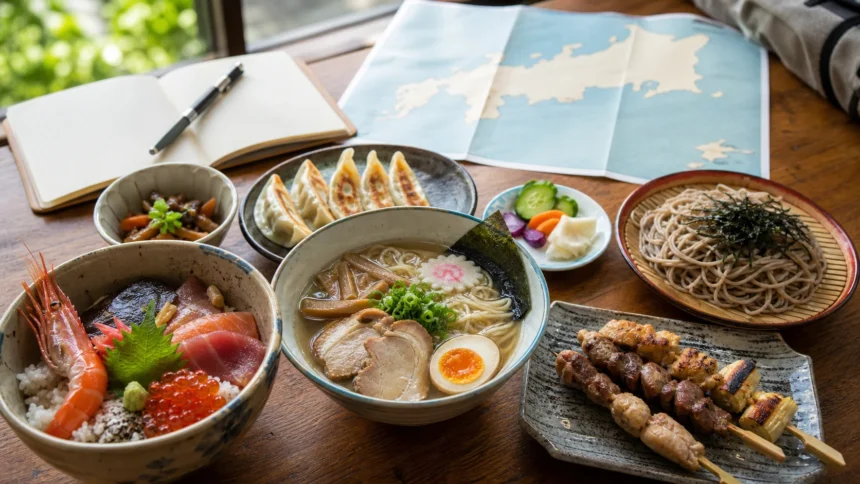
Make the railway part of the food plan
Short answer: first decide whether the train is a normal transfer, a scenic ride, or the main experience. Then plan food at the station or before boarding, protect luggage and platform time, and confirm what remains open at the destination. Regional rail travel can reveal landscapes and local food that a city route cannot, but rural services may be less frequent and food access may close early.
Last checked: August 16, 2026. Timetables, reservations, onboard services, station shops, weather, prices, and opening days change. Check the exact railway operator and venue before travel.
Three rail-day patterns
| Pattern | Food plan | Protect first |
|---|---|---|
| City to regional base | Buy food before the long segment and eat near the base after arrival | Connection, luggage, and the last useful local bus |
| Scenic train experience | Use station food or a pre-ordered option if the operator confirms one | Reservation, boarding point, and weather |
| Local day route | Pack a flexible meal and choose one food stop with a nearby backup | Limited return services and early closures |
Station food is part of route planning
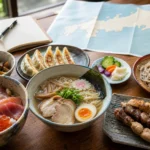
Station food may include an ekiben, rice ball, bakery item, cafe meal, convenience-store option, or a restaurant inside the station area. The best choice depends on how long you will carry it, whether you can eat before boarding, and how much rubbish or temperature control the group can manage. Do not assume that a small regional station has the same range as Tokyo or Kyoto.
Buy food before the last possible moment. A platform can be farther than expected, a shop can be closed, and a local train may have little space for searching after boarding. When dietary risk is serious, verify ingredients and keep a safe backup in your luggage or at the hotel.
Scenic train or ordinary local train?
A scenic train may have reserved seats, a special timetable, a limited operating period, or a booking process that is different from an ordinary local service. A normal train can still provide scenery and local access without those extras. Choose the special service only when the booking, price, route, and schedule support your trip rather than because a photograph looks memorable.
Use official railway information for the current route. The JR Central Shinkansen information is one example of how an operator explains route, seat, and journey planning. Other railways have their own rules and should be checked separately.
Rural route checklist
- Check the first and last practical service, not only the fastest route in a map app.
- Confirm whether reservations are required and whether the booking covers the correct station and direction.
- Check the distance between the platform, station exit, restaurant, and local bus stop.
- Plan for rain, heat, snow, service disruption, and a venue that closes earlier than a city restaurant.
- Save one base-city or hotel-area meal for the evening instead of making a remote lunch your only food anchor.
Food formats that travel well
| Format | Why it helps | What to check |
|---|---|---|
| Bento or rice ball | Easy to carry and useful before a long ride | Ingredients, temperature, and rubbish |
| Bakery or sandwich | Flexible for a group that eats at different times | Egg, dairy, sauces, and storage |
| Station restaurant | Useful when the group wants seats and a hot meal | Last order and platform distance |
| Local restaurant at destination | Best when the town itself is the food anchor | Opening day, queue, and return timing |
Etiquette and comfort
Keep luggage out of the aisle, follow the operator’s food and drink guidance, and take rubbish to the correct place rather than assuming the next station will solve it. A regional trip is more comfortable when the group can sit, use a restroom, and reach the next connection without rushing. For families and older travelers, a shorter route with a dependable meal may be better than a longer train advertised as scenic.
Build a rail day in layers
| Layer | Decision | Example |
|---|---|---|
| Fixed | Which service must you catch? | Reserved scenic train or final return service |
| Food anchor | Where will the group eat with confidence? | Station bento, local lunch, or hotel dinner |
| Flexible stop | What can move if the train is late? | Cafe, sweets shop, market browsing, or short walk |
| Backup | What works without another long ride? | Station building, supermarket, or base-city restaurant |
Put the scenic part in the flexible layer unless the train itself is the booked experience. Put the most important meal near a place with more than one option. This protects the route when the weather, the platform, or the group’s energy changes.
Questions before choosing a regional line
- Does the route require a separate reservation or special ticket?
- How often does the next service run if the first plan fails?
- Can you buy food at the departure station, or should you bring it from the base city?
- Are there stairs, long platform walks, or limited toilets?
- What is the last comfortable time to leave the destination?
Families and dietary needs
Children may enjoy the movement and scenery but dislike a long wait for the next meal. Older travelers may prefer a shorter line with seats and easy toilets. For dietary needs, do not assume that an onboard or station meal has enough information. Verify ingredients, sauces, stock, and shared preparation, then keep a known alternative. A regional rail day should broaden the trip, not make the group anxious about the next meal.
What to carry
- A screenshot of the route, booking, and destination address.
- Water and a small snack if the next food stop is uncertain.
- Portable battery, wipes, and a small rubbish bag.
- Any dietary translation card or verified food information the group needs.
- A light layer or rain protection when the route includes an outdoor platform or rural walk.
These items are not substitutes for checking the operator. They simply reduce stress when the next station is smaller than expected or a connection changes.
If the rail plan fails
If the scenic service is sold out, use the ordinary route and keep the food stop. If the weather hides the view, enjoy the local town or move the landscape plan to another day. If a restaurant closes, use a station building, supermarket, hotel meal, or convenience store rather than risking the final train. The route remains successful when the group reaches the base safely and still has a meal.
Related guides
Use Scenic Food Travel in Japan for route comparison, Food for Long Train Rides for carrying and eating, and Japan Food, Culture, and Travel Guide for the national map.
Sources
Editorial disclosure: This is an independent rail and food planning guide. It does not guarantee a seat, menu, service, or connection.