Spicy Food in Japan: How Travelers Can Choose Heat Levels Safely
Short answer: Help travelers choose spice levels without ruining a travel day or overlooking allergies. Start with the format that fits your route, budget, group, appetite, and dietary boundaries. Do not rely on old prices, viral lists, or one branch’s rules.
For the broader route map, return to Practical Food Guides in Japan. This article is a focused cluster guide, so it solves one traveler decision and links to deeper practical guides where needed.
Last checked: August 4, 2026. Menus, prices, hours, reservations, ingredients, payment methods, language support, and branch rules can change. Confirm current details with the exact venue, package, hotel, park, or official source before relying on them.
When this choice makes sense
Spicy food in Japan ranges from mild curry heat to intense ramen, mapo tofu, hot sauces, and regional or limited dishes. The most useful question is not whether the topic is famous. The useful question is whether it protects the next part of your day.
This is especially important for overseas travelers because Japan food decisions are often linked to train timing, hotel location, queue systems, weather, luggage, children, and how much energy the group has left.
Quick chooser
| Choose this when… | Better backup | Check first |
|---|---|---|
| You are already near the area or venue. | A simpler meal near your route. | Opening hours, last order, and access. |
| The group understands the ordering flow. | A food hall, family restaurant, hotel meal, or convenience store. | Queue, seating, payment, and English support. |
| The budget and portion size fit the day. | A set meal, bento, or smaller snack plan. | What the price includes and whether additions cost extra. |
| Dietary needs can be confirmed. | A preverified restaurant or packaged alternative. | Ingredients, sauces, stock, shared tools, and cross-contact. |
Common examples
- Curry spice level: useful when it matches the schedule, eating place, and comfort level.
- Spicy ramen: useful when it matches the schedule, eating place, and comfort level.
- Mapo tofu: useful when it matches the schedule, eating place, and comfort level.
- Hot sauce: useful when it matches the schedule, eating place, and comfort level.
- Limited spicy menu: useful when it matches the schedule, eating place, and comfort level.
What travelers should check
Check the exact location and the exact day. A format that works well in one branch, hotel, park, station, or shopping center may work differently somewhere else. Look for current signs, official pages, reservation screens, package labels, and staff instructions.
- Spice scales are not universal.
- Sauces may contain allergens.
- Heat can be hard before long transit.
- Limited menus change.
- Exact prices, hours, menus, and availability can change without notice.
How to fit it into an itinerary
Use this topic as one part of the day, not the whole plan. Put it near a station, hotel, attraction, shopping area, or neighborhood you already intend to visit. If it requires a long detour, make sure the experience itself is important enough to justify the time.
For early starts, luggage transfers, theme park days, bad weather, or children, keep a backup meal nearby. A practical backup is not a failure; it is what keeps a food trip from becoming stressful.
Allergies and dietary needs
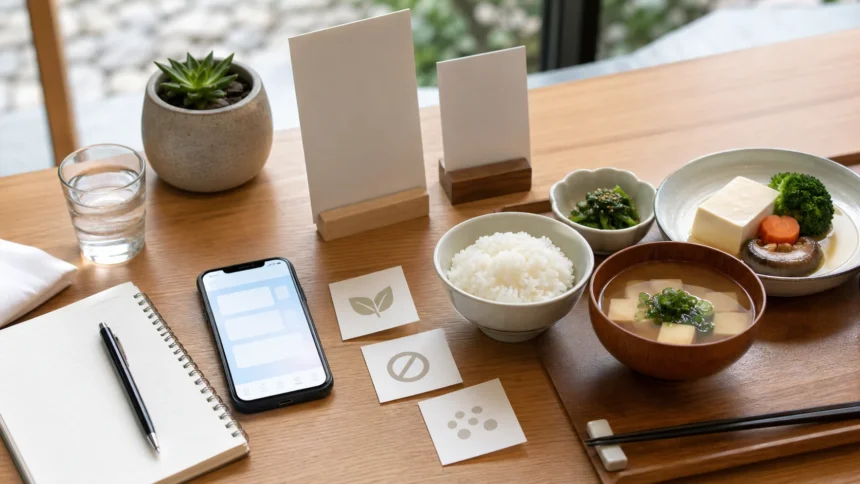
Do not rely only on English menu titles, photos, or familiar-looking food. Sauces, stock, marinades, frying oil, toppings, shared tools, and packaged ingredients can matter. If the risk is serious, contact the venue in advance or choose an option whose ingredients and controls can be verified.
For deeper preparation, use Japan Food Allergy Guide for Travelers.
Common mistakes
- Choosing from an old social-media post without checking current details.
- Ignoring location and travel time.
- Assuming one chain, hotel, park, or branch represents all others.
- Ordering before checking the unit, set contents, or added costs.
- Forgetting a backup when the group has children, luggage, allergies, or a tight train.
FAQ
Is this good for first-time visitors?
Yes, when the format is easy to understand and near your route. Choose a lower-pressure option first if the group is tired, hungry, or uncertain.
Should I make a reservation?
Reserve when the venue requires it, the meal is central to the trip, the group is large, or cancellation terms are acceptable. Keep casual meals flexible.
Can I rely on English menus?
English menus can help, but they do not always explain ingredients, allergens, stock, sauces, or branch-specific rules. Confirm anything important before ordering.
Related guides
Practical Food Guides in Japan | Ramen Shop Guide for First-Time Visitors | Japan Food Allergy Guide for Travelers
Sources
Editorial disclosure: This guide is independent and does not rank or promote specific restaurants, hotels, chains, parks, products, or booking platforms.