Japan theme park food budget guide: snacks, meals, drinks, and souvenirs
Short answer: budget for theme park food in Japan as four separate choices: one normal meal, one or two priority snacks, drinks or heat/rain backups, and souvenir sweets. Do not build the day around exact prices from old posts; check official park pages close to your visit.
If you are still choosing between USJ, Tokyo Disneyland, Tokyo DisneySea, mobile order, priority seating, and limited snacks, start with Japan Theme Park Food Guide. For park-specific planning, use Universal Studios Japan Food and Restaurants or Tokyo Disney Resort Food Planning Guide.
Last checked: August 4, 2026. Theme park menus, prices, operating hours, mobile order, priority seating, limited items, souvenir foods, and allergy information can change. Confirm current details on official park pages before visiting.
The simplest food budget formula
Instead of asking only, “How much is food at Japanese theme parks?”, divide the day into decisions. A practical budget has one breakfast plan before entry, one lunch or dinner plan inside the park, one snack priority, drink money, and a souvenir buffer if packaged sweets or character foods matter.
This keeps the day flexible. You can still enjoy a famous snack, but you will not depend on finding every item from a viral list. In a crowded park, time, walking distance, heat, rain, shows, timed entries, and children can decide the real cost more than the menu price.
Budget by food type
| Food category | What to plan | Budget risk |
|---|---|---|
| Breakfast before entry | Hotel breakfast, convenience store, station food, or cafe near the route | Skipping it can make the first park snack more urgent |
| Main meal | Counter service, sit-down restaurant, mobile order, or priority seating | Peak lunch queues can cost time and money |
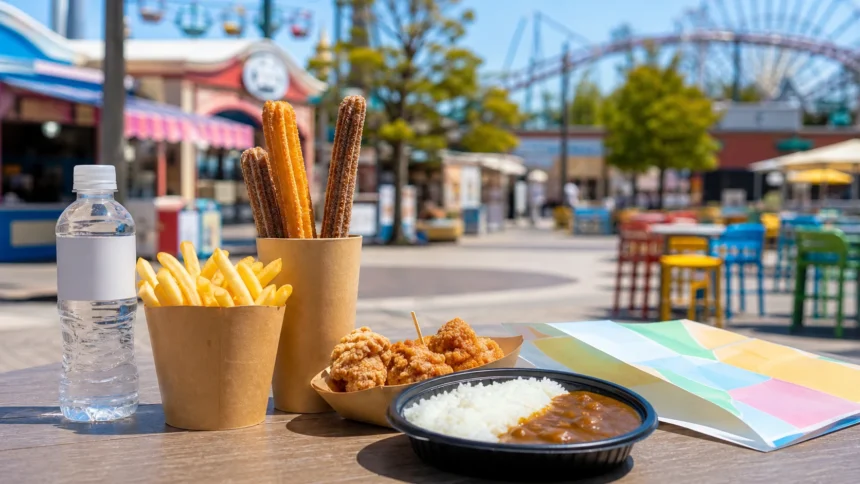
| Priority snack | One or two limited, themed, or photo-friendly items | Snack-chasing can scatter the route |
| Drinks and weather backups | Water, hot drinks, cold drinks, rainy-day rest stops | Heat, humidity, and children increase the need for buffer |
| Souvenir sweets | Packaged snacks, tins, cookies, chocolates, or character treats | Easy to forget until the end of the day |
Three budget styles
Light budget
Eat breakfast before entering, choose one simple meal inside the park, and pick one snack. This works best for adults who care more about rides and shows than food photos. It is also useful when you plan to eat dinner outside the park or near your hotel.
Balanced budget
Eat before entry, plan one real meal inside the park, keep one limited snack as a priority, and leave room for drinks or souvenir sweets. This is the safest default for most first-time visitors because it protects both the schedule and the food experience.
Food-focused budget
Choose the park day as a food experience. Use official restaurant pages, check mobile order or priority seating where available, and choose snacks by area so you do not cross the park repeatedly. This style needs more time and more flexibility, especially when limited items sell out or move.
USJ and Tokyo Disney budget differently
Universal Studios Japan and Tokyo Disney Resort are not the same food problem. USJ planning may depend on area movement, timed attractions, popular collaboration snacks, and whether Osaka dinner after the park is realistic. Tokyo Disneyland and Tokyo DisneySea planning may depend on mobile order, priority seating, parade or show timing, and whether you are staying near Maihama.
For either destination, official pages are the only reliable place to confirm current restaurant details, mobile order, priority seating, and menu availability. Social media is good for ideas; official pages are for decisions.
Where budgets often break
- Skipping breakfast: hunger appears during the most important morning ride window.
- Chasing too many snacks: the route becomes a food scavenger hunt instead of a park day.
- Ignoring drinks: heat, humidity, walking, and children can make drink stops more important than expected.
- Forgetting souvenirs: packaged sweets and character tins are often bought near the exit when fatigue is high.
- Using old prices: menus and prices can change, especially for limited or seasonal items.
Family and group planning
Families and groups need more buffer than solo travelers. One person may want a character snack, another may need a full meal, and children may need drinks or rest before adults expect it. Decide before entering the park whether the group will split for snacks, eat together, or keep one shared rest meal.
If the group includes allergies, dietary restrictions, picky eaters, or children, do not rely on one limited snack as the food plan. Use a normal meal or outside backup as the base, then add park snacks as extras.
When to eat outside the park
Eating outside the park can save stress when you are staying nearby, returning to a station area, or not planning to re-enter. It may be especially useful for dinner after a long day. However, check re-entry rules, ticket conditions, hotel distance, train timing, and whether nearby restaurants will be crowded.
If you leave the park hungry without a plan, the outside meal can become just as stressful as an inside queue. Choose the backup area before the day begins.
Allergies and dietary needs
Theme park food is not automatically easier for allergies or dietary restrictions. Limited menus, shared kitchens, sauces, packaged ingredients, and seasonal items can create uncertainty. Check official park information and restaurant pages, and ask staff when necessary.
If a serious allergy matters, keep a backup that does not depend on a limited menu item. For broader planning, read Japan Food Allergy Guide for Travelers.
Common first-time mistakes
- Budgeting only for lunch and forgetting snacks, drinks, and souvenirs.
- Assuming every viral snack will be available on the visit date.
- Waiting until noon to make the first food decision.
- Using one person’s snack list for a whole family or group.
- Choosing a sit-down meal without checking whether reservations, priority seating, or mobile order matter.
- Leaving the park for dinner without checking re-entry and route timing.
FAQ
Is theme park food in Japan expensive?
It can cost more than ordinary meals outside the park. The value is often convenience, atmosphere, character design, and time saved inside the park, not only portion size.
Should I bring food into a Japanese theme park?
Check the official rules for the exact park before relying on outside food. Rules can differ by park, ticket, area, and situation.
Should I use mobile order?
Use it when the official app and restaurant conditions fit your day. It is helpful in some cases, but availability depends on the park, date, restaurant, and current rules.
How many snacks should I plan?
For a first visit, one or two priority snacks are usually enough. Add more only if food is the main purpose of the park day.
Related guides
Return to Japan Theme Park Food Guide for the parent hub. For a broad first-time strategy, read Theme Park Food in Japan. For Osaka, use Universal Studios Japan Food and Restaurants. For Maihama, use Tokyo Disney Resort Food Planning Guide.
Sources
- USJ: Food and Restaurants
- USJ: Mobile Ordering
- USJ: Restaurant Priority Seating
- Tokyo Disneyland: Restaurants
- Tokyo DisneySea: Restaurants
- Tokyo Disney Resort: Disney Mobile Order
Editorial disclosure: This guide is independent and does not reproduce park character art, menu images, or campaign materials. Confirm current park details on official pages before visiting.