Ryokan dinner and breakfast in Japan: what first-time guests should know
Short answer: if you book a ryokan or onsen inn, treat dinner and breakfast as part of the stay, not just optional restaurant meals. Check whether meals are included, where they are served, what time they start, how late you can arrive, and whether dietary requests must be confirmed before booking.
If you are comparing hotel breakfast, room-only stays, resort meals, and ryokan plans, start with Hotel Dining in Japan. If you are choosing between breakfast-only, half-board, dinner-included, and room-only plans, read How to Choose Hotel Dining Plans in Japan.
Last checked: August 4, 2026. Ryokan meal plans, dinner times, breakfast times, dining venues, room-service style, private rooms, late-arrival rules, allergy support, and dietary flexibility vary by property. Confirm current details with the exact inn before booking.
Should you book ryokan meals?
| Book dinner and breakfast if… | Be careful if… | Better option |
|---|---|---|
| The ryokan stay is one of the main experiences of the trip | You want total freedom to eat anywhere at any time | Room-only city hotel or breakfast-only plan |
| The inn is in an onsen town, mountain area, island, or quiet resort area | You will arrive late after sightseeing or a long train ride | Confirm late check-in and dinner deadline before booking |
| You want seasonal, regional, multi-dish Japanese meals | You have strict allergies, vegan, halal, or religious dietary needs | Contact the property before booking, not after arrival |
| You prefer a calm evening after travel | Your group has very different food preferences | Choose a city stay with outside restaurant choices |
Ryokan meals are part of the lodging experience
A ryokan is a Japanese-style accommodation, and meals can be one of the main reasons to stay. Dinner and breakfast may introduce local ingredients, seasonal dishes, tableware, regional cooking, and the inn’s hospitality style. For many first-time visitors, the meal is remembered together with the room, bath, yukata, futon, and surrounding scenery.
That does not mean every ryokan meal is the same. A small family inn, a luxury ryokan, a modern hotel-ryokan, a large onsen property, and a remote mountain inn can all handle meals differently. Some meals are elaborate multi-course dinners; some are simpler set meals; some plans may not include dinner at all.
Dinner timing matters more than many travelers expect
Ryokan dinner is often tied to the inn’s schedule. Instead of walking into a restaurant whenever you feel hungry, you may need to arrive, check in, bathe, and be ready for dinner during a fixed or limited time window. A late train, long sightseeing day, or missed bus can therefore affect the meal you paid for.
Before booking a dinner-included plan, check the latest check-in time, dinner start time, whether late dinner is possible, and what happens if you arrive after the meal window. If the route is risky, a room-only or breakfast-only plan may be calmer.
Where meals may be served
Ryokan meals may be served in several ways depending on the property and plan. Some guests eat in a dining room. Some plans use a private dining room. Some traditional inns may serve meals in the guest room. Large onsen hotels may use restaurants, buffets, or banquet-style dining.
Do not assume room dining just because the accommodation is called a ryokan. Do not assume a buffet just because the property is large. If the dining setting matters for privacy, children, mobility, photos, allergies, or a special occasion, confirm it before booking.
What ryokan dinner is usually trying to do
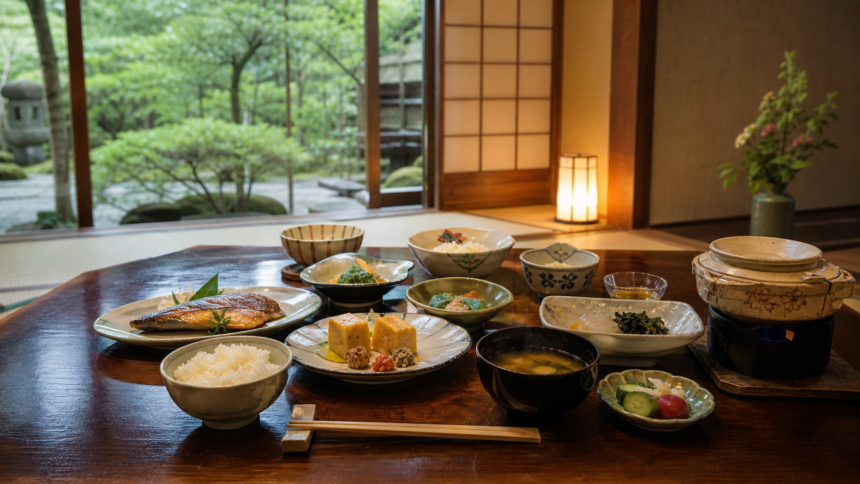
Ryokan dinner often emphasizes season, region, and balance. You may see small dishes, sashimi, grilled fish, simmered dishes, vegetables, rice, soup, pickles, hot pot, local beef, seafood, mountain vegetables, dessert, or a course-like flow. Treat these as common examples, not guarantees.
The important point is not memorizing every dish name. It is knowing that the meal may be set in advance. Unlike a casual restaurant, you may not choose every item separately. That is why dietary communication matters before arrival.
Breakfast can be a full experience too
Ryokan breakfast may be a Japanese-style set meal with rice, miso soup, grilled fish, egg, tofu, vegetables, pickles, seaweed, local sides, or seasonal items. Some inns offer Western options or buffets, while others focus on Japanese breakfast.
If you are not used to a savory breakfast, check photos and plan descriptions before booking. For some travelers, ryokan breakfast is a highlight. For others, a simple hotel buffet or convenience-store breakfast may fit the route better. For broader breakfast planning, use Hotel Breakfast in Japan.
Dietary needs and allergies
Ryokan meals can be difficult for serious allergies, vegetarian diets, vegan diets, halal needs, pork-free meals, shellfish restrictions, gluten concerns, or religious dietary rules. Ingredients may appear in soup stock, sauces, simmered dishes, pickles, processed foods, shared tools, and seasonings.
Do not wait until dinner to explain a strict dietary need. Contact the property before booking or immediately after booking, and ask whether the request can be handled. Some inns may help; others may not be able to change the course safely. If the risk is serious, keep a backup plan and read Japan Food Allergy Guide for Travelers.
Questions to ask before booking
- Is dinner included, breakfast included, both included, or neither included?
- What time is dinner served, and what is the latest check-in for dinner?
- Where are meals served: dining room, private room, guest room, restaurant, or buffet?
- Can the property handle allergies or dietary restrictions, and how early must requests be made?
- Is the meal plan attached to every guest in the room?
- What happens if transportation delays make you late?
- Can children receive a different meal, smaller portion, or child plan?
When to skip dinner included
A dinner-included ryokan plan is not always the best choice. Skip or rethink it if you plan to arrive late, want to eat at a specific outside restaurant, have uncertain transport, need very flexible timing, or cannot confirm dietary requirements. The most expensive plan is not automatically the best plan for the trip.
On the other hand, in quiet onsen towns or remote areas, skipping dinner can create its own problem. Restaurants may close early, require reservations, or be limited near the inn. If the area has few evening options, dinner included may protect the whole night.
Common first-time mistakes
- Booking a dinner-included plan without checking the arrival deadline.
- Assuming every ryokan dinner is kaiseki or every ryokan serves meals in the room.
- Waiting until check-in to mention allergies or dietary restrictions.
- Skipping dinner in a quiet onsen area without checking nearby restaurants.
- Choosing a plan from photos without reading what is actually included.
- Planning a busy evening outside when the inn meal is the main experience.
FAQ
Are ryokan meals worth it?
Often, yes, when the ryokan stay itself is a main part of the trip. They are less flexible than ordinary restaurant meals, so confirm timing, plan details, and dietary support before booking.
Is ryokan dinner always served in the room?
No. Some inns offer room dining, but many use dining rooms, private dining rooms, restaurants, or buffets. Check the exact plan.
Can I arrive late and still eat dinner?
Not always. Dinner may have a fixed or limited time window. If your route arrives late, contact the ryokan before booking or choose a plan that does not depend on dinner.
What if I do not like Japanese breakfast?
Check the plan before booking. Some properties offer Western options or buffets, while others focus on Japanese breakfast. If breakfast style matters, do not rely only on the word “breakfast included.”
Related guides
For the parent decision map, return to Hotel Dining in Japan. For plan comparison, read How to Choose Hotel Dining Plans in Japan. For morning choices, read Hotel Breakfast in Japan. If the lodging area is undecided, use Best Areas to Stay in Japan for Food and Breakfast.
Sources
- JNTO: Accommodation
- JNTO: Japanese food and drink
- Japan Ryokan Association: Ryokan guide
- Japan Ryokan Association: How to stay at a ryokan
- Japan Ryokan Association: Breakfast
Editorial disclosure: This guide is independent and does not recommend or rank specific ryokan. Confirm current meal details with the accommodation before booking.