Best areas to stay in Japan for food and breakfast: Tokyo, Osaka, Kyoto, and beyond
Short answer: stay near a major station when you want reliable breakfast, luggage movement, late dinner backups, and easy day trips. Stay in a neighborhood food area when restaurants are the purpose of the trip and you can handle less transit convenience.
Last checked: August 16, 2026. This guide chooses area types, not hotels. Check current hotel location, station exits, breakfast plan, and restaurant hours before booking.
Food-first hotel area rules
A good food base is not always the trendiest neighborhood. The best base is a place where morning food, transit, and backup meals still work when it rains, a reservation fails, or you arrive late.
- Station base: best for first-time visitors, families, early trains, and day trips.
- Dining district base: best when dinner is the main goal.
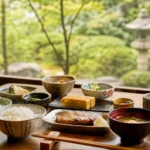
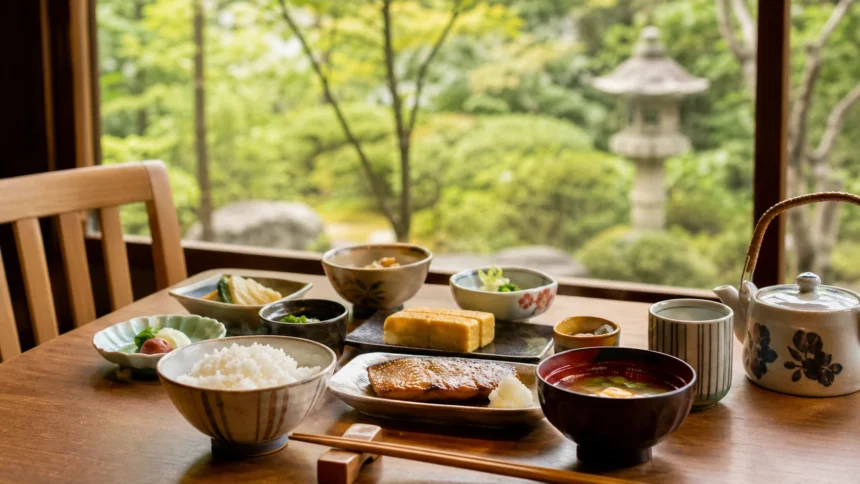
- Ryokan or resort base: best when hotel meals are part of the stay.
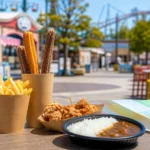
- Theme park base: best when breakfast timing and return travel matter more than nightlife.
Tokyo
Tokyo has many valid food bases. Tokyo Station works for trains, station food, department-store food floors, and day trips. Shinjuku works for nightlife, transport, and broad restaurant choice. Ueno and Asakusa can work for older Tokyo atmosphere and easier sightseeing routes. Akihabara or Ikebukuro can work for pop-culture days if that is the main purpose.
Osaka
In Osaka, Namba and Umeda are the easiest food-and-transit anchors for most visitors. Namba is strong for evening food routes and southern Osaka energy. Umeda is strong for rail access, department stores, and easier onward travel. If Universal Studios Japan is a priority, a park-area or rail-convenient base can reduce morning stress.
Kyoto
Kyoto Station is practical for early buses, trains, luggage, and breakfast. Downtown Kyoto is better for dinner, shopping, and evening walks. Arashiyama, Higashiyama, and ryokan areas can be wonderful, but they work best when the location is the experience and you accept less flexibility.
How to choose
| Trip type | Base to prefer | Why |
|---|---|---|
| First Japan trip | Major station | Breakfast and transit backups are easier |
| Food nightlife trip | Dining district | Dinner is nearby and taxis are less necessary |
| Theme park trip | Park or direct-train base | Morning timing matters |
| Onsen trip | Meal-included lodging | Dinner may be part of the stay |
Breakfast and dinner backup test
Before booking, run a simple test. If you wake up at 7:00, can you find coffee, convenience-store food, bakery food, or hotel breakfast within a reasonable walk? If you return at 21:30, can you find a simple dinner without crossing the city? If both answers are no, the hotel may be beautiful but fragile for a food-focused trip.
FAQ
Should first-time visitors stay near Tokyo Station?
It can be a strong choice for trains, station food, and day trips. It is not the only good area, but it is forgiving.
Is Namba or Umeda better for Osaka food?
Namba is often easier for evening food energy. Umeda is often easier for rail access and department-store food. Choose based on your route.
Is Kyoto Station too practical?
It may feel less atmospheric than some districts, but it is very useful for buses, trains, luggage, and early starts. Food travelers often benefit from practicality.
Make the decision fit the day
Best Areas to Stay in Japan for Food and Breakfast: Tokyo, Osaka, Kyoto, and Beyond is most useful when it solves one concrete travel decision. Start with hotel location, breakfast access, station transfers, neighborhood food, and luggage days; then choose the option that fits the route already on the calendar. A famous format is not automatically the best choice if it adds a long detour, a hard reservation, or a new problem for the group.
Before leaving for Best Areas to Stay in Japan for Food and Breakfast: Tokyo, Osaka, Kyoto, and Beyond, set the route anchor, the latest acceptable meal time, and one trigger for changing plans. For this topic, the trigger may be a sold-out slot, a long queue, bad weather, luggage, a dietary boundary, a tired child, or a train that cannot be missed. Decide it while the group is calm, not after the original plan has failed.
| Travel situation | First choice | Confirm before committing |
|---|---|---|
| The topic is the day’s main goal | Reserve or arrive early and keep the surrounding route light. | Official hours, entry format, current menu, payment, and cancellation or late-arrival rules. |
| The topic is a pleasant extra | Choose a nearby option with a normal meal or rest stop beside it. | Walking time, queue length, seating, toilets, and whether the group can leave easily. |
| The group has a constraint | Prefer the clearest option and save a second choice in the same area. | Ingredients, access, child needs, weather cover, luggage space, and a way to communicate questions. |
Check the exact venue or area
For best areas to stay in japan for food and breakfast, use maps and social posts to discover candidates, then verify the exact official venue or area page before changing the itinerary. Branch hours, menus, reservations, campaign dates, tenant lists, payment methods, and access can differ. Recheck near the visit when weather, events, or stock could change the decision.
When planning best areas to stay in japan for food and breakfast from overseas, check Japan local time, phone-number requirements, language options, card support, and visit-day evidence. Save the official page, confirmation screen, address, nearest station exit, and reservation or timed-entry details before leaving reliable Wi-Fi.
Keep the backup in the same movement pattern
For best areas to stay in japan for food and breakfast, the backup should preserve the same movement pattern with less friction. Match an early train with a station option, rain with a hotel or mall, a late arrival with a convenience store or supermarket, and a failed campaign or queue with an ordinary restaurant. A backup that crosses the city is usually too expensive in time and energy.
Use the parent guide after this decision is clear. It can help compare areas, seasons, or purposes; this page should remain the practical answer for hotel location, breakfast access, station transfers, neighborhood food, and luggage days. When a child or sibling article is added, link it from the parent and keep the promise of each page distinct so readers can move from the broad map to the next small choice.
FAQ
Should I plan this before booking my trip?
Only when hotel location, breakfast access, station transfers, neighborhood food, and luggage days is a major reason for the trip or has a limited reservation window. Otherwise, place it as a flexible option near a route you already want to take. This keeps the plan useful even when dates, weather, or availability change.
What is the safest way to handle changing information?
For Best Areas to Stay in Japan for Food and Breakfast: Tokyo, Osaka, Kyoto, and Beyond, record the date, location, and rule you actually confirmed, then save one nearby alternative. An old review, translated summary, or single branch should explain where to look next, not become a universal rule for the whole category.
What should I decide first?
Decide whether the topic is the anchor, a meal, a short break, or a backup. Then set the time and location around that role. The route becomes easier when the article has one job instead of trying to rank every possible choice.
A short decision sequence
First, decide what job Best Areas to Stay in Japan for Food and Breakfast: Tokyo, Osaka, Kyoto, and Beyond has in the itinerary: a must-do experience, a normal meal, a short break, or a recovery option. Second, place it beside the station, hotel, attraction, or shopping area that already matters that day. Third, choose the least complicated version that still gives the traveler the experience they came for.
Then check the handoff to the next activity. A meal that looks convenient on a map may still involve a station exit, a queue, stairs, a timed ticket, luggage storage, or a long walk through heat and rain. Leave enough time to finish, pay, find the exit, and regroup without turning the next reservation into a race.
For groups, agree on the non-negotiable before comparing menus or venues. One traveler may need a clear ingredient answer, another may need a chair, and another may care most about a limited campaign or a fixed budget. Put the shared constraint first, then let the group choose the most enjoyable option that still fits it.
When no option is clearly better, choose proximity and reversibility. A nearby meal that can be left easily is often stronger than a destination that requires a reservation, a long queue, or a cross-city transfer. This is especially useful on the first day, after a late arrival, and when weather or transport is uncertain.
Check the cost of inflexibility
For hotel-area food access, compare more than the listed price. Ask what the plan saves in walking, waiting, searching, and decision fatigue, then ask what it prevents you from doing. A prepaid meal can be useful on a timed day, but it can also make a flexible market morning, late train, or weather change harder. The best choice is the one whose benefit matches the actual route.
Before confirming, write down the meal window, the nearest practical entrance, the payment method, and the fallback that remains available without another reservation. Keep the confirmation and the current official rule accessible offline. If the group changes its mind, follow the stated cancellation or change process rather than assuming a reservation can be transferred or ignored.
Related guides
For the full hotel dining decision, start with Hotel Dining in Japan. For hotel meals, read Hotel Breakfast in Japan and How to Choose Hotel Dining Plans in Japan. For Tokyo food routes, read Three-Day Tokyo Food Itinerary.
Sources
Editorial disclosure: This article is an area-planning guide, not a hotel ranking.