Choose comfort before price
Short answer: most first-time visitors should compare sumo seats by comfort, group size, mobility, and official ticket rules before looking only at price. Chair seats are usually the easiest to understand. Box seats feel more traditional, but they can require sitting on cushions on the floor. Ringside or special seats can be exciting, but they are not the default choice for most overseas visitors.
Last checked: August 28, 2026. Seat categories, prices, fees, availability, age rules, wheelchair-seat rules, venue maps, ticket receiving methods, and resale policies can change by tournament and venue. Always confirm current details on the Nihon Sumo Kyokai and Ticket Oosumo English pages before buying.
Quick seat comparison
| Seat type | Best fit | Check first |
|---|---|---|
| Chair seats | First-time visitors who want individual stadium-style seating and simpler comfort | View, category, ticket limit, venue map, and stair/access route |
| Box seats | Groups who want the classic sumo atmosphere and can sit on floor cushions | Box capacity, whether sold by box, shoe rules, legroom, and group fit |
| Ringside or special seats | Experienced fans who understand stricter rules, higher demand, and closer-ring conditions | Sales channel, age/risk restrictions, photography rules, and availability |
| Wheelchair or accessible seating | Visitors who need accessible viewing arrangements | Official tournament-specific reservation method before buying any other seat |
Chair seats: the safest first choice
The Nihon Sumo Kyokai’s official English ticket guide describes arena seats, also called chair seats, as similar to seats in a typical sports stadium. For many first-time visitors, that is the important point. You know what your body is being asked to do: sit in an individual chair for a long event day.
Chair seats can still vary by venue, level, row, side, and category. Ticket Oosumo’s venue-map pages also warn that seat types are subject to change. Before buying, check the current tournament page, the venue map, and any stairs, access, child, luggage, or re-entry rules that matter to your group.
Box seats: traditional, but not automatically easier
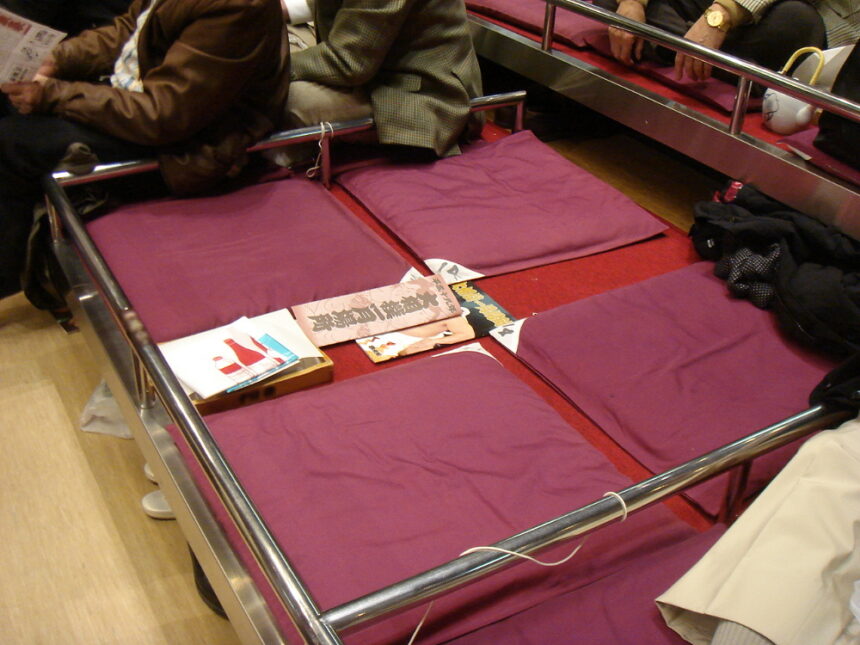
The official Kyokai ticket guide describes Masu-seki, or box seats, as Japanese-style boxes where visitors sit directly on the floor. Ticket Oosumo’s current tournament pages may also explain that box seats are sold in box units and that visitors remove their shoes and sit on square cushions inside the box.
This can be a memorable way to watch sumo, especially for a group that wants the classic venue atmosphere. But it is not automatically the best option. If someone in your group has knee, hip, back, mobility, or comfort concerns, chair seats may be the kinder choice. A cheaper-looking box also may not be cheaper for a small party if it is sold by the whole box rather than by one individual seat.
Ringside and special seats: read the rules twice
Very close seats can sound irresistible, but they can have stricter purchase routes, limited availability, physical risk, age rules, or venue-specific restrictions. Ticket Oosumo’s current pages can also separate some seat types by sales channel. Do not assume that every seat shown on a Japanese page is available through the English sales route.
For a first tournament, choose ringside or special seats only if the official page clearly matches your needs and you are comfortable with the rules. If you mainly want a relaxed travel day, a chair seat or ordinary box seat is usually easier to plan around.
Accessibility and mobility planning
Do accessibility planning before purchase, not after. Ticket Oosumo’s current tournament information can include tournament-specific wheelchair-seat instructions, reservation methods, payment rules, and limitations. Those details are exactly the kind of information that should come from the official current page, not from a general travel article.
If a visitor will use a wheelchair, cannot sit on floor cushions, needs a predictable aisle route, or may need staff support, check the official seating and access instructions first. Buying a standard ticket and trying to solve accessibility later can create a worse day for everyone.
Buying rules can matter as much as the seat
Ticket Oosumo’s help page says sales can be first-come-first-served, seat numbers may be assigned by random draw, purchase results may arrive by email, tickets may be issued at the venue, and purchases cannot be changed or canceled. That means the best seat type is also the one you can buy with confidence under the current rules.
Use official channels and avoid unofficial resale pressure. If a seat category sells out, treat that as real planning information. This seat article intentionally avoids maintaining a live price list; use the current schedule and ticket guide for active sale status and current price examples: Sumo in Japan: Tournament Schedule and Tickets.
Simple recommendation
Choose chair seats if comfort and simplicity matter most. Choose box seats if your group wants the traditional atmosphere and everyone is comfortable sitting on cushions. Be cautious with ringside or special seats unless you fully understand the official rules. For the wider sumo branch, start with Sumo in Japan for First-Time Visitors.
Photo credit
Featured image: Sumo box seat by PekePON on Wikimedia Commons, CC BY-SA 3.0. Cropping or resizing may be applied for site display. The image is used in editorial sumo seat-planning travel-guide context and does not imply endorsement by the photographer, the venue, the Japan Sumo Association, Ticket Oosumo, or Wikimedia.
Sources
- Nihon Sumo Kyokai: How to Buy
- Ticket Oosumo: Ryogoku Kokugikan 1st Floor Box Seats
- Ticket Oosumo: Ryogoku Kokugikan 2nd Floor Arena(Chair) Seats
- Ticket Oosumo: current tournament ticket information example
- Ticket Oosumo: Help
- Wikimedia Commons image file and license record
Editorial disclosure: This is an independent planning guide. It is not affiliated with the Nihon Sumo Kyokai, Ticket Oosumo, PIA Corporation, Ryogoku Kokugikan, venues, wrestlers, spectators, Wikimedia, or the photographer.