Use official viewing spaces first
Short answer: the safest first plane-spotting plan in Japan is an official airport observation deck, not a fence-line location or a roadside photo stop. Haneda, Narita, Kansai International Airport, and Chubu Centrair all have official visitor information that helps first-time travelers choose a public viewing place and check current rules before going.
Last checked: August 20, 2026. Observation decks, access routes, photography rules, closure notices, tour content, security rules, weather restrictions, and airport facilities can change. Always confirm current details on the official airport page before you go.
Good first airport choices
| Airport | Best fit | Check first |
|---|---|---|
| Haneda Airport | Tokyo visitors who want easy public-deck access during a travel day | Official deck page, terminal choice, weather or security closure notices |
| Narita Airport | International-flight fans who want runway views and public visitor areas | Official best-view page, tour-area limits, equipment rules, weather closure notices |
| Kansai International Airport | Osaka/Kyoto travelers who want a dedicated observation hall | Official Sky View page, shuttle access, facility notices, current opening information |
| Chubu Centrair | Aviation fans who care about close runway and taxiway views | Official Sky Deck page, weather restrictions, fence, tripod, stepladder, and flash rules |
Haneda: easiest for a Tokyo travel day
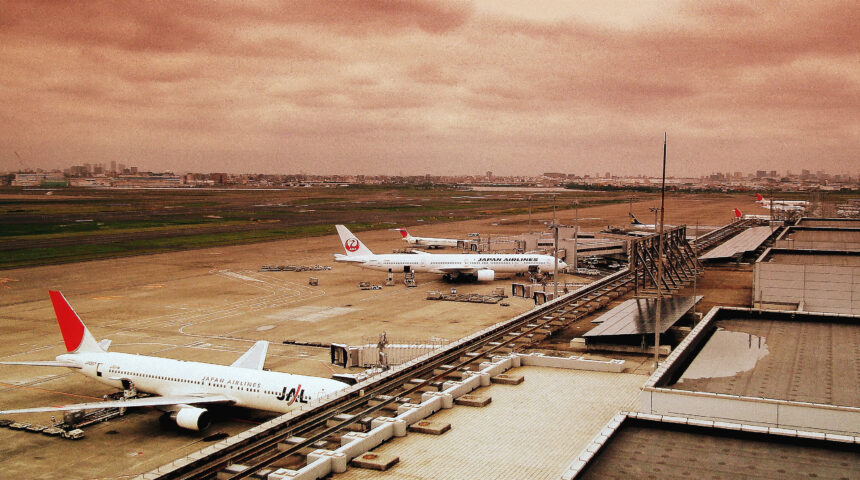
Haneda Airport’s official passenger-terminal page describes observation decks in each terminal and says visitors can watch aircraft take off and land. It also warns that decks may close because of bad weather or security-related reasons. That makes Haneda a strong first choice when you are already flying through Tokyo or staying nearby.
Choose Haneda when convenience matters. Pick the terminal based on your route, baggage situation, and food or shopping plan. Do not assume one terminal is always the best for every aircraft type or runway direction; weather, operations, and the airport’s current notices matter more than a fixed online tip.
Narita: runway views with clear visitor limits
Narita Airport’s official best-view page describes Terminal 1 and Terminal 2 observation decks and notes weather-related closure risk. Its visitor-tour page also makes an important boundary clear: airport visits are self-guided public-area visits, and areas such as Immigration, control towers, and maintenance areas are not tour spaces.
That boundary is useful for plane spotting. Narita can be rewarding, but keep the day simple: public decks, public terminal areas, official maps, and ordinary airport manners. The official visitor page asks guests not to disturb others, and the best-view page includes equipment restrictions for some deck areas.
Kansai: a dedicated observation-hall plan
Kansai International Airport’s official Sky View Observation Hall page describes an observation deck with panoramic airport views and runway proximity. It also explains that the hall can be reached by a free shuttle bus from the passenger terminal area.
Choose Kansai when the observation hall itself is part of the outing, not just something to fill ten minutes before a flight. Because facility hours, shuttle access, shop areas, museum areas, tours, and notices can change, use the official page as the current-info source on the day you plan.
Centrair: strong rules, strong views
Chubu Centrair’s official Sky Deck page is especially useful because it does not only describe the view. It also gives practical photography guidance: weather restrictions, fence considerations, tripod manners, stepladder restrictions, flash and reflector safety, and how to treat aircraft operation information.
For serious aviation fans, that level of guidance is a good sign. A strong plane-spotting airport is not just close to aircraft; it also tells visitors how to enjoy the view without creating safety, security, or crowding problems.
What not to do
- Do not enter restricted areas, service roads, maintenance zones, Immigration areas, control-tower areas, or private property.
- Do not use drones, lasers, flash, reflectors, stepladders, or large equipment where airport rules prohibit or restrict them.
- Do not block decks, fences, doors, stairs, shops, crossings, roads, or other visitors’ sightlines.
- Do not treat live flight movements as guaranteed; check official flight information and airport notices.
- Do not follow social-media photo tips if they conflict with signs, staff instructions, or official rules.
Build a simple first plan
For a first plane-spotting day, connect the airport to a real itinerary. Haneda fits Tokyo arrival or departure. Narita fits international-flight interest and a slower airport visit. Kansai fits Osaka, Kyoto, and airport-facility fans. Centrair fits Nagoya-area travelers who want a stronger aviation-focused deck experience.
For the wider transport branch, start with Japan Transport Fan Travel Guide. If you also like rail travel, pair this with Scenic Railways in Japan for First-Time Visitors or Railway Museums in Japan for First-Time Visitors.
Photo credit
Featured image: Tokyo Haneda Airport view from Domestic Terminal 2 Observation Deck by calflier001 on Wikimedia Commons, CC BY-SA 2.0. Cropping or resizing may be applied for site display. The image is used in editorial airport and plane-spotting travel-guide context and does not imply endorsement by Haneda Airport, Japan Airlines, airlines, Wikimedia, Flickr, or the photographer.
Sources
- Haneda Airport Passenger Terminal: Observation Deck
- Narita International Airport: Best View Point
- Narita International Airport: For guests wishing to tour Narita Airport
- Kansai International Airport: Sky View Observation Hall
- Chubu Centrair International Airport: Observation Deck “Sky Deck”
- Wikimedia Commons image file and license record
Editorial disclosure: This is an independent planning guide. It is not affiliated with Haneda Airport, Narita International Airport, Kansai International Airport, Chubu Centrair International Airport, airport operators, airlines, Japan Airlines, Wikimedia, Flickr, the photographer, or trademark owners.