Choose by landscape first
Short answer: scenic railway travel in Japan works best when you choose the landscape first, then check the operator’s current timetable and ticket rules. For a first trip, the easiest choices are a Kyoto gorge ride, a Kamakura/Enoshima seaside local line, a Toyama gorge train, or a sightseeing train that already fits your regional route.
Last checked: August 28, 2026. Timetables, fares, operating sections, seasonal calendars, reservations, service suspensions, onboard food, special cars, and weather conditions can change. Always confirm current details on official operator pages before you go.
Best first scenic railway choices
| Experience | Best fit | Check first |
|---|---|---|
| Sagano Romantic Train | Kyoto visitors who want a short Hozu River gorge ride near Arashiyama | Official Sagano calendar, tickets, timetable, and weather notices |
| Enoden | Tokyo/Kamakura visitors who want sea views, temples, compact stations, and a local railway feel | Official Enoden train status, fares, IC-card rules, and crowding notices |
| Kurobe Gorge Railway | Toyama or Hokuriku travelers who want a deeper gorge railway experience | Official operation section, reservations, weather, and route notices |
| JR Kyushu sightseeing trains | Kyushu travelers who want distinctive trains, resort-style interiors, or scenic regional routes | Official train pages, operation dates, reservations, and onboard services |
Kyoto: short, scenic, and easy to understand
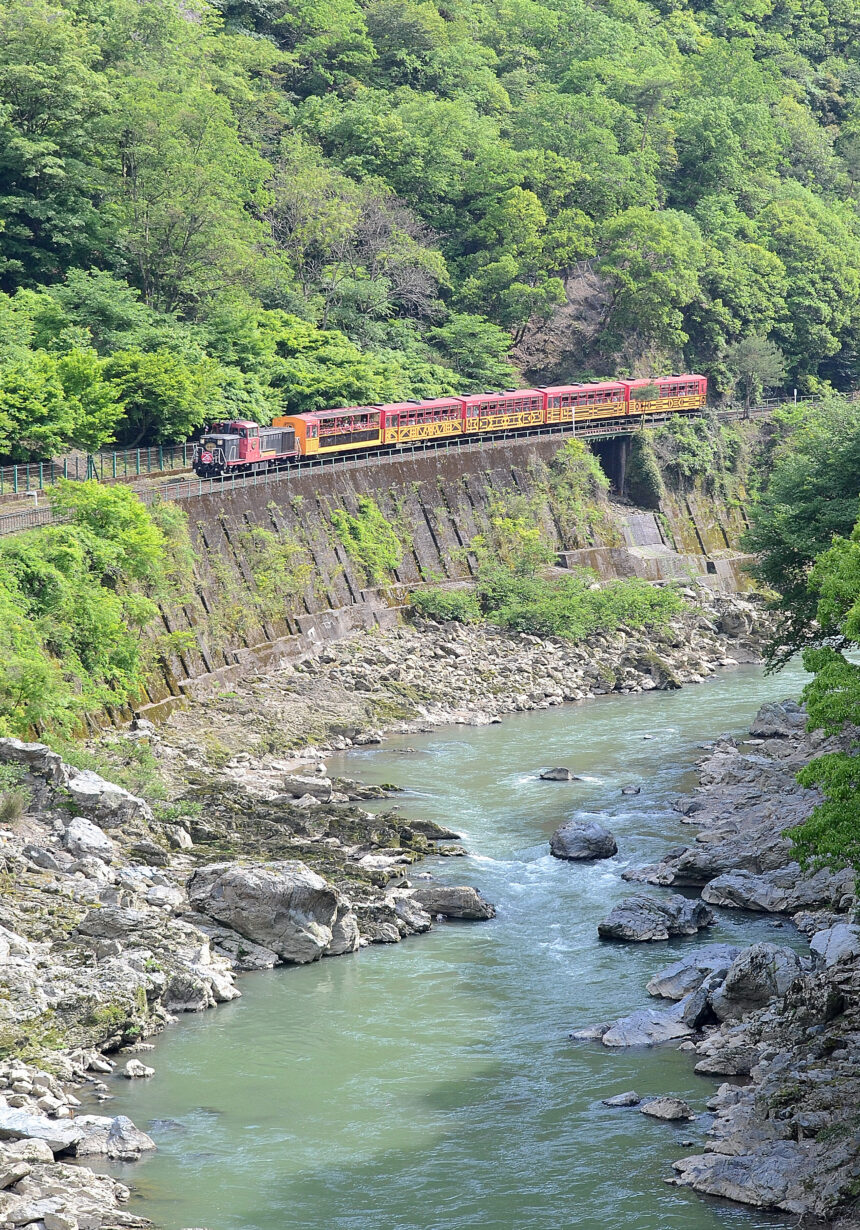
The Sagano Romantic Train official site describes a ride through the Hozu River and Hozukyo gorge area, with seasonal views from the train windows. For many first-time visitors, this is the easiest scenic rail add-on because it can fit around Arashiyama, Kyoto, and nearby sightseeing.
It still needs current checking. Tourist trains can have seasonal calendars, reserved seats, weather interruptions, event changes, and crowded periods. Plan the ride only after checking the official calendar and ticket page, especially during cherry blossom and autumn foliage periods.
Kamakura and Enoshima: scenic local railway, not a special train
The Enoshima Electric Railway official English site frames Enoden as the line linking Fujisawa, Enoshima, and Kamakura. Its tourism page describes a 10km railway where riders can enjoy tunnels, ocean views, and Enoshima scenery. That makes Enoden different from a reserved sightseeing train: the charm is the ordinary local line itself.
Choose Enoden when you want stations, beaches, temples, narrow streets, and a slower local ride. Avoid blocking crossings or residential streets for photos, and do not treat famous rail-photo spots as private shooting sets. Use official stations, public paths, and ordinary visitor manners.
Toyama: gorge railway with more planning risk
Kurobe Gorge Railway’s official English site has route, timetable, fare, reservation, and current information sections. This is exactly the kind of train where a generic article can become outdated quickly, because mountain weather, route conditions, and service sections matter.
Choose Kurobe when the gorge itself is the reason for the day, not as a casual side trip. Check operation notices, reservation rules, return times, clothing, luggage, and weather before committing. This guide should help you choose the landscape; if the official route or operating section changes, let the official page win over any itinerary you drafted earlier.
Kyushu and regional sightseeing trains
JR Kyushu’s official train pages show how Japan’s scenic railway branch can also mean distinctive train design, resort-style interiors, regional food, or route storytelling. These trains can be memorable, but they often require more attention to operation dates, seat reservations, and onboard service rules.
For Kyushu, decide first whether the train is transportation between places you already want to visit or the main attraction itself. If it is the main attraction, book the rest of the day around official train operation, not around a rough map search.
How to choose without chasing every train
Start with the parent decision: where are you already going? Kyoto points toward Sagano. Tokyo and Kamakura point toward Enoden. Hokuriku and Toyama point toward Kurobe Gorge. Kyushu points toward JR Kyushu’s sightseeing trains. If a scenic train forces too much detour, save it for a later trip.
For older rolling stock and heritage operations, pair this guide with Vintage Trains and Railway Heritage in Japan. For the wider transport branch, start with Japan Transport Fan Travel Guide.
What to check before going
- Official timetable, operating calendar, service section, and suspension notices.
- Ticket purchase method, reservation window, seat type, and refund/change rules.
- Weather, foliage or snow expectations, heat, rain, and river or mountain conditions.
- Last return option, luggage rules, accessibility, stroller rules, and station facilities.
- Photography rules, crowding, residential-area manners, and safe public viewpoints.
Photo credit
Featured image: Sagano scenic railway hotsukyo.jpg by Toshinori baba on Wikimedia Commons, CC BY-SA 4.0. Cropping or resizing may be applied for site display. The image is used in editorial scenic-railway travel-guide context and does not imply endorsement by Sagano Scenic Railway, railway operators, Wikimedia, or the photographer.
Sources
- JNTO: Scenic Railway Journeys
- Sagano Romantic Train official English site
- Kurobe Gorge Railway official English site
- Kurobe Gorge Railway: Route Guide
- Enoshima Electric Railway official English site
- Enoshima Electric Railway: access and tourism information
- JR Kyushu: Train Varieties
- Wikimedia Commons image file and license record
Editorial disclosure: This is an independent planning guide. It is not affiliated with JNTO, Sagano Scenic Railway, Kurobe Gorge Railway, Enoshima Electric Railway, JR Kyushu, railway operators, Wikimedia, the photographer, or trademark owners.