Short answer
Aso Kumamoto Airport is a practical aviation-fan stop when you treat it as both a 4F observation-deck visit and a gateway decision. Start with the official observation deck, then choose whether your route continues into Kumamoto city, toward Higo-Otsu / Ozu Station by Airport Liner, or onward toward Aso.
Last checked: August 21, 2026. Observation-deck hours, flight operations, bus platforms, Airport Liner details, fares, parking, shops, and terminal facilities can change. Always confirm current details on official airport, operator, airline, and transport pages before you go.
Why Kumamoto Airport works for aviation fans
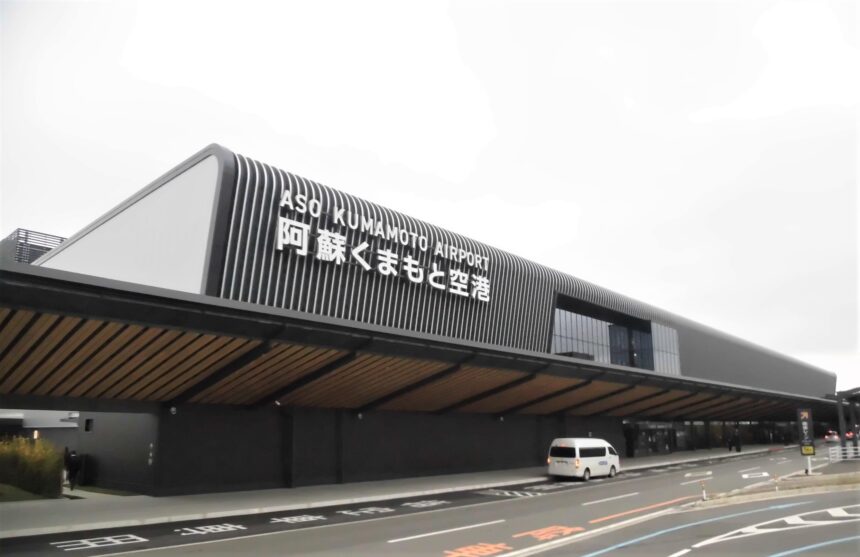
Kumamoto Airport, officially branded Aso Kumamoto Airport, has a clear official viewing anchor. The airport’s English facilities page says the 4th floor of the passenger terminal building is an observation deck and that visitors can see planes taking off and landing. That makes the visit easy to plan without searching for unofficial perimeter viewpoints.
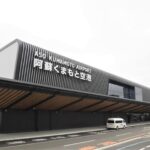
The airport also has a post-2023 terminal context: the official airport news announced the new passenger terminal opening on March 23, 2023. For travelers, that means the airport day can be more than waiting for one aircraft movement. You can combine the deck, terminal food or shops, and a realistic onward route.
Start on the 4F observation deck
Use the 4F observation deck as the first stop if aircraft watching is the theme. The airport lists the deck in the Passenger Terminal Building 4F and gives business-hour information on the official page, while also noting that terminal hours can change with flight schedules or delays. Treat that as a same-trip check, especially if you are visiting early, late, or around weather disruption.
Keep the viewing plan simple. Stay inside official public areas, leave space for other visitors, and avoid tripods or equipment that blocks circulation. Do not use restricted roads, private land, or drone flights to chase a better angle.
Decide between Kumamoto city and rail connection
The official access and FAQ pages give two useful cityward patterns. One is the limousine bus into Kumamoto city. The FAQ says Kumamoto Station city-center buses use bus stop 4, while the Airport Special Rapid Bus to Sakuramachi Bus Terminal uses bus stop 3. The other pattern is the Airport Liner shared taxi to Higo-Otsu Station, followed by JR toward Kumamoto Station.
Do not hard-code those as permanent route instructions. The official access table and FAQ are the right place to check current platforms, fares, times, and reservation rules. The FAQ also notes that limousine buses generally depart on time even if flights are delayed, while the final limousine bus may wait for the final flight. Leave margin if a train, hotel check-in, or event time matters.
Use Aso routes only when the timing is kind
Kumamoto Airport can also point toward Aso-area travel. The official access page lists Aso-related options such as Aso Station, Kurokawa Hot Spring, Aso Sanjo Terminal, and Takamori Station-related services. That makes the airport useful for visitors who want aviation plus mountain-country movement, but it also raises the update burden.
If your main goal is plane watching, keep the Aso add-on modest. If your main goal is Aso, make the deck a bonus. Mountain routes, bus seats, road conditions, weather, and onward return options need official checks close to the travel date.
Simple first-time plan
| Step | What to do | Why it works |
|---|---|---|
| 1 | Check official flight, deck, weather, bus, and Airport Liner information before leaving | Kumamoto routes are useful, but timing and platforms are high-update |
| 2 | Start with the 4F observation deck | It is the official safe viewing anchor for aircraft watching |
| 3 | Add terminal food, shops, or a short rest | The terminal can carry the plan if aircraft movements are quiet |
| 4 | Choose city bus, Airport Liner plus JR, or Aso-area bus after rechecking current details | Each route solves a different travel problem |
| 5 | Keep a backup route | Traffic, weather, and full services can affect the day |
What to check before going
- Official 4F observation-deck information, including hours, restrictions, renovation, weather, and security notices.
- Official flight information if aircraft viewing is the main reason for your visit.
- Kumamoto city bus platform, timetable, fare, and operator information.
- Airport Liner information for Higo-Otsu / Ozu Station and the JR connection onward to Kumamoto Station.
- Aso-area bus options, mountain weather, seat availability, and last return route if going beyond the airport.
- Taxi, rental-car, parking, and road conditions if you are not using public transport.
Where this fits in the transport hub
Use this as a central Kyushu airport branch of the Japan Transport Fan Travel Guide. It pairs naturally with Fukuoka, Kitakyushu, Oita, Saga, and Nagasaki airport-area plans, but Kumamoto is especially useful when your day needs a bridge between aircraft viewing, Kumamoto city, and Aso-area movement.
Photo credit
Featured image: Kumamoto Airport 2023 by hyolee2 on Wikimedia Commons, CC BY-SA 4.0. Cropping or resizing may be applied for site display. The image is used in editorial transport-travel-guide context and does not imply endorsement by the photographer, Wikimedia, Aso Kumamoto Airport, Kyushu Kumamoto International Airport, airlines, bus operators, taxi operators, or local authorities.
Sources
- Aso Kumamoto Airport: observation deck
- Aso Kumamoto Airport: access information
- Aso Kumamoto Airport: FAQ
- Aso Kumamoto Airport: new passenger terminal opening notice
- Wikimedia Commons image file and license record
Editorial disclosure: This is an independent planning guide. It is not affiliated with Aso Kumamoto Airport, Kyushu Kumamoto International Airport, airlines, bus operators, taxi operators, rental-car companies, Wikimedia, or the photographer.