Make Randen the slower way into Arashiyama
Short answer: Randen is best for travelers who want a Kyoto rail experience as part of the day, not only the fastest way to Arashiyama. Use it as a short tram ride plus one careful walk: Arashiyama Station, Togetsu-kyo Bridge, a bamboo-grove manners check, and maybe one quieter side stop.
Last checked: August 28, 2026. Timetables, fares, passes, transfer routes, station facilities, crowd conditions, attraction hours, and local requests can change. Always confirm current details on Keifuku Electric Railroad and Kyoto City official pages before you go.
Choose your first Randen plan
| Plan | Best fit | Check first |
|---|---|---|
| Subway plus Randen | Kyoto Station travelers who want to avoid the most crowded bus approach | Kyoto official route guide, subway transfer, Randen timetable |
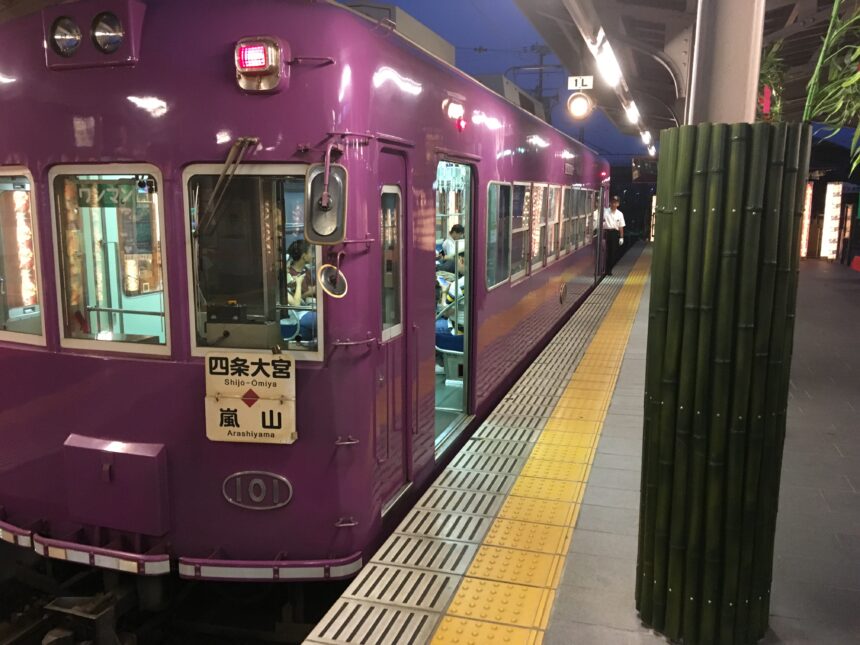
| Shijo-Omiya to Arashiyama | Rail fans who want the classic Randen ride from the city side | Keifuku timetable, crowding, IC/ticket rules, last return |
| Arashiyama station walk | First-time visitors who want the bridge, station area, and a light bamboo-grove visit | Kyoto area information, crowding, local manners |
| Kitano Line branch | Repeat visitors who want temples and a calmer rail day away from the busiest core | Transfer at Katabiranotsuji, temple hours, return route |
What Randen is
Kyoto City’s official tourism article describes the Keifuku Line, known as Randen, as having two branches: the Arashiyama Main Line and the Kitano Line. It also frames Randen as local public transport used by residents for daily life, commuting, and school, not just a tourist attraction.
That matters for planning. Randen is charming because it feels close to the street and neighborhood, but it is still public transport. Keep luggage compact, let local riders board and exit first, and avoid turning small platforms or doorways into photo spots.
The easiest access: subway to Randen-Tenjingawa
Kyoto City Official Travel Guide proposes a route from Kyoto Station to Arashiyama using the subway and Randen. The route goes by subway to Uzumasa Tenjingawa, then transfers at street level to Randen-Tenjingawa for the ride to Arashiyama. The page presents this as a way to spread visitors across different routes instead of concentrating everyone on the same crowded access path.
This is a good first plan if you are starting from Kyoto Station and want a rail day without relying on buses. Follow current station signs, check the official route before travel, and use crosswalks and signals around Randen-Tenjingawa. Kyoto’s guide specifically warns visitors to obey traffic signals and cross only at crosswalks even if a train is about to arrive.
The classic rail-fan ride: Shijo-Omiya to Arashiyama
If your main interest is the tram itself, start from Shijo-Omiya. Keifuku’s official route and timetable page lists Randen stations, transfer information, station facilities, and notes that road conditions or crowding can affect operation. Use that page for the current timetable and station details rather than relying on a saved screenshot. This article should guide the rail walk, not replace the operator’s live timetable.
The Shijo-Omiya route works best when you are already in central Kyoto or using Hankyu to reach the Omiya area. Kyoto’s official access page calls the Keifuku Railway route atmospheric and notes that bus travel from busy central areas can be crowded or time-consuming. Treat the ride as part of the experience, not only a transfer.
Arriving in Arashiyama
Kyoto’s official access page explains that after exiting Keifuku Arashiyama Station, visitors can turn left and walk a few minutes toward Togetsu-kyo Bridge. That makes the station a strong rail-walk anchor: arrive by tram, orient yourself, then choose one walking direction instead of trying to cover every famous site at once.
For a first visit, keep the plan simple. Walk the station area and bridge, then decide whether you still want the bamboo grove, a temple, food, or a quieter side street. If the station area is packed, slowing down or choosing a side stop can make the day better than pushing into the densest photo line.
Bamboo grove and local manners
Kyoto’s Saga and Arashiyama area page says the bamboo forest and Togetsu-kyo Bridge are famous and often crowded with visitors trying to take photos. The same page asks visitors not to damage bamboo, and Kyoto’s official news page warns that graffiti and carving harm the grove and the wider landscape.
Respect Kyoto’s visitor guidance is simple: preserve the bamboo grove and treat the area with care. Do not carve, write on, touch, shake, or damage bamboo. Do not block narrow paths for photos. Do not leave trash. If the main path is too crowded, use Randen as the memorable part of the day and let Arashiyama be a shorter walk rather than a forced checklist.
When to add the Kitano Line
Randen becomes more interesting on a repeat Kyoto trip when you use the Kitano Line. Kyoto’s Randen tourism article notes that the Kitano Line is dotted with greenery and famous temples, and the operator’s route page shows the transfer pattern through Katabiranotsuji. This can support a slower temple-and-rail day without making Arashiyama carry the whole itinerary.
For first-time visitors, the Kitano branch is optional. Add it only when you have enough time to check temple hours, return routes, and station access. A relaxed two-anchor day is usually better than a route that looks efficient on a map but leaves no room for crowds, weather, or simple wandering.
Simple first itinerary
Start from Kyoto Station, take the subway to Uzumasa Tenjingawa, transfer carefully to Randen-Tenjingawa, and ride to Arashiyama. Walk from Randen Arashiyama Station toward Togetsu-kyo Bridge, then choose one add-on: bamboo grove with strict manners, a temple visit, a food stop, or a quieter walk away from the densest area. If you are starting near Omiya, use Shijo-Omiya instead.
For the wider transport branch, start with Japan Transport Fan Travel Guide. For related rail-walk ideas, see Tokyo Tram Walks for First-Time Visitors, Enoden and Kamakura Rail Walk for First-Time Visitors, and Scenic Railways in Japan for First-Time Visitors.
Photo credit
Featured image: Arashiyama Station, Randen, Keifuku Railway, Kyoto by Fabio Achilli / travelourplanet.com on Wikimedia Commons, CC BY 2.0. Cropping or resizing may be applied for site display. The image is used in editorial Kyoto rail-travel-guide context and does not imply endorsement by Keifuku Electric Railroad, Kyoto City, Wikimedia, Flickr, the photographer, staff, or passengers.
Sources
- Keifuku Electric Railroad: Randen route map and timetable
- Kyoto City Official Travel Guide: Subway and Randen route to Arashiyama
- Kyoto City Official Travel Guide: Comfortable access to Saga/Arashiyama
- Kyoto City Official Travel Guide: Saga & Arashiyama
- Kyoto City Official Travel Guide: Respect Kyoto
- Kyoto City Official Travel Guide: Please Do Not Damage Bamboos
- Kyoto City Official Travel Guide: Randen and sustainable tourism
- Wikimedia Commons image file and license record
Editorial disclosure: This is an independent planning guide. It is not affiliated with Keifuku Electric Railroad, Kyoto City, Kyoto City Tourism Association, Wikimedia, Flickr, the photographer, railway operators, staff, passengers, temples, shrines, or local facilities.