Izu Oshima by bus
Oshima Suna-no-hama by Bus Guide
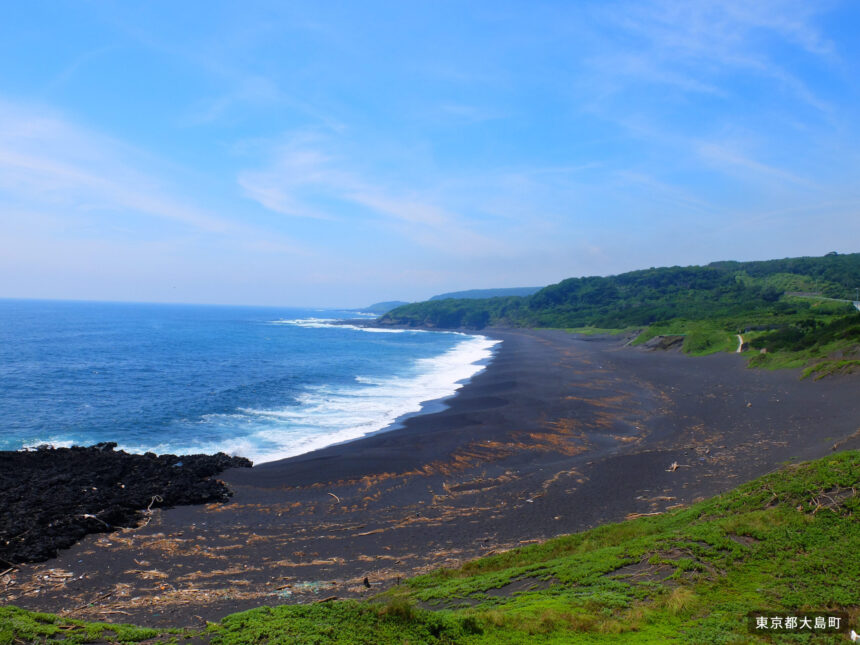
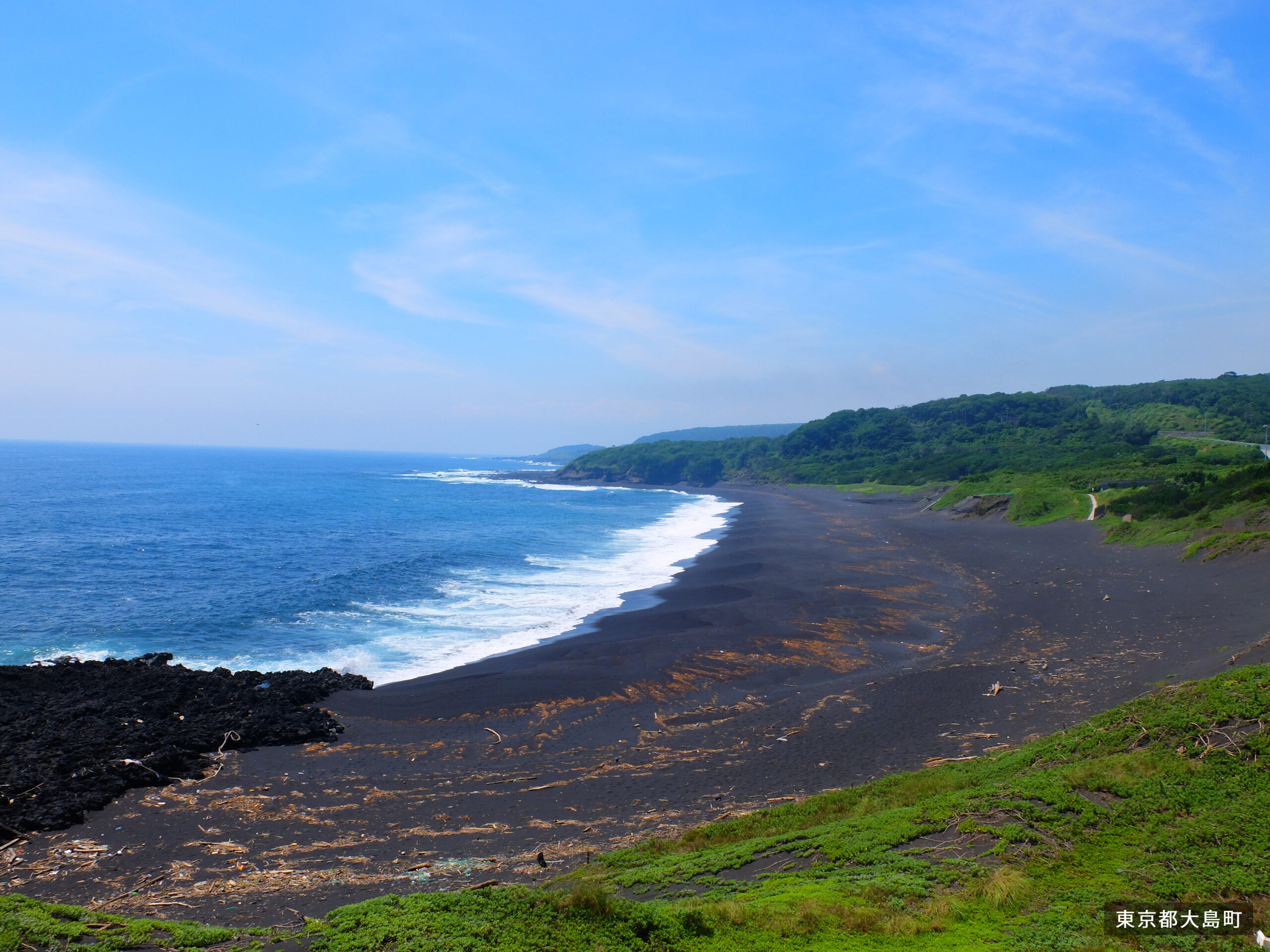
Suna-no-hama is one of Izu Oshima’s most striking short bus-side landscapes: a long black-sand beach shaped by volcanic material, waves, and wind. It is not a beach to treat casually as a swimming stop. It works best as a quiet scenic detour on the Habu Port Line, planned with an official timetable check, a return-bus buffer, and enough respect for rough sea conditions.
Quick Answer
Use Oshima Bus’s Habu Port Line and get off at Suna-no-hama Entrance. Oshima Bus lists the walk from the stop as about 5 minutes. Before you go, check the current Habu Line timetable and route map on the official Oshima Bus route-bus page, because the useful question is not only how to get there, but how you will leave after a short beach visit.
Why This Stop Matters
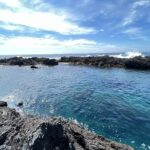
The official Izu Oshima Geopark English page calls the place Sanohama Beach and describes a black beach formed by volcanic ash, volcanic sand, and eroded volcanic rock washed down through valleys. The same official page describes it as a black long beach of about 1 km, with views toward the Izu Islands.
That geology is the point of the visit. The beach gives transport fans a useful kind of Izu Oshima stop: it is close enough to a bus route to add to a port-day itinerary, but the atmosphere feels different from a timetable-only transfer. You are using a rural island bus to reach a volcanic shoreline, then building your day around the next departure.
Route Basics
For a normal public-transport visit, start with Oshima Bus’s official route-bus page. As checked on August 21, 2026, the posted route-bus timetable period was July 1 to September 30, 2026, and the page linked the route-bus timetable and island map, route map, fare table, and Habu Line summary timetable.
On the sightseeing page, Oshima Bus lists Suna-no-hama on the Habu Port Line, with Suna-no-hama Entrance as the stop and a 5-minute walk from the stop. Use those details as your structure, then confirm the current PDF before travel. If you are arriving by large ship in the early morning, Oshima Bus also notes connection buses for major directions, but their departure timing can vary with ship arrival, so do not plan that transfer as if it were a fixed city schedule.
How Long To Spend
For most first-time visitors, Suna-no-hama is a short scenic stop rather than a half-day destination. A practical visit might include the walk from the stop, time to look at the black sand and Izu Islands view, photos from a safe distance from the water, and a comfortable walk back before the return bus. If your next bus is soon, skip the beach approach and protect the onward connection.
Because bus frequency on island routes can be limited, decide your exit plan before stepping away from the road. Download or save the current Oshima Bus PDF while you have a connection, check whether your next bus is toward Motomachi, Habu Port, or another transfer point, and give yourself a weather buffer.
Safety And Weather Notes
Do not treat Suna-no-hama as a swimming beach. Oshima Bus’s sightseeing description notes strong wind and waves and says it is not suitable for swimming. The official geopark page also notes that the black sand absorbs a lot of heat in summer, enough to burn your feet. Closed shoes or sandals that handle heat and sand are more realistic than bare feet on a sunny day.
On windy days, this is still a good viewpoint, but it may not be a comfortable place to linger. Stay well back from the surf, avoid climbing unstable edges, and do not disturb wildlife. The geopark page notes that sea turtles lay eggs there, but travelers should treat that as a reason to be careful, not as a promise of something to see.
Fare And Payment Planning
Oshima Bus’s official route-bus page listed one-day passes at 2,500 yen for adults and 1,250 yen for children, and two-day passes at 3,800 yen for adults and 1,900 yen for children, valid on all routes, as checked on August 21, 2026. The same page says these passes are sold at the Oshima office, on route buses, at departure-port waiting-room bus windows during morning-arrival periods, and through the Jorudan app.
Payment matters because this is not an urban IC-card ride. Oshima Bus’s FAQ says Suica and PASMO are not accepted, while cash and PayPay are accepted. The FAQ also says on-bus change is available only for 50 to 500 yen coins and 1,000 yen notes. Carry small cash even if you expect to use a pass or PayPay.
Good Pairings
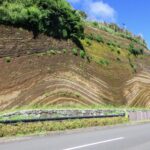
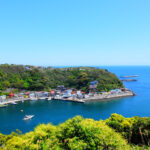
Suna-no-hama pairs naturally with other Habu Port Line stops. If you are already visiting the Oshima strata section, you can think of Suna-no-hama as the shoreline counterpart: one stop is a roadside wall of layered eruption history, the other is black volcanic material at the sea. Habu Port can also make sense on the same route, especially if you want an old port-town walk rather than only landscape stops.
The important constraint is the return bus. Build the day from official bus times first, then choose the scenery. That order keeps the trip relaxed and avoids turning a beautiful black-sand beach into a missed-connection problem.
Before You Go Checklist
- Check the current Habu Line timetable on the official Oshima Bus route-bus page.
- Confirm which direction your return bus goes: Motomachi, Habu Port, or another transfer point.
- Carry small cash, because Suica and PASMO are not accepted on Oshima Bus.
- Bring footwear that can handle hot black sand in summer.
- Skip swimming plans and stay back from rough surf.
Sources
- Oshima Bus sightseeing information
- Oshima Bus route-bus timetables, maps, fares, and passes
- Oshima Bus FAQ
- Izu Oshima Geopark: Sanohama Beach
- Tokyo Metropolitan Government UMISORA Oshima bus timetable FAQ
- Izu Oshima Photo Studio source image and terms
Editorial disclosure: This guide was prepared from official transport, geopark, local-government, and source-image pages checked on August 21, 2026. Timetables, fares, payment rules, and route operations can change, so check the official Oshima Bus page before travel.