Make the station part of the journey
Short answer: ekiben are one of the easiest ways for rail fans to turn a Japan train ride into a food experience. Buy a regional box lunch at the station, save it for a shinkansen or limited express journey, and treat station food as part of the route rather than a rushed snack grabbed after boarding.
Last checked: August 28, 2026. Ekiben shops, product lineups, prices, labels, allergy information, campaign pages, and station facilities can change. Always confirm current details at the station, shop, railway operator, or official source before relying on a specific item.
Best first patterns
| Plan | Best for | Check first |
|---|---|---|
| Tokyo Station starter | First-time visitors who want many regional options in one major station | Shop location, crowding, train platform, and departure time |
| Regional station pick | Travelers who want the food to match the place they just visited | Local specialty, package photo, ingredients, and availability |
| Scenic rail lunch | Rail fans riding shinkansen, limited express, or longer reserved-seat trains | Train type, seat space, trash plan, and whether eating is appropriate |
| Station food without eating onboard | Travelers on local or crowded city trains | Eat before boarding, use station dining, or take food to hotel |
What makes ekiben different
JNTO describes ekiben as boxed meals made for on-the-go train eating, shaped by Japan’s railway network and regional food culture. The fun is not only the food itself. It is the match between place, train, packaging, timing, and view from the window.
JR East’s Ekiben Grand Prix describes ekiben as station-sold lunch boxes for long-distance train travel, often showcasing local flavors, specialties, seasonal ingredients, and creative recipes. For rail fans, that makes ekiben a small map of the journey: seafood in one region, beef in another, mountain vegetables elsewhere, and packaging that sometimes becomes a souvenir.
Where to buy without overthinking it
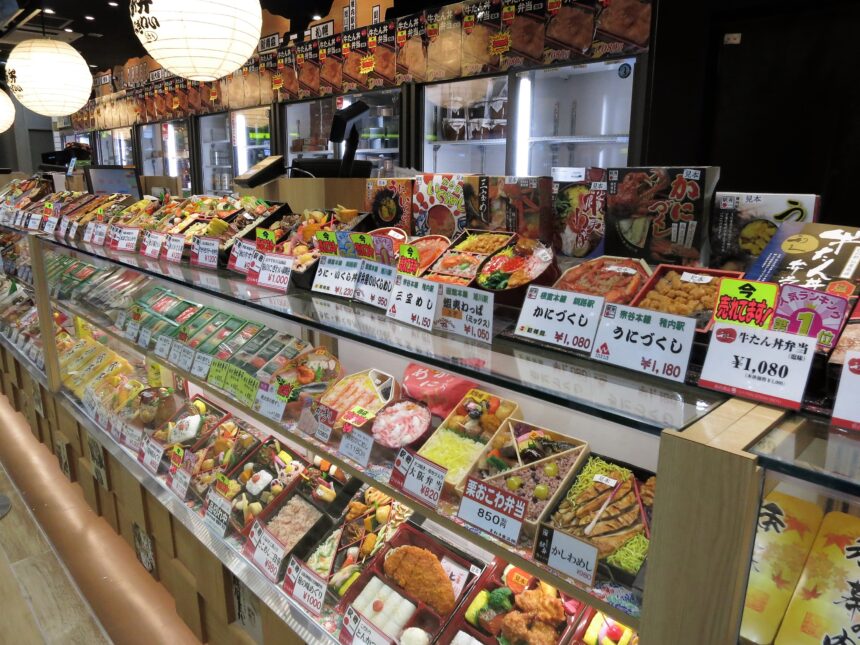
Large stations usually give beginners the easiest start. JNTO notes that larger stations have many shops selling ekiben from several regions, while smaller stations often have local specialties sold from a glass cabinet or nearby counter. That means there are two good strategies: use a major station for choice, or use a regional station for place-specific memory.
Do not build a tight itinerary around one exact box unless you have checked current information. Popular items can sell out, shops can move, campaigns can end, and product names may be difficult to match in English. Use photos, allergen labels, staff help, and time buffer. If you are carrying large luggage, buy after you know your platform and train.
Choose the right train for eating
JNTO’s guidance is practical: eating and drinking are acceptable on long-haul express trains such as shinkansen and other super express trains, but short-distance local trains are not set up for meals and can become crowded. That is the manners rule that matters most.
For rail fans, the best ekiben ride is usually a reserved-seat or long-distance segment where you can sit calmly, open the box, keep the tray steady, and manage trash. Avoid spreading food across shared seats, using strong-smelling items in a crowded car, or balancing drinks where they might spill. If the train feels like a commuter service, save the food for later.
Food and allergy cautions
Ekiben can be difficult for travelers with allergies or strict diets. JNTO notes that many ekiben feature beef, pork, fish, local vegetables, and rice, and that gluten-free options can be rare because many dishes may involve soy sauce. Vegetarian, vegan, halal, seafood-free, or gluten-free travelers should treat every box as something to verify, not assume.
Look for pictograms, ingredient labels, and staff assistance, but keep a backup meal plan. If you cannot confirm an ingredient, do not gamble on a long train ride. Station convenience stores, bakeries, rice balls, or eating before boarding may be safer than choosing a beautiful but unclear ekiben.
How to make it a rail-fan ritual
- Arrive early enough to browse without rushing the train.
- Choose a box connected to the region, route, or station.
- Take a quick photo before opening, without blocking the shop or platform.
- Eat on a suitable long-distance train, not a crowded local service.
- Keep trash sealed until you find the correct bin or can dispose of it later.
- Use the packaging as a memory, but avoid carrying leaky or smelly leftovers.
Where this fits the transport branch
For rail-focused days, pair ekiben with Scenic Railways in Japan for First-Time Visitors or Vintage Trains and Railway Heritage in Japan. For the broader overview, start with Japan Transport Fan Travel Guide.
The best first win is simple: choose one train ride where eating is appropriate, buy one regional box with enough time, and let the station become part of the story. This guide explains the station-food habit; it does not maintain a live product, campaign, or price list.
Photo credit
Featured image: Train station box lunches in Japan called eki ben by Gpwitteveen on Wikimedia Commons, CC BY-SA 4.0. Cropping or resizing may be applied for site display. The image is used in editorial railway-food travel-guide context and does not imply endorsement by stores, product makers, station operators, Wikimedia, or the photographer.
Sources
- JNTO / Travel Japan: Experience Japan’s Local Ekiben Culture
- JR-EAST EKIBEN Grand Prix 2025
- JR East Cross Station: Foods business
- Wikimedia Commons image file and license record
Editorial disclosure: This is an independent planning guide. It is not affiliated with JNTO, JR East, JR East Cross Station, ekiben makers, station operators, stores, Wikimedia, or the photographer.