Keep Fukuoka Airport simple
Short answer: the best Fukuoka Airport plan for aviation fans is the Domestic Terminal observation decks first, then food or terminal time, with the subway or shuttle checked before you move anywhere else. Fukuoka Airport is close to the city, but that does not make tight layovers safe.
Last checked: August 20, 2026. Observation-deck access, terminal routes, shuttle buses, subway access, shop and restaurant hours, security rules, flight operations, and weather can change. Always confirm current details on official Fukuoka Airport pages before you go.
Choose your first Fukuoka Airport plan
| Plan | Best fit | Check first |
|---|---|---|
| Domestic deck only | First-time aviation fans, short airport visits, families, and travelers who want the safest aircraft-viewing anchor | Observation deck access, weather, crowding, terminal map |
| Deck plus terminal food | Arrivals, departures, and visitors who want a low-risk airport outing before or after a flight | Restaurant directory, public/secure area, last order, queue time |
| Domestic to international transfer | International passengers using subway or domestic terminal facilities first | Free shuttle route, stops, baggage, check-in deadline |
| Airport plus city | Travelers with a long buffer, light luggage, and a clear return route | Subway, return time, weather, luggage storage, flight buffer |
Why Fukuoka Airport works well
Fukuoka Airport is unusually practical because the Domestic Terminal connects directly to the Fukuoka City Subway. The official airport access page says the airport is located near the city center and that the Domestic Terminal is connected to the subway, making access convenient for Fukuoka and the rest of Kyushu.
That convenience is exactly why the airport works as a light aviation day. You do not need to chase risky roads or informal fence lines. Start with the official domestic observation decks, add terminal food or shopping if you want a break, and keep enough time to return to your departure flow.
Start with the Domestic Terminal observation decks
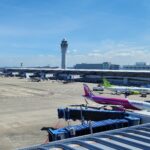
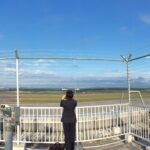
Fukuoka Airport’s official observation-deck page lists domestic observation decks on the 3rd and 4th floors, plus international send-off decks on the 4th floor north and south sides. For most aviation fans, the domestic decks are the easiest first choice because they connect naturally with subway access, terminal food, and domestic arrival or departure flows.
Fukuoka Prefecture’s official travel guide describes the Domestic Terminal as having an observation deck where visitors can watch planes take off and land up close, across the 3rd and 4th floors. It also notes chairs, benches, and tables. Treat that as a visitor-friendly space, not a guaranteed aircraft show. Weather, runway use, flight schedules, delays, construction, and crowding can change the experience quickly.
Use the terminal as the add-on
The best add-on is still inside the airport. The prefectural travel guide points to terminal features such as the Information Square near the observation deck, food, gifts, and airport displays. The official airport Eat & Shop page should be your current directory because restaurant locations, public-side access, hours, queues, and menus change more often than a travel article can stay fresh.
If you are not boarding soon, confirm whether a restaurant or shop is before security or after security. If you are departing, protect your flight first. A good aviation day at Fukuoka Airport is one where you enjoy the deck, eat something local, and still reach baggage, check-in, security, immigration, and boarding calmly.
Subway access is useful, but do not overread it
Fukuoka Airport’s official first-time visitor page says the subway from Hakata Station reaches the domestic terminal in about 5 minutes, and from Tenjin in about 10 minutes. It also warns that the subway is not directly connected to the international terminal. The official subway page says Fukuoka-kuko Station is directly connected by escalator to the south side of the Domestic Terminal.
That makes the domestic side easy, but international passengers still need to think. If you are going to the International Terminal, the official guidance says to get off at Fukuoka Airport Station in the Domestic Terminal Building and take the free shuttle bus to the International Terminal. Build in time for the shuttle, luggage, check-in counters, immigration, and unexpected queues.
Photo and safety manners
Stay in official public areas: observation decks, terminal public spaces, signed shuttle stops, subway routes, bus stops, taxi areas, and ordinary visitor paths. Do not approach cargo areas, service roads, airport fences, staff-only doors, parking-lot edges, helipad areas, or residential streets just because a map looks close to the runway.
Be careful with large lenses, tripods, children, crowded deck railings, and people waiting for passengers. Do not block traffic, point bright lights toward aircraft, fly drones, climb objects, or photograph staff-sensitive areas in a way that creates problems. If airport staff give instructions, follow them immediately.
When a city add-on makes sense
JNTO notes that Fukuoka Airport’s central location makes Hakata a quick train ride after luggage collection. That is useful if you have a long buffer and a simple bag. It is not a reason to squeeze a city plan into a short connection. For most aviation fans, the better first plan is deck, food, subway check, and a calm return to the correct terminal.
If you do leave the airport, choose one easy destination and set a hard return time. Keep weather, luggage, escalators, station crowds, train disruption, and terminal transfers in mind. The closer an airport is to the city, the easier it is to underestimate the time needed to become a passenger again.
Simple first itinerary
For a light visit, arrive at the Domestic Terminal, check the observation-deck page and terminal map, spend time on the 3rd or 4th floor deck, then use the official shop and restaurant directory for a public-side food stop. If you are international-bound, check the shuttle route before relaxing. If you are city-bound, confirm subway access and your return plan before leaving the terminal.
For the wider transport branch, start with Japan Transport Fan Travel Guide. For related airport planning, see Japan Airports Guide and Nearby Travel Ideas, Plane Spotting in Japan Airports for First-Time Visitors, Haneda Airport Area Guide for Aviation Fans, Narita Airport Area Guide for Aviation Fans, Kansai Airports Compared for Aviation Fans, and Chubu Centrair Airport Area Guide for Aviation Fans.
Photo credit
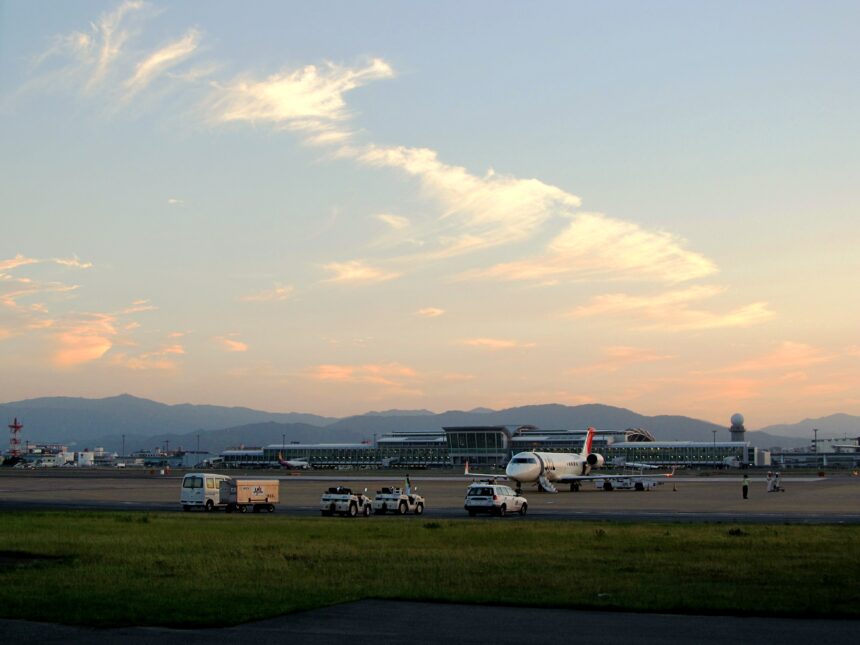
Featured image: Fukuoka Airport by tsuna72 on Wikimedia Commons, CC BY 2.0. Cropping or resizing may be applied for site display. The image is used in editorial Fukuoka Airport aviation-travel-guide context and does not imply endorsement by Fukuoka Airport, airlines, aircraft operators, Wikimedia, Flickr, or the photographer.
Sources
- Fukuoka Airport Official Website: Observation Decks
- Fukuoka Airport Official Website: Access
- Fukuoka Airport Official Website: First-time visitor guidance
- Fukuoka Airport Official Website: Subway
- Fukuoka Airport Official Website: Inter-Terminal Shuttle
- Fukuoka Airport Official Website: Eat & Shop
- VISIT FUKUOKA: Fukuoka Airport terminal guide
- JNTO: Fukuoka Airport access
- Wikimedia Commons image file and license record
Editorial disclosure: This is an independent planning guide. It is not affiliated with Fukuoka Airport, Fukuoka International Airport Co., Ltd., Fukuoka Prefecture, JNTO, airlines, aircraft operators, Wikimedia, Flickr, or the photographer.