Plan for the building, not only the view
Short answer: Himeji Castle is one of Japan’s strongest first-time World Heritage choices, but the visit is more physical than many travelers expect. Before you go, check the official site for current rules, then plan around steep stairs, wooden floors, shoe handling, heat, crowd controls, and enough time to move slowly through a protected cultural property.
Last checked: August 28, 2026. Hours, fees, repairs, ticket rules, visitor limits, queue conditions, heat guidance, illumination, events, and tour availability can change. Confirm the current official Himeji Castle page before travel.
Why Himeji matters
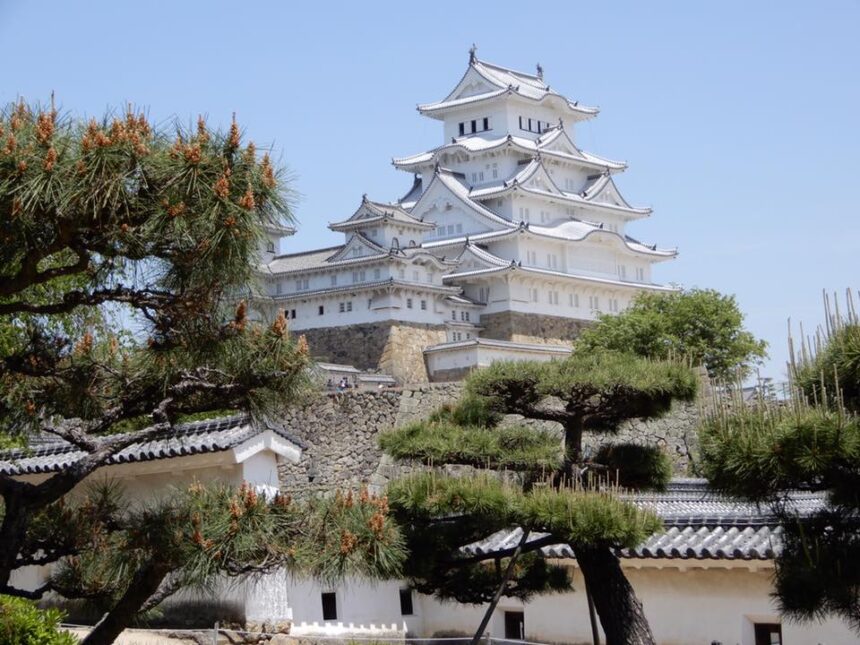
UNESCO inscribed Himeji-jo in 1993 under cultural criteria (i) and (iv). It describes the castle as a major surviving example of early 17th-century Japanese castle architecture, combining wooden construction, defensive systems, white plastered earthen walls, and layered roof forms.
JNTO and local tourism sources often frame the castle through its nickname, White Heron Castle, because of its white exterior and elegant silhouette. That beauty is real, but it is only half the visit. Himeji also rewards travelers who look for gates, walls, turns, narrow passages, and defensive design.
What to check before you go
| Check | Why it matters |
|---|---|
| Current official notices | Repairs, heat guidance, crowd controls, and entry rules can change |
| Main keep access | Entry may involve waiting, limits, narrow passages, and safety controls |
| Footwear and shoe bag | Official guidance asks visitors to handle shoes carefully inside wooden buildings |
| Mobility and stairs | The castle has steep stairs, slopes, gaps, and no elevators inside the tower |
| Weather and heat | There is no air conditioning inside the castle buildings |
| Time buffer | A rushed visit misses both preservation rules and the defensive layout |
The physical visit is real
The official Himeji Castle English site states that there are no air conditioners, elevators, or escalators inside the castle, and it warns visitors about steep slopes, stairs, and gaps. It also notes that the main keep and turrets are not wheelchair accessible. Treat this as important planning information, not fine print.
If your group includes children, older travelers, people with knee concerns, or anyone uncomfortable with steep indoor stairs, decide in advance whether everyone needs to enter the main keep. The exterior views, gates, walls, and nearby garden can still make the trip worthwhile.
How to fit Himeji into a route
Himeji works especially well between Kansai and western Japan. It can be a focused day from Osaka or Kyoto, or a stop on a route toward Okayama, Hiroshima, or the Setouchi area. It is less satisfying as a rushed detour when every hour is already committed.
If your route continues west, compare this castle-focused day with the Hiroshima and Miyajima Heritage Guide. Himeji is the stronger architecture stop; Hiroshima and Miyajima combine peace memorial context, shrine landscape, island access, tide timing, and the Seto Inland Sea.
Keep the plan simple: arrive, walk toward the castle, visit the grounds and main keep if conditions fit your group, then leave time for a slower meal or garden stop. Avoid placing Himeji between two other heavy sightseeing blocks. A castle visit with stairs and queues is not the same as a quick viewpoint.
Preservation etiquette
Himeji Castle is a protected cultural property, not a reconstructed theme attraction. Follow staff instructions, do not touch restricted surfaces, carry shoes as directed, keep food and drinks where allowed, and move carefully on wooden floors and stairs. If photography is restricted in an area, follow the sign even if other visitors ignore it.
The official FAQ explains that main keep restrictions are used for safety, cultural-property protection, and visitor comfort. That is the right frame for the whole visit: the goal is not simply to get inside, but to see the castle without damaging the place or making the route unsafe for others.
Best first-time approach
For a first visit, start with the exterior view from the approach, then move through the gates and walls with the defensive layout in mind. If the main keep is crowded or your group is tired, do not treat skipping the top as failure. Himeji’s value is visible in the full composition: stone walls, plaster, towers, gates, roof layers, and the way the castle dominates the surrounding plain.
Use this guide together with Japan World Heritage Guide for First-Time Visitors. If Kyoto and Nara are your temple-and-ancient-capital anchors, Himeji adds a castle architecture anchor that fits naturally into a western Japan route.
Photo credit
Featured image: Himeji Castle by Floodmfx on Wikimedia Commons, CC0. Cropping or resizing may be applied for site display. This editorial use does not imply endorsement by Himeji Castle, Wikimedia, the creator, UNESCO, JNTO, Himeji City, or site operators.
Sources
- UNESCO World Heritage Centre: Himeji-jo
- JNTO: Himeji Castle (UNESCO)
- JNTO: Himeji Castle
- Himeji Castle Official English Site
- Himeji Castle Official FAQ
- Visit Himeji Official Travel Guide: Himeji Castle
Editorial disclosure: This is an independent planning guide. It is not affiliated with UNESCO, JNTO, Himeji City, Himeji Castle, Visit Himeji, transport companies, or site operators.