Use Nara as a heritage day, not a quick photo stop
Short answer: a first Nara World Heritage visit is best built around one calm walking route. UNESCO’s Historic Monuments of Ancient Nara includes eight component parts: palace remains, five Buddhist temples, Kasuga-Taisha Shrine, and Kasugayama Primeval Forest. Many are near Nara Park, but the whole story is larger than deer and one famous Buddha hall.
Last checked: August 28, 2026. Hours, fees, repairs, reservations, photography rules, forest access, deer guidance, and transport conditions can change. Confirm current official pages before travel.
What UNESCO lists
UNESCO inscribed Historic Monuments of Ancient Nara in 1998 under cultural criteria (ii), (iii), (iv), and (vi). The property reflects Nara’s role as Japan’s capital in the 8th century and includes the Nara Palace Site, Todaiji, Kofukuji, Yakushiji, Toshodaiji, Gangoji, Kasuga-Taisha Shrine, and Kasugayama Primeval Forest.
This mix is important. Nara is not only a temple route. It includes an archaeological palace site, Buddhist institutions, a Shinto shrine, and a protected forest landscape connected to religious tradition.
Do not confuse Nara’s three World Heritage groups
Nara now connects to several separate World Heritage stories. This article focuses on Historic Monuments of Ancient Nara, while UNESCO separately lists Buddhist Monuments in the Horyu-ji Area, Sacred Sites and Pilgrimage Routes in the Kii Mountain Range, and the 2026 Ancient Capitals of Asuka and Fujiwara property. These are related through Nara’s long religious, archaeological, and political history, but they are not the same itinerary.
For a first short visit from Kyoto or Osaka, focus on Historic Monuments of Ancient Nara. Horyuji deserves separate planning. Yoshino, Omine, and the Kii pilgrimage routes are better treated as a mountain and pilgrimage trip, not as an add-on after Nara Park.
Choose the route by energy
| Route | Good for | Planning caution |
|---|---|---|
| Nara Park core | Todaiji, Kofukuji, Kasuga-Taisha, deer, museum or garden time | Large grounds, crowds, stairs, and deer interaction |
| Naramachi plus Gangoji | Slower streets, old-town atmosphere, shorter walking blocks | Small lanes, shop hours, and quiet residential areas |
| Nishinokyo | Yakushiji and Toshodaiji with a less rushed temple focus | Separate transport from the park area |
| Heijo Palace Site | Visitors interested in capital planning and archaeology | Open spaces, weather, and exhibition access |
| Kasugayama forest | Travelers who want nature and sacred landscape context | Trail readiness, weather, shoes, and route rules |
A realistic first-day plan
If you only have one day, keep the plan simple. Start with one major anchor, such as Todaiji or Kasuga-Taisha, then add one nearby partner and a slow walk. Nara Park can take more time than expected because the grounds are wide, deer draw attention, and temple and shrine spaces ask for a calmer pace.
A rushed route can make every site feel the same. A better day might be Todaiji, a pause in the park, Kofukuji or Kasuga-Taisha, and then Naramachi or a quiet meal. If you care about architecture more than park atmosphere, make a separate route for Yakushiji and Toshodaiji instead.
Deer are wild animals
Nara’s deer are famous, but official Nara guidance is clear: they are wild animals. Feed them only the special deer crackers sold for that purpose, do not give them bread, sweets, vegetables, paper, plastic, or trash, and do not tease, chase, grab, or crowd them. Children should be supervised closely.
Also remember that deer may bite, butt, kick, or become aggressive, especially when they expect food or during sensitive seasons. The safest way to enjoy them is to observe calmly, keep bags and maps secure, and step away when a deer becomes pushy.
Respect temples, shrines, and forest space
At temples and shrines, follow posted rules, keep your voice low, and check whether photography is allowed before taking pictures. Some buildings, statues, museum rooms, ceremonies, or worship areas may restrict photography or entry. At forest or trail areas, stay on permitted routes and prepare for weather, footwear, and daylight.
Nara can feel more relaxed than Kyoto, but that does not make it casual. Its major sites are protected cultural properties, religious places, and natural environments.
Use this with the national hub
This article is a child guide of Japan World Heritage Guide for First-Time Visitors. If you are building a Kansai route, compare Nara with Kyoto World Heritage Guide for First-Time Visitors and the Ancient Capitals of Asuka and Fujiwara Guide. Kyoto is denser and more urban. Nara is usually calmer, wider, and more tied to the 8th-century capital and its relationship with Buddhism, Shinto, palace remains, and sacred landscape.
Photo credit
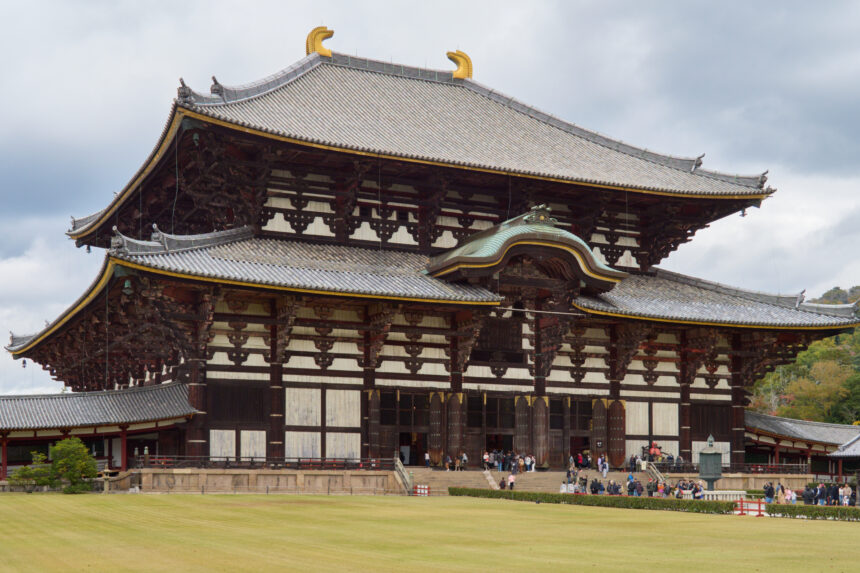
Featured image: Todaiji Daibutsuden in Nara by lumoplank on Wikimedia Commons, CC0. Cropping or resizing may be applied for site display. This editorial use does not imply endorsement by Todaiji, Wikimedia, the creator, UNESCO, JNTO, Nara tourism bodies, or site operators.
Sources
- UNESCO World Heritage Centre: Historic Monuments of Ancient Nara
- JNTO: The Historic Monuments of Ancient Nara
- Official Nara Travel Guide: World Heritage
- UNESCO World Heritage Centre: Ancient Capitals of Asuka and Fujiwara
- Official Nara Travel Guide: For First-Time Visitors
- Nara Travelers Guide: Why are there deer in Nara Park?
- Official Nara Travel Guide: Nara’s Sacred Deer
Editorial disclosure: This is an independent planning guide. It is not affiliated with UNESCO, JNTO, Nara tourism bodies, temples, shrines, deer-protection organizations, transport companies, or site owners.