Start with the new World Heritage story
Short answer: Ancient Capitals of Asuka and Fujiwara is Japan’s newest cultural World Heritage property, inscribed in 2026. It is best for travelers who want to understand the early formation of Japan through archaeology, temple history, palace sites, burial mounds, and quiet Nara Basin landscapes rather than through one large surviving building.
Last checked: August 28, 2026. Site access, museum displays, bus routes, cycling services, opening hours, event information, component visibility, photography rules, and local visitor guidance can change. Confirm current details on official UNESCO, Asuka-Fujiwara, Nara Prefecture, municipal, transport, temple, museum, and facility pages before travel.
What UNESCO inscribed
The UNESCO World Heritage Centre lists Ancient Capitals of Asuka and Fujiwara as a cultural property inscribed in 2026 under criteria (ii) and (iii). UNESCO places it in the southern part of the Nara Basin and describes Asuka and Fujiwara as two ancient capitals that marked the establishment of a centralized state system modeled on ritsuryo, the codified legal and administrative system introduced through East Asian exchange.
The property has 19 component parts. UNESCO groups them as palaces and government offices, Buddhist temples, and mounded tombs. The sites preserve archaeological evidence for the Asuka Capital from 588 to 694 CE and the Fujiwara Capital from 694 to 710 CE. This makes the area especially useful for travelers who want to connect early Buddhism, court government, burial culture, and later capitals such as Nara and Kyoto.
Why it feels different from Kyoto or Nara
Do not expect Asuka and Fujiwara to feel like a single monument with one ticket gate. This is an archaeological landscape. Some parts are temple grounds, some are open ruins, some are tombs, some need museum context, and some make more sense after you have read a map or walked the surrounding fields.
That difference is the point. Kyoto often teaches travelers through buildings, gardens, and streets that still hold later court and temple culture. Historic Monuments of Ancient Nara teaches through major temples, shrines, and forested sacred space. Asuka and Fujiwara reaches further back, showing the transition toward state formation before Nara became the better-known ancient capital.
Asuka, Fujiwara, and Asuka-dera
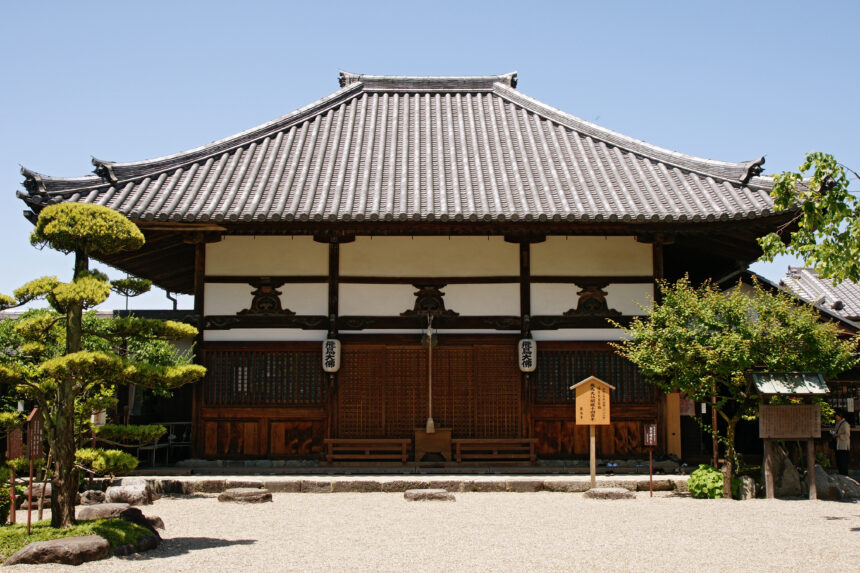
UNESCO notes that the Asuka capital was established at the site of Asuka-dera, described on the UNESCO page as the first Buddhist temple in Japan. For visitors, that gives the area a strong opening theme: Buddhism was not simply added to an existing tourist landscape. It was part of the political, cultural, and international transformation of the age.
Fujiwara adds another layer. The official Asuka-Fujiwara site explains that the late sixth to early eighth century was when a unified state with centralized government based on ritsuryo codes came into being in the southern Nara Basin. The area is not only about one temple or one tomb; it is about the repeated movement and shaping of capitals, institutions, rituals, and landscapes.
How to plan a first visit
| Traveler goal | Best approach | Check first |
|---|---|---|
| Understand the inscription | Start with UNESCO and the official Asuka-Fujiwara site before choosing stops | Component names, maps, visitor notices, and current access |
| Walk the landscape | Use a compact route around Asuka Village or Fujiwara-kyo context | Weather, distance, toilets, food stops, buses, and cycling rules |
| See temple history | Connect Asuka-dera with nearby archaeological context | Temple hours, entry rules, photography, and quiet behavior |
| Travel with children or older adults | Choose fewer sites and add museum or rest time | Walking distance, steps, shade, seating, and transport gaps |
| Add it to Nara | Treat it as a separate half-day or day, not a rushed add-on after Todaiji | Rail/bus timing, last return, luggage, and meal options |
Use museums and maps
Because many remains are archaeological rather than vertical buildings, a map and museum context can make the difference between “field with stones” and “ancient capital.” Nara Prefecture’s English Asuka and Fujiwara walking page groups the area into sites, Buddhist temples, mounded tombs and mausoleums, massive stones, and local context. It also points travelers toward viewpoints such as Amakashi-no-oka Hill, where the change in scenery toward the Fujiwara-kyo plain can help the geography make sense.
For a first visit, resist the urge to cover every component. Choose one historical question: early Buddhism, palace sites, tombs, Fujiwara-kyo scale, or the transition toward Nara. Then build a route that gives that question enough time.
Respectful visitor rules
This area includes religious places, protected archaeological remains, tomb-related sites, quiet village roads, farm scenery, and places where local life continues. Stay on permitted paths, do not enter fields or restricted archaeological areas, and avoid climbing on stones, foundations, railings, mounds, or garden features for photos. Keep voices low at temples and around graves or mausoleum-related places.
Ask before photographing people. Follow signs around temple interiors, museum rooms, excavation displays, and private property. If a place looks open but is not clearly a public path, do not treat it as public access just because it appears on a map.
Best route logic
Asuka and Fujiwara works best as a slow culture day from Nara, Osaka, or Kyoto, depending on your base and route. Use official transport information close to the travel date, because rural buses, community buses, rental cycles, weather, and return timing are more important here than they are for a station-front museum.
If you are already planning the classic Nara temples, give Asuka and Fujiwara a separate slot. It is close in theme but different in pace. A rushed route after Todaiji, Kasuga Taisha, and Nara Park will make the archaeological sites feel smaller than they are. A dedicated morning or day lets the landscape speak.
How it fits the wider Japan trip
Use this guide with the Japan World Heritage Guide for First-Time Visitors and the Classic Japan Guide for First-Time Visitors. If you are comparing it with the better-known Nara temples, read Nara World Heritage Guide for First-Time Visitors first, then decide whether you want major temple architecture, early-capital archaeology, or both.
Photo credit
Featured image: Asuka-dera, Asuka, Nara Prefecture by 663highland on Wikimedia Commons, used under CC BY-SA 3.0. Cropping or resizing may be applied for site display. The credit identifies the source image only and does not imply endorsement by the creator, Wikimedia Commons, Asuka-dera, UNESCO, Nara Prefecture, the Asuka-Fujiwara promotion council, any temple, museum, local government, operator, or cultural organization.
Sources
- UNESCO World Heritage Centre: Ancient Capitals of Asuka and Fujiwara
- UNESCO World Heritage Centre: Japan
- Ancient Capitals of Asuka and Fujiwara official site
- Ancient Capitals of Asuka and Fujiwara: About World Heritage
- Nara Prefecture: Asuka and Fujiwara Walking Around
- Permanent Delegation of Japan to UNESCO: Inscription announcement
- Ministry of Foreign Affairs of Japan: Inscription press release
- Wikimedia Commons image file and license record
Editorial disclosure: This independent guide is not affiliated with or endorsed by UNESCO, JNTO, Nara Prefecture, the Asuka-Fujiwara promotion council, Asuka-dera, any temple, museum, local government, transport operator, Wikimedia Commons, or the photographer. Always confirm current access, opening, route, safety, and visitor rules on official sources before travel.