Plan two very different heritage visits
Short answer: Hiroshima and Miyajima work well together because Hiroshima Prefecture has two powerful World Heritage experiences: the Hiroshima Peace Memorial, also known as the Genbaku Dome, and Itsukushima Shinto Shrine on Miyajima. They can fit into one long route, but they should not be treated as the same kind of sightseeing.
Last checked: August 28, 2026. Museum hours, ferry schedules, tide timing, shrine entry, ropeway operations, event dates, crowd control, photography rules, and local visitor guidance can change. Confirm current details on official UNESCO, JNTO, Hiroshima, Miyajima, shrine, museum, ferry, railway, and facility pages before travel.
Why these two sites belong together
UNESCO inscribed both Hiroshima Peace Memorial (Genbaku Dome) and Itsukushima Shinto Shrine in 1996, but their meanings are very different. The Genbaku Dome is a preserved ruin connected to the atomic bombing of Hiroshima on August 6, 1945. Itsukushima Shrine is a Shinto shrine landscape on Miyajima where architecture, sea, and mountain scenery are part of the cultural value.
That contrast makes the pair strong for travelers. One asks for quiet attention to memory, loss, peace, and nuclear history. The other asks for attention to religious landscape, tide, mountain, shrine architecture, and the long idea of scenic beauty in Japan.
Hiroshima Peace Memorial
UNESCO describes the Genbaku Dome as the only structure left standing in the area where the first atomic bomb exploded. It has been preserved in the state immediately after the bombing through the efforts of many people, including the city of Hiroshima. UNESCO frames it as both a stark symbol of destructive force and an expression of hope for world peace and the elimination of nuclear weapons.
For visitors, this means the Peace Memorial should not be planned as a quick photo stop between meals. Give it mental space. If you visit the museum, the park, the cenotaph area, or the Dome, keep the schedule calm afterward. Avoid loud poses, casual jokes, blocked paths, or treating the site as visual content first and history second.
Itsukushima Shrine and Miyajima
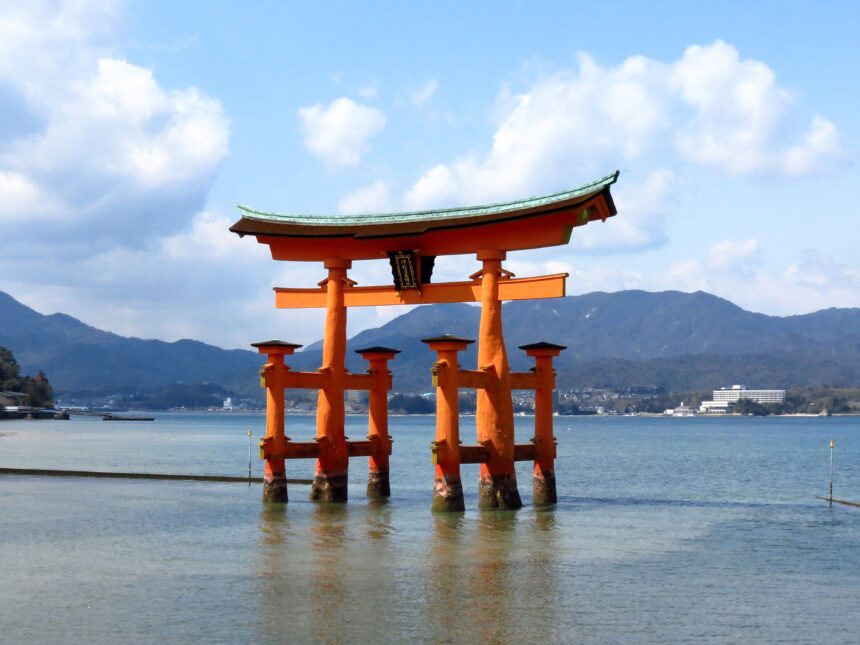
UNESCO describes Itsukushima, in the Seto Inland Sea, as a holy place of Shintoism since the earliest times. The first shrine buildings were probably erected in the 6th century, and the current shrine form reflects the 12th-century tradition associated with Taira no Kiyomori. The World Heritage value comes from the composition of shrine buildings, sea, and mountains, and from the concept of scenic beauty that combines nature and human creativity.
JNTO’s Miyajima guidance notes that the shrine appears to float on the water when the tide is in, and that at low tide visitors may be able to walk out to the large torii gate. That makes timing matter, but do not rely on old tide notes in an article. Check the current tide, ferry, shrine, and local guidance before you go.
One day or overnight?
| Plan | Best for | Watch for |
|---|---|---|
| One long day | Travelers with limited time who can start early and keep the route simple | Emotional pacing, ferry timing, meal gaps, crowds, and return transport |
| Hiroshima overnight | Visitors who want the Peace Memorial and museum without rushing | Hotel location, morning museum time, and a calm second day |
| Miyajima overnight | Travelers who want quieter island hours, shrine atmosphere, or Mt. Misen time | Luggage, ferry timing, dinner, lodging rules, and evening access |
| Two separate days | Families, older travelers, photographers, and slow cultural travelers | Extra hotel nights and transport cost, but better pace |
A respectful first route
If you have one full day, a common route is Hiroshima Peace Memorial Park and museum first, then Miyajima in the afternoon or evening. This can work logistically, but the tone shift is large. Some travelers prefer the reverse: Miyajima early, then a focused Peace Memorial visit when they are not worried about ferry returns. There is no single correct order; choose the one that protects attention.
Do not put too much around the Peace Memorial. Do not turn Miyajima into only a torii photo hunt. A balanced day may include one main memorial visit, one shrine visit, one meal, and one flexible walk. Add Mt. Misen, ropeway, aquarium, craft, or temple stops only if the official current information and your energy support it.
Current checks before travel
- Check Hiroshima museum, park, and city pages for current hours, closure notices, and visitor guidance.
- Check Miyajima Tourist Association, ferry, railway, and shrine pages for current access and local notices.
- Check tide timing if the torii gate view or low-tide walk matters to you.
- Check ropeway status separately if Mt. Misen is part of the plan.
- Check weather, heat, rain, and crowd conditions before committing to long outdoor walking.
- Ask before photographing people, rituals, restricted interiors, or private spaces.
Food and rest are part of the plan
JNTO’s Hiroshima page points to local food such as Hiroshima-style okonomiyaki and anago, or saltwater eel. Those can make the route easier, but do not let food planning crowd out the reason for the visit. Near the Peace Memorial, choose a calm meal or rest period. On Miyajima, check restaurant hours because island dining can be more limited later in the day.
Families should keep extra time for ferries, toilets, snacks, and slow walking. Older travelers should check stairs, distance, seating, shade, and whether the chosen route requires standing in queues. Photographers should remember that tide, weather, crowds, and sacred-space rules are not under visitor control.
How it fits the wider Japan trip
Use this guide with the Japan World Heritage Guide for First-Time Visitors. If you are traveling west from Kansai, compare this route with Himeji Castle. Himeji is a strong architecture day; Hiroshima and Miyajima combine memory, peace, shrine landscape, island scenery, and the Seto Inland Sea.
Photo credit
Featured image: Itsukushima Shrine Torii Gate by redlegsfan21 / Daniel Betts via Wikimedia Commons and Flickr, licensed under CC BY-SA 2.0. Cropping or resizing may be applied for site display. The credit identifies the source image only and does not imply endorsement by the creator, Wikimedia Commons, Flickr, UNESCO, JNTO, Hiroshima tourism bodies, Miyajima Tourist Association, Itsukushima Shrine, any ferry or transport operator, or any local organization.
Sources
- UNESCO World Heritage Centre: Hiroshima Peace Memorial (Genbaku Dome)
- UNESCO World Heritage Centre: Itsukushima Shinto Shrine
- JNTO: Hiroshima
- JNTO: Miyajima
- Miyajima Tourist Association
- Wikimedia Commons image file and license record
Editorial disclosure: This independent guide is not affiliated with or endorsed by UNESCO, JNTO, Hiroshima tourism bodies, Miyajima Tourist Association, Itsukushima Shrine, Hiroshima Peace Memorial Museum, any ferry or transport operator, Wikimedia Commons, Flickr, or the photographer. Always confirm current access, opening, tide, route, safety, and visitor rules on official sources before travel.