Plan the villages as living heritage
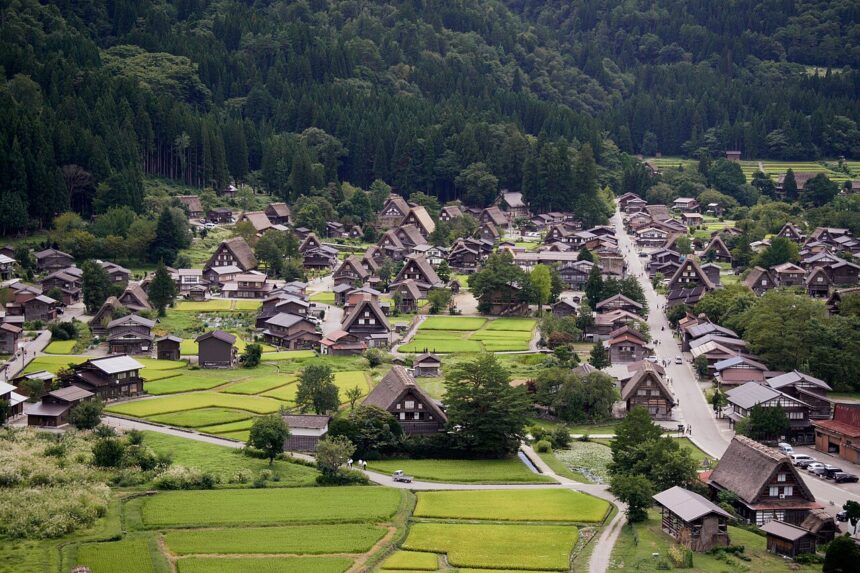
Short answer: Shirakawa-go and Gokayama are best planned as a mountain heritage route, not as a single photo stop. The UNESCO property includes three historic villages: Ogimachi in Shirakawa-go, and Ainokura and Suganuma in Gokayama. Each has gassho-style houses, but the travel feel, access, crowd level, and overnight options are different.
Last checked: August 28, 2026. Bus schedules, parking rules, winter road conditions, observatory access, light-up events, house interiors, accommodation, smoking areas, and local visitor guidance can change. Confirm current details on official UNESCO, JNTO, Shirakawa Village, Gokayama, transport, accommodation, and local tourism pages before travel.
Why Shirakawa-go and Gokayama matter
UNESCO inscribed the Historic Villages of Shirakawa-go and Gokayama in 1995 under criteria (iv) and (v). The property is important because the villages show a traditional way of life adapted to a remote mountain environment, heavy snow, agriculture, sericulture, and strong local community systems. UNESCO identifies the three villages as Ogimachi, Ainokura, and Suganuma.
That means the value is not only the shape of the roofs. The landscape, house groups, fields, waterways, outbuildings, repair traditions, fire prevention, and local residents are all part of the story. A good visit should protect that wider setting.
What gassho-zukuri means
Gassho-zukuri is often translated as a roof shape like hands joined in prayer. The steep thatched roofs are visually famous, but they are also practical. JNTO explains that the high upper floors supported silkworm cultivation, while the roof angle helped heavy snow slide off more easily. The houses were not designed as sightseeing sets. They were working homes built for climate, labor, storage, family life, and community survival.
When you step inside a preserved house, look for how the structure works: the beams, attic space, hearth, smoke-darkened wood, steep roof, and relationship between living space and work space. That is the difference between simply seeing a postcard view and understanding why the village exists.
Choose the right village pattern
| Area | Best for | Watch for |
|---|---|---|
| Shirakawa-go Ogimachi | First-time visitors who want the most famous view, larger village scale, house museums, and a Takayama or Kanazawa route | Crowds, parking, private property, observatory access, and winter congestion |
| Gokayama Ainokura | Travelers who want a quieter village feel, overnight gassho-style stays, and slower photography or walking | Limited services, small residential scale, access timing, and local etiquette |
| Gokayama Suganuma | Visitors who want a compact village, folk museum context, and a Toyama or Takaoka route | Event changes, parking notices, opening changes, and short-stay planning |
If this is your first visit and time is limited, Ogimachi is the easiest name to build around. If the purpose is slower cultural travel, Gokayama deserves serious consideration because Ainokura and Suganuma can feel more intimate. The best route may not be the most famous one; it is the one that fits your base city, season, transport confidence, and respect for local life.
How to think about access
JNTO describes Shirakawa-go as commonly accessed by bus from Takayama. Gokayama is usually planned through a train-and-bus combination, with Takaoka, Shin-Takaoka, or Johana functioning as access points depending on the route. These broad patterns are useful, but exact bus times, reservations, operating days, and transfers should always be checked on current official transport pages.
Driving can look simple on a map, but winter changes the calculation. Shirakawa Village official guidance tells first-time visitors to prepare winter tires or chains when visiting in winter. Snow, road restrictions, full parking areas, and light-up traffic controls can change the visit from easy to stressful. If you are not used to winter mountain driving in Japan, use public transport or stay overnight near the route.
Respect rules are not optional here
Shirakawa-go’s official responsible tourism guidance is direct: the village is not a theme park or reenactment, and residents still live there. Tourist vehicles are requested not to enter the UNESCO World Heritage area; visitors should use designated parking. Do not enter private property, fields, homes, or work areas for photos. Do not open doors, look into windows, block paths, or photograph residents as if daily life were a performance.
Fire prevention is especially important because thatched roofs are vulnerable. Shirakawa Village official guidance says fireworks are strictly prohibited in the World Heritage village and smoking must be limited to designated areas. This is not a small manners issue. UNESCO also notes that fire is a major hazard and that resident fire-fighting systems are part of property protection.
Best trip styles
A day trip can work if you keep the plan simple: one village, one meal or rest stop, one house interior or viewpoint, and a clear return route. Do not try to turn Ogimachi, Ainokura, Suganuma, Takayama, Kanazawa, and Toyama into one rushed day unless you are using a carefully planned tour or private transport.
An overnight trip is better if you care about atmosphere. JNTO points to overnight stays in authentic farmhouses in Shirakawa-go and gassho-zukuri inns in Gokayama. Staying overnight can give quieter morning or evening hours, but it also makes etiquette more important. Confirm check-in rules, meals, heating, luggage, bathing arrangements, language support, and cancellation terms before booking.
Seasonal planning
Spring and autumn are strong walking seasons, but crowds and weather still matter. Summer can be green and easier underfoot, though heat and rain should be considered. Winter is the iconic snow season, but it requires the most preparation. Roads, buses, parking, footwear, visibility, light-up rules, and accommodation availability can all shape the trip.
For photography, arrive with flexibility. The famous view may be affected by clouds, snow, crowds, road controls, or observatory notices. Use tripods, drones, selfie sticks, and commercial shooting only where current local rules allow them. Even when photography is permitted, keep walkways clear and treat homes as homes.
How this fits a wider Japan route
Use this guide with the Japan World Heritage Guide for First-Time Visitors and the Classic Japan Guide for First-Time Visitors. Shirakawa-go and Gokayama pair naturally with Takayama, Kanazawa, Toyama, or a Hokuriku route. They also work as a contrast to temple-heavy Kyoto and Nara because they show heritage through rural settlement, architecture, snow, work, and community life.
If you are choosing between this area and Hiroshima and Miyajima, ask what kind of memory you want from the trip. Hiroshima and Miyajima combine memorial history, shrine landscape, and the Seto Inland Sea. Shirakawa-go and Gokayama are about mountain villages, resident stewardship, and architecture adapted to climate.
Photo credit
Featured image: Shirakawa-go – Shirakawa161.jpg by lumoplank via Wikimedia Commons and Flickr, released under CC0 1.0. Cropping or resizing may be applied for site display. The credit identifies the source image only and does not imply endorsement by the creator, Wikimedia Commons, Flickr, UNESCO, JNTO, Shirakawa Village, Nanto City, Gokayama tourism bodies, residents, transport operators, or local organizations.
Sources
- UNESCO World Heritage Centre: Historic Villages of Shirakawa-go and Gokayama
- JNTO World Heritage FAQ: Shirakawa-go and Gokayama
- JNTO: Shirakawa-go
- JNTO: Gokayama
- Shirakawa Village Official Website
- Shirakawa-go Responsible Tourism
- Gokayama Official Travel Guide
- Gokayama Official Travel Guide: History and Culture
- Wikimedia Commons image file and license record
Editorial disclosure: This independent guide is not affiliated with or endorsed by UNESCO, JNTO, Shirakawa Village, Nanto City, Gokayama tourism bodies, Wikimedia Commons, Flickr, the photographer, residents, transport operators, accommodations, or local organizations. Always confirm current access, parking, weather, safety, photography, event, and visitor rules on official sources before travel.