Start with the route, not the checklist
Short answer: Japan’s World Heritage sites are best used as travel anchors, not as a list to complete. A first-time visitor should choose one or two heritage clusters that fit the route they are already building: Kyoto and Nara for classic cultural depth, Asuka and Fujiwara for early capital archaeology, Nikko or Mount Fuji from Tokyo, Himeji and Hiroshima and Miyajima as a western extension, Shirakawa-go and Gokayama for mountain village heritage, Koyasan and Kumano for sacred routes, or Yakushima and the southern islands for nature-first travel.
Last checked: August 28, 2026. UNESCO lists Japan with 27 World Heritage properties: 22 cultural and 5 natural, including Ancient Capitals of Asuka and Fujiwara inscribed in 2026. Opening rules, access, reservations, photography, trail conditions, and crowd-control measures vary by site and must be checked with official local sources before travel.
What World Heritage means for travelers
A World Heritage listing identifies cultural or natural places considered to have outstanding universal value. For travelers, that status is useful because it points to places with deep historical, architectural, spiritual, ecological, or memorial importance. It does not mean every site is simple to visit, open every day, quiet, barrier-free, or suitable for a quick stop.
Some sites are active temples or shrines. Some are residential villages. Some are mountain, forest, island, or trail environments where weather and transport matter as much as sightseeing time. A better question than “Which site is best?” is “Which site belongs naturally in this trip?”
Choose by travel base
| Travel base | Good first choices | Planning caution |
|---|---|---|
| Kyoto or Osaka | Historic Monuments of Ancient Kyoto, Ancient Nara, Asuka and Fujiwara, Himeji-jo, Koyasan and Kumano | Temple rules, archaeology context, seasonal crowds, reservations, and long walking days |
| Tokyo | Nikko, Fujisan, nearby cultural landscapes | Day-trip fatigue, mountain weather, and transport transfers |
| Hiroshima or western Japan | Hiroshima Peace Memorial and Itsukushima Shinto Shrine, Himeji-jo | Memorial etiquette, ferry timing, tide timing, and route order |
| Hokuriku or Hida route | Shirakawa-go and Gokayama, Takayama, Kanazawa, Toyama | Bus reservations, winter access, private homes, fire prevention, and parking rules |
| Nature-focused route | Yakushima, Shirakami-Sanchi, Ogasawara, Amami-Okinawa islands | Weather, permits, ferries or flights, and ecological protection rules |
Cultural sites and natural sites feel different
Cultural heritage often fits better into a first trip because transport and services are usually easier around major cities. Kyoto, Nara, Asuka and Fujiwara, Himeji, Nikko, Hiroshima, and Mount Fuji all connect to familiar route planning for international visitors. These sites also pair naturally with gardens, old streets, museums, local food, and hands-on cultural experiences.
Natural heritage can be more rewarding when the trip is built around it from the beginning. Yakushima, Shirakami-Sanchi, Ogasawara, and the Amami-Okinawa island chain are not just scenic stops. They require more care around weather, trail readiness, wildlife, fragile ecosystems, local transport, and backup days.
A respectful visitor checklist
- Check the official site or local tourism office for hours, closures, reservation rules, restricted areas, and photography.
- At temples and shrines, follow signs and keep a calm tone, especially around prayer areas, interiors, and ceremonies.
- At memorial sites, keep the visit quiet and avoid turning the place into a casual photo stop.
- In historic villages, remember that residents may still live and work there.
- For mountains, islands, forests, and trails, confirm weather, equipment, emergency guidance, and transport before departure.
Best first-trip patterns
For a classic first visit, choose Kyoto and Nara if you want temples, gardens, architecture, and a strong cultural base. Add Asuka and Fujiwara if early state formation, archaeology, and the roots of later capitals are the reason for the detour. Add Himeji if you want a castle day that fits well between Kansai and western Japan. Add Koyasan and Kumano when the trip needs a sacred-mountain branch with temple stays, shrines, or pilgrimage walking. Choose Nikko or Mount Fuji when Tokyo is the center of your itinerary and you want a strong cultural or scenic extension without rebuilding the whole trip.
Choose Hiroshima and Miyajima when the trip continues west toward the Setouchi area or Kyushu. Choose Shirakawa-go and Gokayama when the trip connects Takayama, Kanazawa, Toyama, or a Hokuriku route and you want mountain villages, snow-country architecture, and resident-led preservation. Choose Yakushima or the southern nature sites when nature is the main purpose of the trip, not a side quest squeezed between cities.
How many heritage sites should you include?
For a first trip, one major heritage day every two or three travel days is usually enough. Famous sites can involve early starts, long walks, stairs, quiet behavior, queues, weather exposure, or extra transfers. If every day is built around a major site, the trip can start to feel like a museum route rather than a visit to a living country.
A comfortable pattern is to pair one heritage anchor with one lighter local activity. For example, a Kyoto temple morning can pair with a market lunch or riverside walk. Himeji can pair with a slower evening in Kobe or Osaka. Hiroshima’s Peace Memorial area deserves calm time, so avoid rushing directly into loud entertainment immediately afterward.
Use this hub as the parent map
As detailed guides are added, use this page to decide which branch matters first: Kyoto and Nara for dense cultural history, Asuka and Fujiwara for early-capital archaeology, Nikko and Fujisan for Tokyo-based extensions, Himeji and Hiroshima and Miyajima for western routes, Shirakawa-go and Gokayama for mountain settlement heritage, Koyasan and Kumano for sacred routes and pilgrimage walking, and Yakushima or the island sites for nature-focused travel. The goal is not to collect every UNESCO name. The goal is to choose places that make the rest of the itinerary stronger.
Photo credit
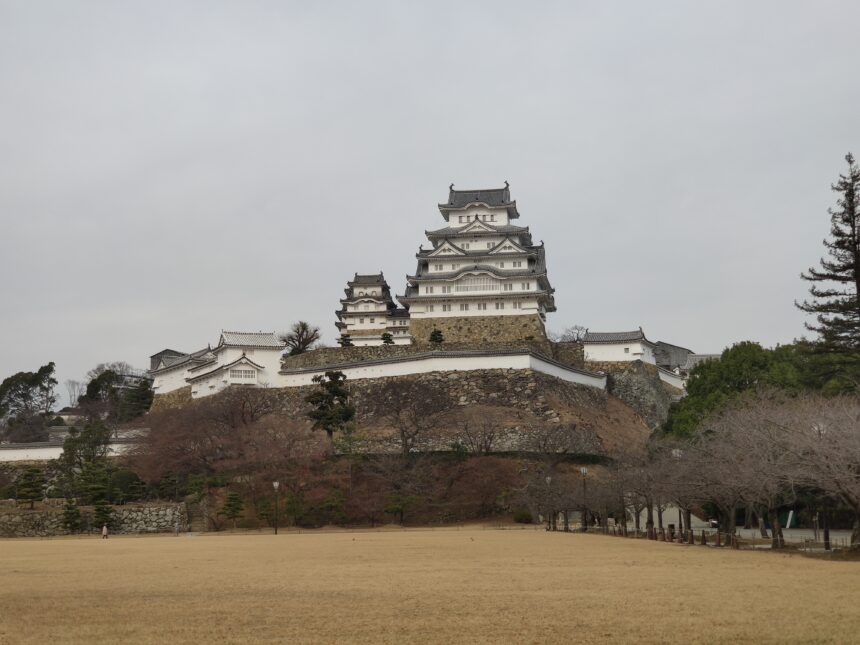
Featured image: Himeji castle by Drivephotographer on Wikimedia Commons, CC0. Cropping or resizing may be applied for site display. This editorial use does not imply endorsement by UNESCO, Himeji Castle, Wikimedia, the creator, local governments, site operators, or tourism organizations.
Sources
- UNESCO World Heritage Centre: Japan
- UNESCO World Heritage Centre: Ancient Capitals of Asuka and Fujiwara
- UNESCO World Heritage Centre: World Heritage List
- JNTO: Things to Do in Japan
- JNTO: Shrine and Temple Traditions
- JNTO: Connecting with Japanese Culture
Editorial disclosure: This is an independent planning guide. It is not affiliated with UNESCO, JNTO, local governments, temples, shrines, site operators, or transport companies.