Plan Fuji as a cultural landscape
Short answer: Mount Fuji is not only a summit climb or a distant photo. UNESCO lists Fujisan as a cultural World Heritage property because the mountain, pilgrim routes, shrines, lakes, springs, lodging-house traditions, and famous artistic views together show its role as a sacred place and a source of artistic inspiration.
Last checked: August 28, 2026. Weather, visibility, trail rules, climbing registration, huts, fees, transport, shrine hours, museum hours, and crowd-control measures can change. Check current official sources before travel, especially if you plan to climb.
Why Fuji is World Heritage
UNESCO inscribed Fujisan in 2013 under cultural criteria (iii) and (vi). The property is serial, meaning it is made from multiple related places rather than one fenced site. UNESCO describes 25 component sites that reflect the mountain’s sacred and artistic landscape, including the upper mountain, pilgrim routes, crater shrines, Sengen-jinja shrines, Oshi lodging houses, lava tree molds, lakes, springs, waterfalls, and coastal pine-grove scenery.
This is why a first-time visitor should not think only in terms of “climb or do not climb.” A lake viewpoint, a shrine visit, Oshino Hakkai, Miho-no-Matsubara, a heritage center, or a carefully planned climb can all be part of understanding Fuji, depending on the trip.
Choose your visit style
| Style | Good for | Watch for |
|---|---|---|
| Viewpoint and lake day | First-time visitors who want views from the Fuji Five Lakes area | Clouds, seasonal visibility, transport timing, and return plans |
| Shrine and heritage day | Travelers interested in pilgrimage, Sengen shrines, and cultural context | Worship etiquette, hours, photography rules, and site-to-site travel |
| Water and village route | Visitors drawn to Oshino Hakkai, springs, lakes, and volcanic landscape | Crowds, conservation rules, narrow village streets, and weather |
| Art and interpretation focus | People interested in Hokusai, Hiroshige, museums, and World Heritage centers | Museum hours, language support, and how much time to leave for slow looking |
| Summit climb | Prepared hikers who want the mountain route itself | Official trail status, weather, altitude, huts, equipment, fees, registration, and turn-back decisions |
Climbing is optional
JNTO notes that Fuji’s surrounding destinations are worthwhile whether or not you intend to hike the mountain. That matters for first-time planning. A traveler can have a strong Fuji day by choosing a lake, shrine, village, or heritage center route instead of forcing a climb into an already busy Japan itinerary.
If you do climb, treat it as a mountain plan, not as a sightseeing add-on. The official Mt. Fuji climbing site provides current weather information, trail comparisons, safety guidance, and registration or fee gateways. Use that official source before making decisions, and be ready to change plans if weather or rules make the climb unsuitable.
Do not try all 25 sites in one day
The World Heritage property spans Yamanashi and Shizuoka, and the component sites are scattered around the mountain. JNTO warns that UNESCO-designated sites in the region require additional travel. For a first visit, choose one side or one story: northern lake views, shrine and pilgrimage context, water and village sites, a Shizuoka heritage-center visit, or a carefully managed climb.
A good Fuji plan leaves space for uncertainty. Clouds can hide the mountain. Buses and trains can shape the day more than the map suggests. Shrines and museums may have separate hours, and mountain weather can move faster than a city forecast. The goal is not to collect every component. The goal is to understand why the mountain matters.
Respect the mountain and the places around it
- At shrines and sacred sites, keep your voice low, follow signs, and avoid blocking worshippers.
- At springs, lakes, and village sites, stay on public paths and follow local conservation rules.
- For photography, avoid treating rituals, residents, restricted areas, or private property as travel props.
- For hiking, check official weather and trail information frequently and turn back when conditions require it.
- For crowded viewpoints, leave room for other visitors instead of holding a spot for long photo sessions.
Best first-time pattern
If Tokyo is your base, choose Mount Fuji as either a view-and-lake day or a shrine-and-heritage day. If cultural interpretation matters, pair the route with a World Heritage center or museum rather than only chasing the clearest photo. If climbing is the purpose of the trip, build the trip around current official climbing information and avoid stacking the climb after a long city day.
Use this guide with Japan World Heritage Guide for First-Time Visitors. Compared with Nikko, Fuji is more weather-dependent and more spread out. Compared with Kyoto and Nara, it asks you to plan around landscape, visibility, and movement between component sites.
Photo credit
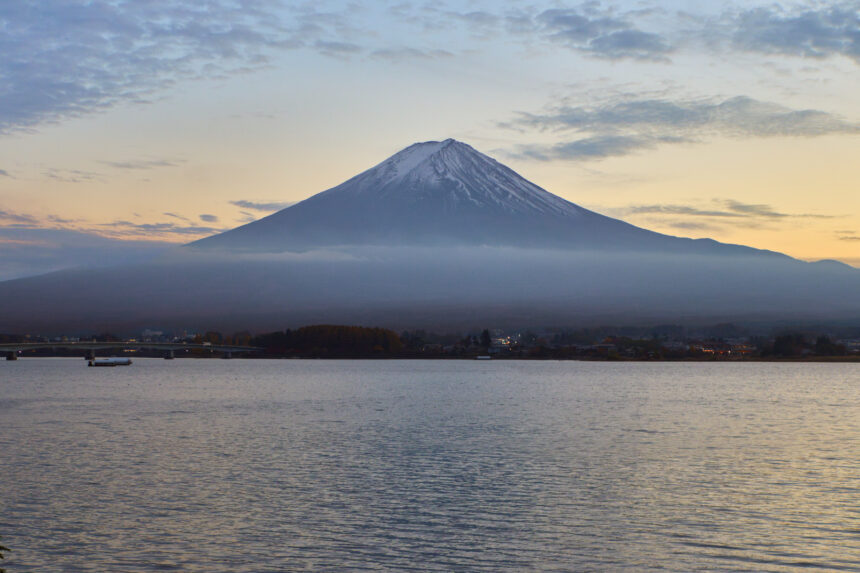
Featured image: Mount Fuji viewed across Lake Kawaguchi by lumoplank on Wikimedia Commons, CC0. Cropping or resizing may be applied for site display. This editorial use does not imply endorsement by UNESCO, JNTO, climbing authorities, local governments, shrines, museums, Wikimedia, the creator, or site operators.
Sources
- UNESCO World Heritage Centre: Fujisan, sacred place and source of artistic inspiration
- JNTO: Fujisan, Sacred Place and Source of Artistic Inspiration
- Official Website for Mt. Fuji Climbing
- Mt. Fuji World Heritage Centre, Shizuoka: Permanent Exhibits
- FujisanWatcher: Cultural assets that make up the Mt. Fuji World Heritage Site
Editorial disclosure: This is an independent planning guide. It is not affiliated with UNESCO, JNTO, the Mt. Fuji climbing authorities, local governments, shrines, museums, transport operators, or site owners.