Keep Naha flexible
Short answer: the best Naha Airport plan for aviation fans is the official visitor deck first, Yui Rail access second, and Senaga Island only if the weather, luggage, and return timing are comfortable. In Okinawa, typhoon and wind checks are part of the plan.
Last checked: August 21, 2026. Visitor-deck hours, typhoon operations, flight information, Yui Rail service, bus routes, taxi access, restaurant status, and parking can change. Always confirm current details on official Naha Airport, Yui Rail, airline, and Okinawa tourism pages before you go.
Choose your first Naha Airport plan
| Plan | Best fit | Check first |
|---|---|---|
| Visitor deck only | First-time aviation fans, families, and travelers who want the safest airport viewing anchor | Deck hours, weather, typhoon notices, terminal map |
| Deck plus terminal food | Arrivals and departures who want a low-risk airport break | Restaurant list, public/secure area, current food-outlet notices |
| Deck plus Yui Rail | Travelers connecting to Naha city without a rental car | Yui Rail route map, timetable, fare table, station access |
| Airport plus Senaga Island | Slow travelers with a long buffer who want a plane-and-sea view outside the terminal | Weather, taxi/bus return, heat, luggage, flight buffer |
Why Naha works for aviation fans
Naha Airport is one of Japan’s most distinctive aviation days because the airport sits between terminal life, blue water, island weather, and the Yui Rail city connection. You can make it a short deck visit before a flight, a food-and-monorail half day, or a slower plane-viewing outing toward Senaga Island.
The key is restraint. Naha Airport’s official English page displays current flight information but warns that actual conditions and errors may occur, and it tells travelers to contact each airline for the latest service situation. Treat that as the tone for the whole day: current checks first, flexible plan second.
Start with the official visitor decks
Naha Airport’s official Japanese facilities page lists visitor decks with use time of 8:00-19:00, free admission, and a note that children should be accompanied by an adult. It also shows visitor decks on the 3rd floor and 4th floor. The airport’s English archive also confirms that the domestic passenger terminal visitor deck became free from April 1, 2018.
Because the detailed visitor-deck page is in Japanese, use the official airport site and floor map together. Check for typhoon notices, construction, temporary closures, event use, and route changes before you go up. If the weather turns bad or staff restrict access, choose terminal time instead.
Use Yui Rail as the clean access spine
Naha Airport’s English page lists monorail as one of its access categories, and its FAQ says you can reach Naha Airport Station from the domestic area 2F communication passage. The airport’s monorail page points travelers to Yui Rail, the Okinawa Urban Monorail operator.
Yui Rail’s official English site provides the route map, station list, timetable, and fare table. Naha City’s official tourism database also describes Naha Airport Station as the Yui Rail terminus and Japan’s westernmost station, with the domestic terminal about a one-minute walk away. Use those official pages for current service and ticket details instead of relying on memory.
Terminal food is the safest add-on
If you are short on time, stay inside the terminal. Naha Airport’s official site links to Shop & Dine, shop lists, restaurant lists, Okinawa cuisine, cafes, fast food, and other tenants. It also posts information notices about food and beverage outlet status, which matters because airport dining can change after renovations, typhoons, or tenant updates.
For an aviation-fan day, terminal food works better than a rushed city trip. Watch aircraft, eat something Okinawan if the current restaurant list supports it, confirm your airline flow, and leave enough time for baggage, check-in, security, immigration, and boarding.
Senaga Island as the plane-and-sea add-on
Senaga Island is the best nearby add-on when your schedule is relaxed. VISIT OKINAWA JAPAN describes Senaga Island as only 15 minutes from Naha Airport, connected to the main island by road, reachable by car, taxi, or bus, and popular for watching planes take off and land at Naha Airport. It also mentions Observation Plaza, Sunset Park, beaches, hot springs, and Senagajima Umikaji Terrace.
Use Senaga Island as an optional outing, not a required part of the airport plan. Heat, rain, wind, traffic, bus timing, luggage, and flight deadlines can turn a simple add-on into stress. If you go, decide your return method before you leave the airport and set a hard return time.
Photo and safety manners
Stay in official public areas: visitor decks, terminal spaces, Yui Rail routes, signed bus/taxi areas, ordinary sidewalks, and public Senaga Island spaces. Do not use cargo roads, fences, staff-only doors, military/shared-use areas, parking-lot edges, or residential streets as spotting locations.
Avoid drones, climbing, stepladders in crowded spaces, bright lights toward aircraft, blocking railings, and photographing staff or other travelers in a way that creates privacy or security problems. If an airport, airline, rail, bus, shop, or local staff member gives instructions, follow them immediately.
Simple first itinerary
For a light airport visit, check Naha Airport notices, go to the visitor deck, spend time watching aircraft, then return indoors for food or your airline flow. If you are entering the city, use the official Yui Rail route map and timetable from Naha Airport Station. If you have a long and calm buffer, consider Senaga Island after confirming your return route.
For the wider transport branch, start with Japan Transport Fan Travel Guide. For related airport planning, see Japan Airports Guide and Nearby Travel Ideas, Plane Spotting in Japan Airports for First-Time Visitors, Haneda Airport Area Guide for Aviation Fans, Kansai Airports Compared for Aviation Fans, Fukuoka Airport Area Guide for Aviation Fans, and New Chitose Airport Area Guide for Aviation Fans.
Photo credit
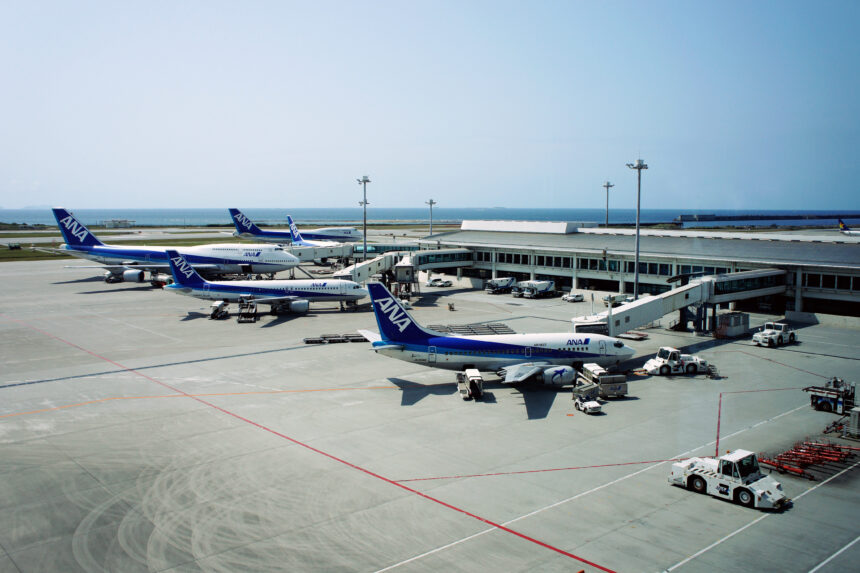
Featured image: Naha Airport by 663highland on Wikimedia Commons, CC BY 2.5. Cropping or resizing may be applied for site display. The image is used in editorial Naha Airport aviation-travel-guide context and does not imply endorsement by Naha Airport, Naha Airport Building, ANA, airlines, aircraft operators, Wikimedia, or the photographer.
Sources
- Naha Airport Passenger Terminal official English site
- Naha Airport: Other Facilities / Visitor Decks
- Naha Airport: Domestic Passenger Terminal Visitors Deck Free Opening
- Naha Airport: Access
- Naha Airport: Monorail
- Yui Rail official English site
- Naha City Tourism Database: Naha Airport Station
- VISIT OKINAWA JAPAN: Senaga Island
- Wikimedia Commons image file and license record
Editorial disclosure: This is an independent planning guide. It is not affiliated with Naha Airport, Naha Airport Building, ANA, airlines, aircraft operators, Okinawa Urban Monorail / Yui Rail, Naha City, VISIT OKINAWA JAPAN, Wikimedia, or the photographer.