An Osaka cooking class can be a relaxed way to understand the city through food, but it should be chosen by the activity format, not only by the dish name. Okonomiyaki and takoyaki are popular choices because they are hands-on, social, and strongly associated with Osaka, but each class can differ in language, location, timing, group size, ingredients, and safety rules.
Last checked: August 28, 2026. Class listings, schedules, minimum ages, dietary support, hot-plate rules, prices, language support, and cancellation terms can change. Confirm the current official class or tourism page before booking.
Use this guide to decide whether an Osaka cooking class fits your trip, what to check before booking, and how to avoid common mismatches around dietary needs, late arrivals, and hot-plate cooking.
Choose The Activity Before The Dish
| Format | Best for | Check first |
|---|---|---|
| Okonomiyaki class | Travelers who want griddle cooking, cabbage preparation, and a filling meal | Hot plate rules, toppings, vegetarian questions, duration, and group size |
| Takoyaki class | Travelers who want a playful hands-on format | Octopus alternatives, hot plate safety, age minimum, and tasting time |
| Market-linked class | Food travelers who want ingredient context before cooking | Meeting point, walking distance, weather, market closures, and language support |
| Private cooking lesson | Families, dietary-needs travelers, or repeat visitors | Substitution policy, cancellation terms, price basis, and kitchen access |
| Food tour instead of class | Travelers who want to eat many things without cooking | Walking distance, pace, alcohol, dietary limits, and end location |
Why Osaka Works Well
Osaka is a strong cooking-class city because food is central to how many visitors experience it. Osaka Info’s official experience pages group cooking under visitor activities and explain that travelers can learn Osaka specialties such as konamon, including takoyaki and okonomiyaki. JNTO also frames cuisine experiences as a way to understand Japan beyond what appears on the plate.
That does not mean every class is interchangeable. A short demonstration, a professional-school style class, a social home kitchen, and a guided market-plus-cooking plan will feel different. Read the exact official listing before you pay.
Use Official Listings As The Final Check
Osaka Info’s okonomiyaki and takoyaki class listing is a useful example of the details travelers should look for. It lists the activity format, schedule, duration, participant range, location, minimum age, vegetarian consultation note, late-arrival cancellation note, and cancellation policy. Those are the kinds of details that matter more than a pretty food photo.
For your own class, confirm what you will cook, whether you eat what you make, how long the class lasts, where you meet, whether the instructor or support materials are in English, and whether the class is immediate booking or request booking. If the listing sends a confirmation later, do not build a tight itinerary until the booking is actually confirmed.
Dietary And Allergy Questions
Osaka dishes can involve wheat, egg, seafood, pork, sauces, stock, mayonnaise, and shared cooking surfaces. If you are vegetarian, vegan, halal, gluten-free, allergic to seafood, or avoiding alcohol-based seasonings, ask before booking. Do not assume that a class can change core ingredients at the table.
Good questions are simple: what ingredients are used, whether substitutions are possible, whether shared utensils or griddles are used, whether the sauce or broth contains animal products, and whether the host can safely handle allergies. If a serious allergy is involved and the listing is unclear, choose a private lesson or a different activity.
Safety, Age, And Comfort
Okonomiyaki and takoyaki classes may use hot plates, griddles, oil, knives, or small tools. Osaka Info’s example listing notes a minimum age because the experience includes hot plates. Families should check age limits and decide whether children will cook, watch, or share a portion.
Clothing also matters. Wear sleeves and shoes that are comfortable around heat and walking. Avoid dangling accessories. If you are visiting during summer, a cooking class can be a good indoor break, but kitchens and griddles may still feel warm.
Timing And Location
A cooking class is a fixed appointment, so it should not be placed too close to arrival, luggage pickup, a long train transfer, or another timed reservation. Check the nearest station, walking route, elevator needs, and what happens if you arrive late. Some activities may treat late no-shows as cancellations.
Leave time after the class. You may want to ask questions, finish eating, buy something nearby, or simply move slowly with a full stomach. A cooking class can replace lunch or dinner, but only if the portion and timing fit your day.
Best First-Time Pattern
For a first Osaka food-experience day, choose one anchor: an okonomiyaki class, a takoyaki class, a market tour, or a food tour. Add one flexible neighborhood walk before or after it, not another hard reservation. Namba, Dotonbori, Umeda, and central Osaka can all be enjoyable, but the class location should decide the route.
The best class is not the one with the longest menu. It is the one where the activity, language, ingredients, timing, safety, and location fit your group.
Use This With Related Guides
Use this Osaka cooking guide with Hands-On Japanese Food Experiences in Japan. If your group wants drinks, compare with Sake, Wine, and Fermentation Travel in Japan. For a non-food hands-on day, use Hands-On Cultural Experiences in Japan.
Photo Credit
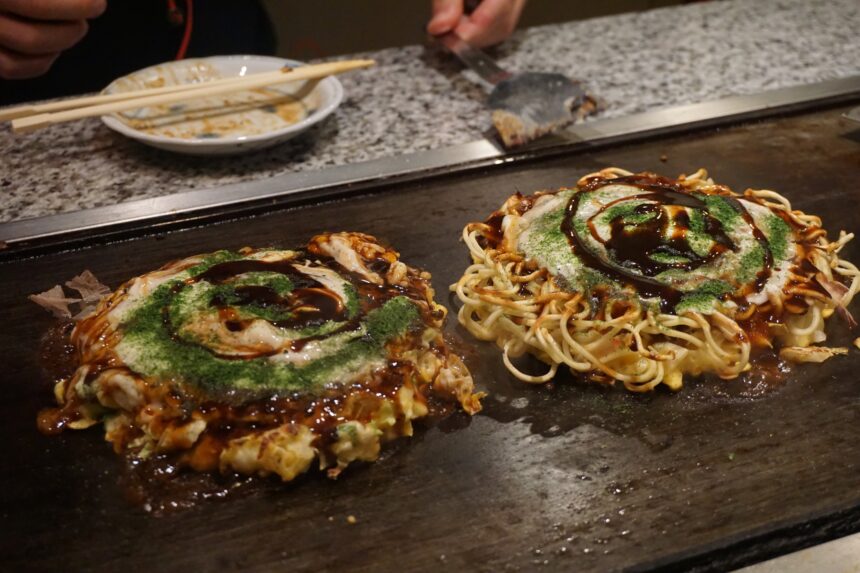
Featured image: Okonomiyaki cooking on teppan Osaka.jpg by Lianguanlun via Wikimedia Commons, licensed under CC BY 4.0. Cropping or resizing may be applied for site display. Image use does not imply endorsement by the photographer, Wikimedia, restaurants, schools, operators, or tourism organizations.
Sources
- Osaka Info Experience: cooking activities
- Osaka Info Experience: okonomiyaki and takoyaki cooking class example
- JNTO: Cuisine experiences in Japan
- JNTO: Japan’s Food Culture
- Wikimedia Commons image file and license record
Editorial Disclosure
This independent guide is not affiliated with or endorsed by Osaka Info, JNTO, restaurants, cooking schools, activity operators, Wikimedia, or the photographer. Always confirm current prices, schedules, age rules, ingredients, language support, meeting points, and cancellation terms on the official listing before booking.