Oshima Motomachi Port Arrival Bus Transfer Guide
Short answer: If your ship arrives at Motomachi Port, first confirm that Motomachi is today’s actual port, then decide whether your first move is a short walk in town or an Oshima Bus transfer. Motomachi is the west-side gateway and town-center port, but Izu Oshima still uses both Motomachi and Okada depending on conditions.
Last checked: August 21, 2026. Ship arrival/departure ports, operation status, bus timetables, early-arrival connections, fares, pass sales, baggage rules, payment rules, information-facility hours, and nearby facility hours can change. Always check official pages before travel.
Why Motomachi Port Matters
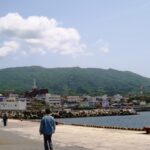
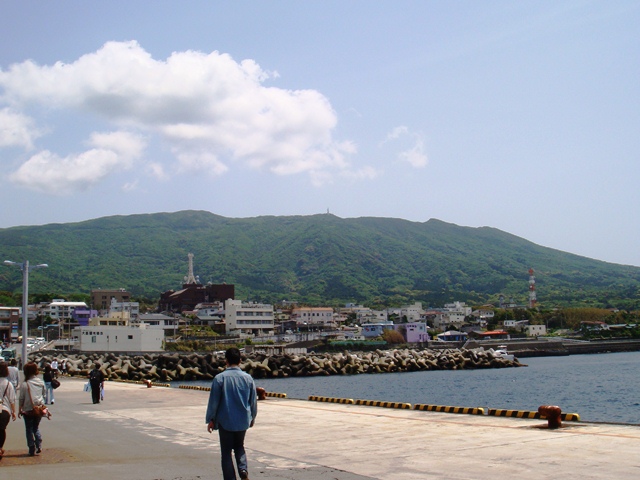
Tokyo Oshima Branch says Motomachi Port is in western Oshima. It also describes the port as facing the island’s largest settlement, the Motomachi district, and supporting the island’s economic and cultural center. Large regular ships, high-speed jet ferries, cargo ships, and other vessels use the port.
That makes Motomachi different from a purely transfer-only terminal. If you arrive here, you are close to town functions, food, baths, a post office and bank area, and several short walking choices. Still, do not assume Motomachi just because your hotel or lunch plan is nearby.
Check The Port First
Tokai Kisen’s Oshima information says the arrival and departure port is decided as Motomachi Port or Okada Port depending on sea conditions, and it points travelers to the Tokai Kisen operation-status page. Tokai Kisen’s operation-status information says large passenger ship information is updated after 09:00 on the day, with final decision planned around 17:00, while high-speed jet ferry decisions are around 06:00.
For a practical trip, check before leaving Tokyo, again before arrival, and again before your return. If your route only works from Motomachi, build a backup for Okada. If your return is from the other port, leave extra time for bus movement and luggage.
Bus Routes At Motomachi
Oshima Bus lists Motomachi Port on the Oshima Park Line, Habu Port Line, and Mt. Mihara Line. Its sightseeing page gives the bus stop as Motomachi Port and says the walk from the stop is zero minutes.
Oshima Bus also says that, for early large-passenger-ship arrival around 6:00, connection buses are prepared for multiple directions, including a Motomachi Port via Gojinka Onsen direction, an Oshima Park via Onsen Hotel direction, and a Habu Port via Oshima Town athletic stadium direction. The same page asks passengers to move to the bus stop promptly after disembarking.
Walk Or Ride?
Motomachi Port is useful because some first stops are genuinely close. Oshima Bus describes Hama-no-yu as a three-minute walk from Motomachi Port, Gojinka Onsen as a five-minute walk, and Umi Ichiba and the Sunset Palm Line as five-minute walks. These are good candidates when you have time before hotel check-in or when the next bus is not ideal.
If your first destination is Oshima Park, Habu Port, Mt. Mihara, the airport side, or a coastal stop, treat Motomachi as a bus-planning point rather than a town stroll. Oshima Bus showed a timetable period from July 1, 2026 to September 30, 2026 when checked, so open the current timetable and match your line, not just the destination name.
Information And Waiting Time
Izu Oshima Geopark lists Motomachi Passenger Terminal as an information facility with digital signage in four languages, a pamphlet rack, and a poster corner. It lists free entry and access on the first floor of Motomachi Passenger Terminal.
Use that kind of stop for orientation, not as a reason to cut bus timing close. If your ship arrives with many passengers, luggage movement, restrooms, ticket counters, weather, and crowd flow can consume the quiet minutes you thought you had.
Fares, Payment, And Bags
When checked, Oshima Bus listed a one-day pass at 2,500 yen for adults and 1,250 yen for children, and a two-day pass at 3,800 yen for adults and 1,900 yen for children, valid on all routes. The route-bus page also links fare, baggage, route-map, and riding-instruction PDFs, so check those before using large luggage, folding bicycles, or multi-stop passes.
The Oshima Bus FAQ says Suica, PASMO, and other IC cards are not accepted. Cash and PayPay are accepted, and on-bus change is available only for 50 to 500 yen coins and 1,000 yen notes. Carry small cash before boarding, especially if you arrive during the early connection window.
Best Fit
- Choose this guide when your ship actually arrives at Motomachi Port.
- Check Tokai Kisen operation status before assuming Motomachi or Okada.
- Use Oshima Park Line, Habu Port Line, and Mt. Mihara Line checks as the first bus-planning layer.
- Consider walking only for nearby Motomachi stops such as Hama-no-yu, Gojinka Onsen, Umi Ichiba, or the Sunset Palm Line.
- Carry small cash and confirm PayPay, pass rules, baggage rules, return port, and bus timing before boarding.
Sources
- Tokyo Oshima Branch official Motomachi Port page
- Tokyo Oshima Branch Motomachi/Okada port notice
- Oshima Bus route-bus page
- Oshima Bus sightseeing page
- Oshima Bus FAQ
- Tokai Kisen operation status page
- Tokai Kisen English page
- Tokai Kisen Oshima special page
- Izu Oshima Geopark facilities page
- Wikimedia Commons source image
- Creative Commons Attribution-ShareAlike 4.0 International
Editorial disclosure: This guide was prepared from official Tokyo, transport, ship, geopark, and source-image pages checked on August 21, 2026. Ship arrival/departure ports, operation status, route-bus timetables, early-arrival connections, fares, pass sales, baggage rules, payment rules, information-facility hours, and port facilities can change, so check official pages before travel.