Short answer
Tokunoshima Airport is a good Amami Islands airport day for aviation fans because Kagoshima Prefecture’s official service page confirms a 2F rooftop observation deck, while the airport page gives a 2,000m runway, island parking rules, and current-check access facts. Use the deck and terminal as the public aviation anchor, then choose one island branch by bus, taxi, rental car, or World Heritage center access.
Last checked: August 21, 2026. Flight operations, airline schedules, observation-deck access, terminal services, paid waiting room, bus timetables, taxi availability, rental-car inventory, parking rules, World Heritage center access, ferry links, heavy rain, and typhoon disruption can change. Always confirm current details on official airport, airline, transport, tourism, heritage, and weather pages before travel.
Why Tokunoshima works for aviation fans
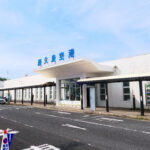
Tokunoshima Airport, also known in travel contexts as Tokunoshima Kodakara Airport, gives aviation fans something many small island airports do not: an officially listed observation deck. Kagoshima Prefecture’s service page places the deck on the 2F rooftop of the airport terminal. That makes the airport easier to recommend than island airports where viewing must stay at the terminal entrance or normal public waiting areas.
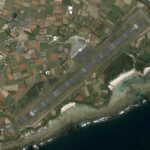
The airport also has stronger runway context than its quiet scale suggests. Kagoshima Prefecture lists the runway as 2,000m x 45m, the elevation as 2.3m, and apron positions for jet and propeller aircraft. Treat those as airport identity facts, not as a promise of any specific aircraft movement on your travel day.
Start with the official rooftop deck
Begin with the public deck if aircraft viewing is your reason for visiting. Because the official service page lists the deck, it is a better first anchor than perimeter wandering. Still, access and comfort can change with weather, maintenance, security, events, or operations, so confirm current terminal information before building a long layover around the deck.
Keep the rest of the plan conservative. Do not use restricted roads, service areas, fences, private land, drones, or roadside stopping to chase aircraft photos. Island roads and airport approaches are working local infrastructure. A good aviation-fan plan should make the terminal easier to enjoy, not make local movement harder.
Use terminal services before leaving the airport
The prefectural service page gives a practical terminal checklist. Passenger facility hours are listed as 8:00 to 19:30, while parking usable time is listed as 8:30 to 19:30. Facilities include general information, tourism information, coin lockers, wheelchair rental, free internet in the 1F lobby from 8:00 to 18:00, a nursing room and kids room, rental-car information at the 1F general information counter, restaurant, shops, an outdoor smoking area, and a paid waiting room.
Those details are useful, but they are not forever facts. If your plan depends on a locker, meal, rental-car counter, paid room, or Wi-Fi window, check the current airport or operator page before travel.
Choose one transport branch
The airport service page lists routes to and from Kagoshima, Amami Oshima, and Okinoerabu, and tells travelers to check airline pages for schedules. It also lists airport access from Kametsu by bus as 60 minutes. The Amami-Okinawa World Natural Heritage access page gives a different practical branch: Tokunoshima Airport to Kametsu by car is about 35 minutes, and flight access to Tokunoshima from Kagoshima and Amami Oshima is listed as a normal route pattern.
For island mobility, the Tokunoshima Tourism Association is the source to use. It says the main transport choices are bus, taxi, and rental car. It also recommends calling taxis by phone and reserving in advance because arrival can take time, and it recommends booking rental cars before coming to the island. That is the core rule for this airport: decide your onward transport before landing.
World Heritage center add-on
If you want a cultural and nature context branch rather than only an airport stop, the Tokunoshima World Heritage Conservation Center is a strong add-on. Its official access page lists the center as 12 minutes by car from Tokunoshima Kodakara Airport, 11 minutes from Hetono Port, and 24 minutes from Kametoku New Port, with parking available.
Use that as a planning direction, not a fixed promise. Opening days, closing days, admission conditions, weather, local events, ferry timing, and rental-car availability should all be checked before building the day.
Parking and accessibility checks
Kagoshima Prefecture’s airport page lists parking capacity as 214 and says parking is for airport users, with overnight parking and other-purpose parking discouraged. The services page separately lists the parking position in front and east of the terminal with 213 spaces. Treat the small difference as a reminder to check current airport guidance before relying on exact capacity.
The prefectural accessibility page is useful for travelers who need more detail. It lists accessible parking, pickup/drop-off area, automatic doors, slope, wheelchair lift, accessible toilet, baby bed, ostomate-compatible toilet, rental wheelchair and stroller, and nursing room. Accessibility needs should still be confirmed directly before travel, especially on an island itinerary with weather and transport constraints.
Simple first-time plan
| Step | What to do | Why it works |
|---|---|---|
| 1 | Check flight status, deck access, terminal services, bus, taxi, rental car, parking, weather, and World Heritage center information | Tokunoshima plans work best when current operations match your timing |
| 2 | Use the 2F rooftop observation deck and public terminal spaces first | It gives the day a safe official aviation anchor |
| 3 | Choose one branch: Kametsu, Hetono Port, Kametoku New Port, rental-car pickup, taxi, bus, or the World Heritage Conservation Center | One clear branch protects the return window |
| 4 | Leave weather and transport buffers before ferries, flights, hotel transfers, or attraction visits | Island travel is sensitive to rain, wind, and limited transport supply |
Where this fits in the transport hub
Use this as the Tokunoshima and Amami Islands branch of the Japan Transport Fan Travel Guide. It pairs naturally with Amami, Yakushima, Ishigaki, and Shimojishima airport-area plans, but Tokunoshima stands out because the official service listing gives a public rooftop observation-deck anchor.
Photo credit
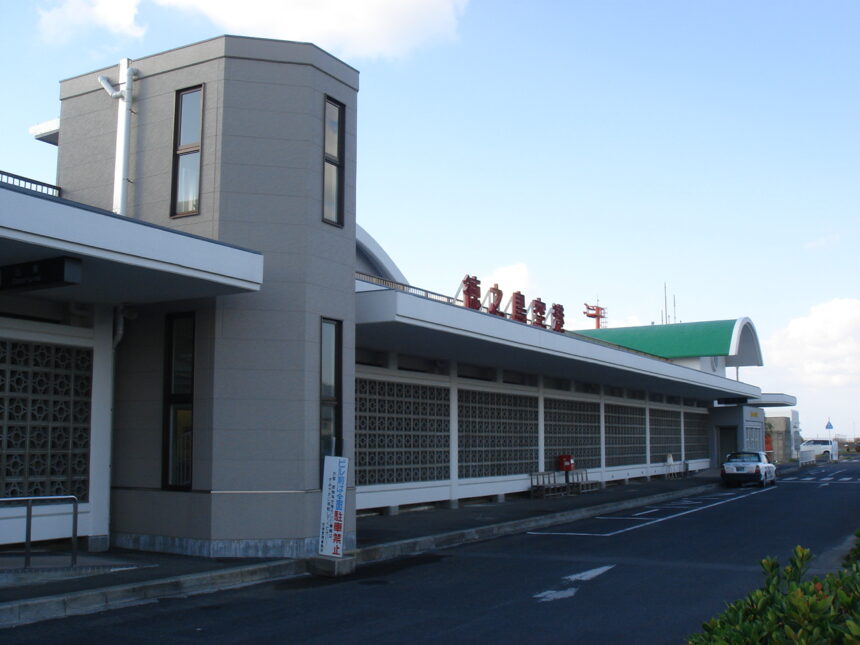
Featured image: Tokunoshima Airport (TKN) by Snap55, CC BY 3.0. Cropping or resizing may be applied for site display. The image is used in editorial transport-travel-guide context and does not imply endorsement by the photographer, Wikimedia, Kagoshima Prefecture, Tokunoshima Airport, airlines, bus operators, taxi operators, rental-car companies, tourism organizations, World Heritage organizations, or local authorities.
Sources
- Kagoshima Prefecture: Tokunoshima Airport
- Kagoshima Prefecture: services provided by Tokunoshima Airport
- Tokunoshima Tourism Association: transport
- Amami-Okinawa World Natural Heritage: access
- Tokunoshima World Heritage Conservation Center: access
- Kagoshima Prefecture accessibility information: Tokunoshima Airport
- Wikimedia Commons image file and license record
Editorial disclosure: This is an independent planning guide. It is not affiliated with Kagoshima Prefecture, Tokunoshima Airport, Japan Air Commuter, J-AIR, Tokunoshima Tourism Association, Amami-Okinawa World Natural Heritage organizations, Tokunoshima World Heritage Conservation Center, bus operators, taxi operators, rental-car companies, Wikimedia, or the photographer.