Short answer
Yakushima Airport is best treated as a small island-airport gateway, not a classic observation-deck stop. Kagoshima Prefecture’s official service listing says the airport has no observation deck, so aviation fans should build the day around the compact terminal, propeller-aircraft island atmosphere, official public areas, and a careful onward plan by bus, taxi, rental car, or port connection.
Last checked: August 21, 2026. Flight operations, airline schedules, terminal hours, parking rules, bus timetables, taxi availability, rental-car inventory, trail shuttles, mountain roads, heavy rain, and typhoon disruption can change. Always confirm current details on official airport, airline, transport, tourism, national-park, and weather pages before you go.
Why Yakushima works as an aviation day
Yakushima Airport is not large, but that is exactly why it is interesting. The Kagoshima Prefecture airport page lists a 1,500m x 45m runway, an elevation of 37.3m, and an apron sized for two propeller aircraft. It also places the airport on the northeast side of Yakushima, along the coast, on an island famous for steep mountains, heavy weather, and ancient forest.
For transport fans, this creates a different kind of airport visit. You are not chasing a rooftop panorama. You are using a small runway, a compact terminal, and a fragile island transport network as the first piece of a real Yakushima plan. The official prefectural page also notes Yakushima’s World Natural Heritage status and its dramatic environment, including high mountains and varied vegetation, which is a reminder to keep the trip respectful and weather-aware.
Do not plan around an observation deck
This is the key planning point: the prefectural service page lists no observation deck. It also lists no lounge, no ATM, no rental-car information counter, and no nursing room or kids room. That does not make the airport uninteresting, but it changes the shape of the article. Use the terminal as a gateway and orientation point, not as a long aircraft-viewing facility.
Keep photography inside normal public visitor areas and avoid restricted airport zones, service roads, fences, drones, private property, or roadside stopping. Small island airports can look casual, but they still operate as controlled transport infrastructure. A respectful aviation plan is one that does not add pressure to local roads, airport staff, or other travelers.
Use the terminal services wisely
The official service listing gives the practical checklist. Passenger terminal and cargo facility hours are listed as 8:30 to 19:00, while parking usable time is listed as 8:30 to 19:30. Facilities include a general information point, a tourism information center near the airport site, coin lockers in the 1F lobby, wheelchair rental at the information counter, wireless LAN, a restaurant, a shop, and an outdoor smoking area.
Treat those details as current-check items, especially if you are arriving with hiking gear, rainwear, or luggage for a ferry or bus connection. If coin lockers, food, or transport counters matter to your day, confirm before travel rather than discovering the limitation after landing.
Choose the right island branch
Kagoshima Prefecture’s service page lists airport access as about 15 minutes by car from Miyanoura Port and about 15 minutes by car from Anbo Port. The Ministry of the Environment’s World Heritage Conservation Center page also gives a useful inland branch: the center is about 15 minutes by car from Yakushima Airport, and bus users should take regular bus service toward Yakusugi Museum and get off at Yakusugi Museum.
The Yakushima Tourism Association’s transport page is the best starting point for island mobility. It says two bus companies serve the island and links to timetable and fare information. It also notes that the western forest road between Kurio and Nagata is not served by either bus company, which is important if your mental map assumes buses go everywhere around the island.
Bus, taxi, and rental-car discipline
For a low-stress first visit, pick one transport mode before arrival. Buses can connect the airport and ports with places such as Yakusugi Museum and Shiratani Unsuikyo, but the National Parks of Japan access guide describes island bus service as infrequent and says renting a car is more convenient for getting around. That is not a command to rent a car; it is a warning not to improvise a tight public-transport itinerary.
Rental cars are useful for coastal hotels, port connections, and flexible sightseeing, but inventory, pickup hours, insurance terms, and winter or heavy-rain driving comfort all matter. Taxis can solve awkward timing, yet they should be treated as a booked or confirmed option rather than an infinite standby supply. Yakushima’s travel rhythm rewards conservative plans.
Weather is part of the airport experience
Yakushima is famous for forest and rain, and that is not just scenery. Weather affects flights, ferry choices, buses, mountain roads, trailhead access, and whether a same-day plan feels calm or stressful. JMA lists Yakushima Airport in its aeronautical climatological information as RJFC/YAKUSHIMA, and JMA aviation-weather resources are a good reminder that airport weather is operational, not decorative.
If you are connecting to a hike, do not make the airport day too tight. The National Parks of Japan access guide notes that Arakawa Trailhead access for Jomonsugi is by shuttle bus from Yakusugi Museum from March to November. That kind of seasonal transport rule belongs in a current check before travel, not in memory from an old itinerary.
Simple first-time plan
| Step | What to do | Why it works |
|---|---|---|
| 1 | Check flight status, terminal hours, parking, bus schedules, taxi, rental car, weather, and trail access | Yakushima plans are sensitive to weather and limited island transport |
| 2 | Use the compact terminal and public visitor areas, not an assumed observation deck | The official service listing says there is no observation deck |
| 3 | Choose one branch: Miyanoura, Anbo, Yakusugi Museum, World Heritage Conservation Center, hotel transfer, or rental-car pickup | One branch protects the rest of the day |
| 4 | Leave a generous buffer before ferries, hikes, check-in, or the return flight | Rain, wind, road timing, and small-airport operations can shift quickly |
Where this fits in the transport hub
Use this as the Yakushima island-airport branch of the Japan Transport Fan Travel Guide. It pairs naturally with Kagoshima, Amami, Ishigaki, and Shimojishima airport-area plans, but Yakushima stands out because the aviation experience is inseparable from weather, ferries, mountain access, and respectful World Natural Heritage travel.
Photo credit
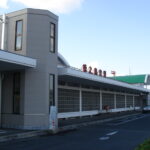
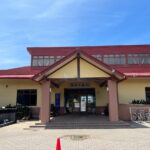
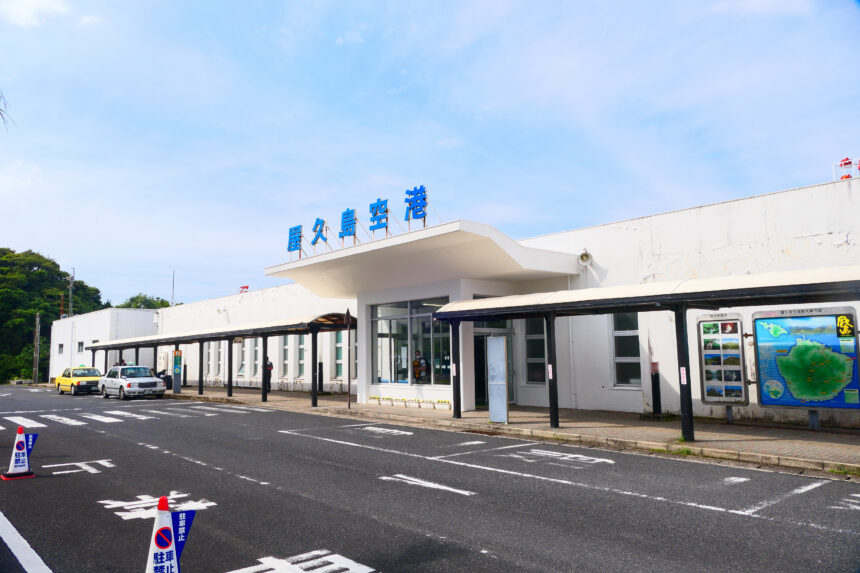
Featured image: Yakushima-Airport Entrance by Wikimedia Commons user MaedaAkihiko, CC0 1.0 Public Domain Dedication. Credit is provided for auditability even though attribution is not required by the license. Cropping or resizing may be applied for site display. The image is used in editorial transport-travel-guide context and does not imply endorsement by the photographer, Wikimedia, Kagoshima Prefecture, Yakushima Airport, airlines, bus operators, taxi operators, rental-car companies, tourism organizations, national-park authorities, or local authorities.
Sources
- Kagoshima Prefecture: Yakushima Airport
- Kagoshima Prefecture: services provided by Yakushima Airport
- Yakushima Tourism Association: on-island transport
- National Parks of Japan: how to get to Yakushima
- Japan Meteorological Agency: aeronautical climatological information
- Ministry of the Environment: Yakushima World Heritage Conservation Center access
- Wikimedia Commons image file and license record
Editorial disclosure: This is an independent planning guide. It is not affiliated with Kagoshima Prefecture, Yakushima Airport, Japan Air Commuter, JNTO, the Ministry of the Environment, Yakushima Tourism Association, bus operators, taxi operators, rental-car companies, Wikimedia, or the photographer.