Real places are not sets
Short answer: anime pilgrimage and media-location travel in Japan should start with respect for the real place. Check official or local sources, avoid trespass, do not block entrances or roads, follow photo and filming rules, support local businesses normally, and keep a backup route if an old fan map is wrong or a cafe no longer welcomes location visitors.
Last checked: August 28, 2026. Location access, event status, photo rules, business hours, collaboration periods, local notices, filming permissions, and crowd-management rules can change. Always confirm current details through official tourism, venue, business, or local sources before travel.
What anime pilgrimage means
Anime pilgrimage usually means visiting real places connected with anime, manga, film, drama, music videos, artists, idols, or celebrities. The Anime Tourism Association presents anime tourism as a way to connect works, local regions, corporations, and content holders. Anime Manga Tourism Festival official materials also connect fan travel with regional food, products, culture, and model routes.
That sounds exciting, but it also creates responsibility. The location may be a shrine, station, cafe, school area, residential street, bridge, seaside road, or ordinary shop. The people who live and work there did not become part of a fan event just because a scene became famous.
Confirm before you go
Use official tourism pages, municipal pages, venue pages, business pages, or organizer announcements before relying on fan maps. If a location is private, closed, inside a ticketed facility, or part of a temporary collaboration, the official rule controls the visit. Tokyo Location Box explains that location owners or managers have the final say on filming-location matters. The same principle helps tourists: the place’s current owner, manager, or local authority matters more than an old screenshot.
If current confirmation is weak, keep the location optional. A good pilgrimage day should still work as a neighborhood walk, local meal, museum stop, or station route even if the exact scene cannot be visited.
Etiquette checklist
| Risk | Good behavior | Why |
|---|---|---|
| Residential streets | Stay quiet, brief, and on public paths | Residents are not part of the performance |
| Shops and cafes | Order normally and follow staff guidance | A filming history does not change customer rules |
| Photos | Avoid strangers, staff, interiors, and prohibited areas | Privacy and rights rules still apply |
| Scene recreation | Do not block roads, stairs, platforms, or entrances | Public space has other users |
| Unofficial maps | Verify with current local sources | Businesses close and access rules change |
Cafes and food stops
Food can make a location trip better, but do not turn a small cafe into a photo studio. If the business is officially promoting a collaboration, follow its current rules. If it is an ordinary cafe that happened to appear in a drama or music video, behave like a normal customer: wait, order, do not film other guests, and leave if the space is full.
Build the meal around the route, not the other way around. Choose one primary location, one nearby meal, and one backup around the station. If a cafe is closed, crowded, or uncomfortable with fan attention, remove it from the plan without arguing.
Photo and copyright caution
A real-world location photo is not the same as a screenshot. Do not reproduce anime frames, manga panels, posters, music-video stills, actor photos, character art, or promotional images unless you have permission. If you want to compare a scene with reality, do it privately while traveling rather than publishing a side-by-side image without rights clearance.
For public travel content, focus on neutral photos of streets, station exits, food you bought, or scenery where allowed. Avoid making residents, staff, or other fans identifiable. When a sign says no photography, no video, or no posting, treat that as final.
A calmer route structure
Start with the official or local source. Then choose the smallest route that still feels meaningful: one scene location, one local food stop, one station or museum backup, and enough time to leave quietly if the area is crowded. GO TOKYO tourist information centers can help with current local tourist information in Tokyo, and many regional tourism offices can do the same outside Tokyo.
The best fan visit leaves the place easy for the next person to enjoy. That is the difference between pilgrimage and extraction.
Use This With Related Guides
Use this guide with Anime, Manga, and Pop Culture Travel Guide to Japan. If the route includes Tokyo fan districts, compare with Tokyo Pop Culture Areas: Akihabara to Odaiba. For museums and event days, read Pop Culture Museums, Exhibitions, and Event-Day Planning.
Photo credit
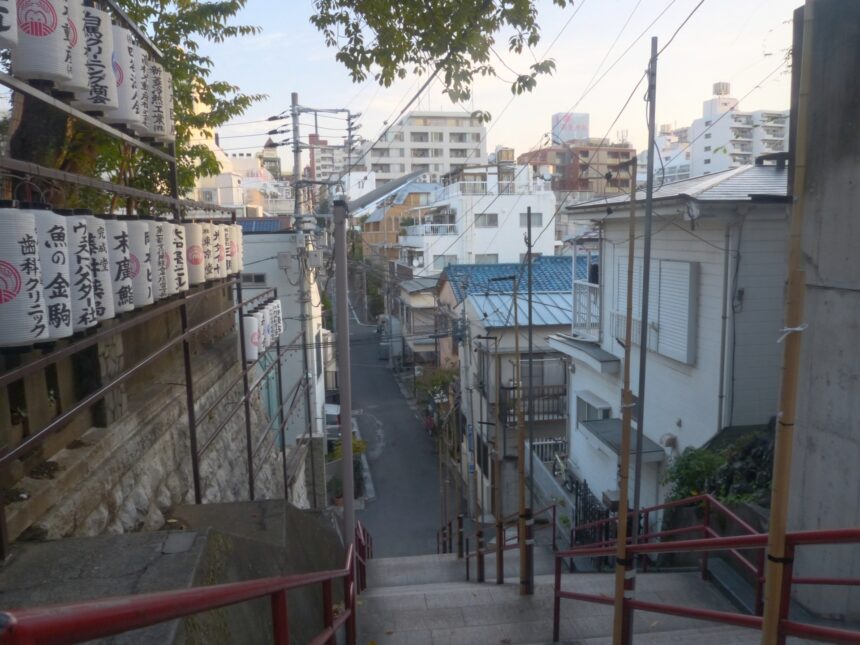
Featured image: Suga Shrine stairs by Hisagi via Wikimedia Commons, licensed under CC BY-SA 4.0. Cropping or resizing may be applied for site display. The image is used as public-place travel context and does not imply endorsement by Suga Shrine, Shinjuku City, any studio, publisher, creator, rights holder, tourism organization, Wikimedia, or the photographer.
Sources
- Anime Tourism Association official site
- Anime Tourism Association overview
- Anime Manga Tourism Festival official site
- Tokyo Location Box official English page
- GO TOKYO tourist information centers
- Wikimedia Commons image file and CC BY-SA 4.0 license record
Editorial disclosure: This is an independent travel-planning guide. It is not affiliated with Anime Tourism Association, Anime Manga Tourism Festival, Tokyo Location Box, GO TOKYO, Suga Shrine, Shinjuku City, any studio, publisher, creator, rights holder, tourism organization, Wikimedia, or the photographer.