Short answer
The Chofu to Miyakejima flight is one of the most interesting small-aircraft trips a transport fan can add to a Tokyo itinerary. New Central Airservice links Chofu with the Izu Islands, including Miyakejima, and its aircraft page describes the Dornier 228-212 as a small twin turboprop with up to 19 passenger seats. The appeal is real, but so are the constraints: current timetable, booking, 5 kg baggage, check-in, weather, and operation status all need official checks.
Last checked: August 21, 2026. Flight schedules, fares, aircraft assignment, check-in rules, baggage rules, airport access, weather decisions, and same-day operation status can change. Always confirm current details on New Central Airservice and official island-access pages before travel.
Why this route is special
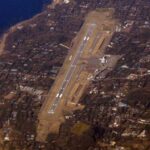
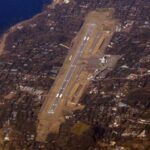
Most Tokyo air travel starts at Haneda or Narita. This route starts at Chofu Airfield, a much smaller airport in western Tokyo. New Central Airservice’s access page lists Chofu Airfield at Nishimachi 290-3, Chofu City, Tokyo 182-0032, with the Chofu counter phone number 0422-31-4191. It also says Chofu Station north exit is about 15 minutes away by Odakyu Bus.
For aviation fans, the charm is scale. You are not using a big jet terminal. You are joining a regional island route where aircraft size, weather, baggage, check-in, and punctuality feel close to the trip itself.
The aircraft: Dornier 228-212
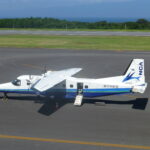
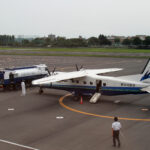
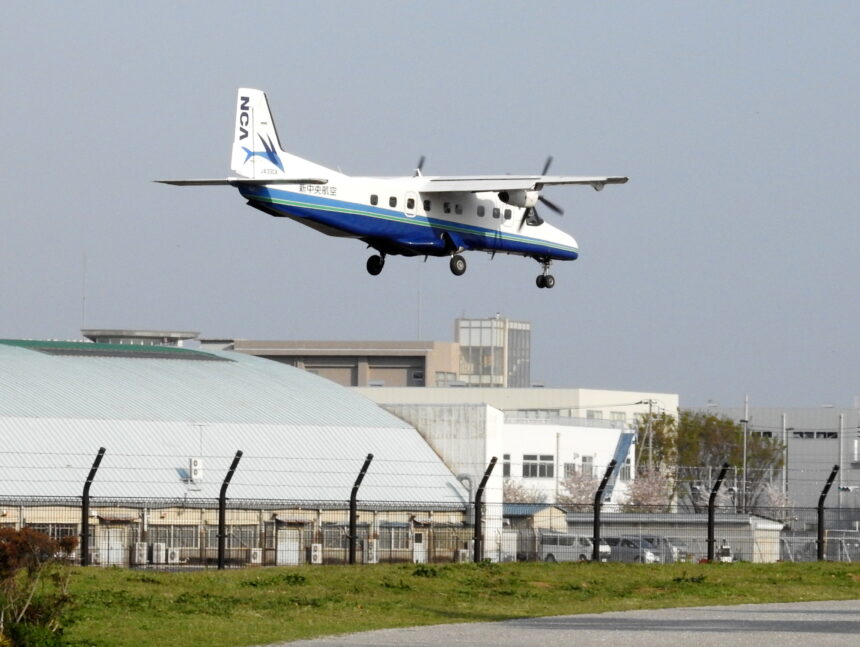
New Central Airservice says it uses the Dornier 228 type on its island routes. Its aircraft page identifies the Dornier 228-212 and lists twin Honeywell engines, each at 715 horsepower, with a listed cruise speed of 355 km/h and maximum range of 2,485 km. The same page gives the dimensions as 16.56 m long, 16.97 m wide, and 4.86 m high.
The number most travelers feel is the capacity. New Central Airservice lists crew as 2 and passenger seats as 19. It also cautions that figures vary depending on passengers, cargo weight, and weather. That line is worth taking seriously. On a small island aircraft, your bag is part of the operation, not an afterthought.
Route basics
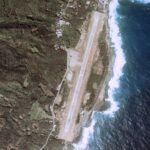
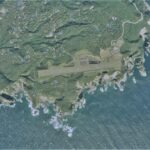
UMISORA, Tokyo Metropolitan Government’s island access site, says Miyakejima Airport is in the eastern part of the island and is currently connected with Chofu Airfield by small airplane. Its Miyakejima Airport page lists the address as Tsubota 1378, Miyakejima Miyake Village, Tokyo 100-1211, and gives New Central Airservice’s Miyakejima Airport phone number as 04994-6-0006.
On the checked UMISORA operation-status page, New Central Airservice entries included Chofu to Miyakejima flights such as 401 from 08:40 to 09:30, 405 from 11:25 to 12:15, and 407 from 14:55 to 15:45. Treat those as checked examples only. The official timetable and same-day status should decide your actual plan.
Booking, fare, and check-in
New Central Airservice’s timetable and fare page has a Chofu-Miyakejima section with monthly timetable links and online reservation access. At the time checked, the displayed regular fare was 20,100 yen for an adult one-way ticket, 14,100 yen for a child one-way ticket, and 36,600 yen for an adult round trip. Fare windows and special periods can change, so do not treat those numbers as timeless.
The user guide says online reservations are accepted 24 hours and that same-day reservations are possible until three hours before departure. It lists phone reservation counters including Chofu 0422-31-4191 and Miyakejima Airport 04994-6-0006. For boarding, the same guide says check-in is from 60 minutes before departure to 30 minutes before departure, and that passengers should finish procedures 30 minutes before departure.
Baggage mindset
Pack light. New Central Airservice’s baggage page says free baggage is 5 kg per passenger, including carry-on and checked baggage. It also says excess baggage may cost extra and may not be accepted in some cases. At the time checked, the Chofu-Miyakejima excess-baggage rate was listed as 380 yen per kg.
Large items need more care. The baggage page says items such as surfboards, fishing rods, cooler boxes, and bicycles in rinko bags should be declared when booking and are accepted only when acceptance can be confirmed. For a transport-fan day trip, this is one reason a small camera bag beats a complicated equipment plan.
Weather and same-day status
The aircraft is built for regional flying, but island weather still matters. New Central Airservice says its Dornier 228 has short takeoff and landing performance suited to short runways and island routes, but the same aircraft page notes that performance figures vary with weather and loading. UMISORA’s operation-status page also tells users to refresh for current information and to check the operator for conditional service details.
A good aviation-fan itinerary has two versions: the fun version and the disruption version. The fun version is the 50-minute island hop. The disruption version asks what you will do if the flight is delayed, canceled, or no longer connects with a ferry, lodging pickup, or onward plan.
Best use cases
| Traveler | Why it works | Watch point |
|---|---|---|
| Aviation fan | Small airport, small turboprop, island route, and visible operational discipline | Do not assume a specific aircraft registration or seat view |
| Short island visitor | Fast Chofu-Miyakejima connection compared with an overnight ship | Build a weather and ferry backup |
| Light packer | 5 kg baggage mindset is manageable | Heavy gear, dive equipment, and large tripods need advance confirmation |
| Transport-route collector | Pairs well with Tokai Kisen ferry branches and Miyakejima Airport planning | Do not stack tight same-day connections without official status checks |
Where to go next
Use this as the aircraft-experience branch of the Japan Transport Fan Travel Guide. For local arrival planning, read the Miyakejima Airport to Ferry Port Transfer Guide. For the airport itself, use the Miyakejima Airport Area Guide. If you plan to return by sea, continue with the Miyakejima to Tokyo Return Ferry Guide.
Photo credit
Featured image: Dornier Do 228 landing at Chofu Airport, Tokyo by Josephus37 on Wikimedia Commons, licensed under CC BY-SA 4.0. The image may be resized for site display. The image is used in editorial transport-travel-guide context and does not imply current aircraft assignment, current route operation, endorsement by the photographer, New Central Airservice, Tokyo Metropolitan Government, Wikimedia, or island communities.
Sources
- New Central Airservice official homepage
- New Central Airservice official aircraft page
- New Central Airservice official timetable and fare page
- New Central Airservice official user guide
- New Central Airservice official baggage page
- New Central Airservice official airport guide and access page
- UMISORA Miyakejima Airport page
- UMISORA Miyakejima operation-status page
- Tokyo Port Authority Chofu Airfield page
- Wikimedia Commons image file and CC BY-SA 4.0 license record
Editorial disclosure: This is an independent planning guide. It is not affiliated with New Central Airservice, Tokyo Metropolitan Government, Tokyo Port Authority, Wikimedia, the image creator, or island communities.