Short answer
The Miyakejima to Tokyo return ferry is a midday-to-evening sea route where the biggest decision is not only the 13:45 departure. In the checked Tokai Kisen timetable, ship code 2400 reaches Miyakejima at 13:35, departs at 13:45, and arrives at Tokyo Takeshiba at 19:50. Before you travel, confirm the same-day port among Miike, Sabigahama (Ako), and Igaya, the operation status, checked-baggage cutoff, lodging checkout, and whether a Chofu flight or helicopter connection is a better fit.
Last checked: August 21, 2026. Timetables, fares, cabin categories, reservation rules, checked-baggage handling, operation decisions, departure ports, weather, flight schedules, helicopter schedules, lodging checkout, and Tokyo arrival connections can change. Always confirm current details on official operator and local tourism pages before travel.
The return route
Tokai Kisen’s official timetable lists the Tokyo, Miyakejima, Mikurashima, and Hachijojima large-passenger-ship route. In the checked return direction, ship code 2400 departs Hachijojima at 9:40, calls at Mikurashima, reaches Miyakejima at 13:35, departs Miyakejima at 13:45, and arrives at Tokyo Takeshiba at 19:50.
The Tokyo Metropolitan Government Miyake Subprefecture access page gives the same practical return pattern as a sample, with Mikurashima 12:40, Miyakejima 13:45, and Takeshiba 19:50, while warning that times may vary by season and travelers should check Tokai Kisen. Miyakejima Tourism Association gives a similar return sample and also warns that season and Oshima-call patterns can change Tokyo arrival time.
Start with the same-day port
Miyakejima has three ferry ports: Miike, Sabigahama (Ako), and Igaya. Tokai Kisen’s checked operation-status page listed the 13:45 Tokyo-bound 2400 Tachibana-Maru from Sabigahama (Ako) Port as operating, but the same page says Miyakejima’s arrival and departure ports may differ by day. It lists the same-day Miyakejima port guidance number as 04994-5-0221.
Miyakejima Tourism Association’s FAQ is even more practical: it says the island has three ports, the port depends on same-day sea conditions, and the Tokyo-bound ship’s port is decided at 11:00. That makes 11:00 the hinge of the return day. Do not move luggage to the wrong side of the island before checking the current port.
Same-day operation and conditional calls
Tokai Kisen’s operation-status page tells users to refresh the browser for the latest information. It also warns that even when a ship is operating, sea and harbor conditions may still prevent berthing. For Miyakejima, that warning interacts with the three-port system and the ship’s route from Hachijojima and Mikurashima.
The local FAQ explains two useful Japanese operation ideas. Conditional operation means the ship may not be able to berth because of rough sea conditions. A quick turnaround can happen when conditions are very bad, and the ship that reached Miyakejima may turn back toward Tokyo much earlier than the normal departure. The practical lesson is simple: stay reachable, check official status, and do not treat 13:45 as the only possible clock.
Baggage and checkout
Tokai Kisen’s checked-baggage page says checked baggage is handled only on large passenger ships. It lists the island-area checked-baggage cutoff as 50 minutes before departure except Niijima, and it describes large travel bags up to 200 cm total dimensions and 30 kg total weight as checkable up to two items per person.
For the checked 13:45 departure example, a 50 minutes-before-departure baggage rule points you toward a 12:55 mindset. That is after the 11:00 port decision, but still early enough that lunch, rental-car return, checkout, and last sightseeing can become tight. Confirm how your lodging, taxi, rental car, or host handles port changes before the final morning.
Flight and helicopter comparison
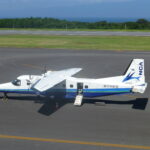
Miyakejima Tourism Association says New Central Airservice operates small aircraft between Chofu Aerodrome and Miyakejima, generally three daily flights with seasonal increases possible, and gives the flight time as about 50 minutes. The Tokyo Metropolitan Government Miyake Subprefecture page lists return flight examples from Miyakejima to Chofu at 9:50, 13:00, and 16:00 in its sample table.
UMISORA’s checked Miyakejima page also showed flight and helicopter entries alongside the ship entries. Use these as comparison branches, not automatic backups. Seats, weather, baggage, check-in timing, airport or heliport transfer, and same-day availability all matter. If you must be in Tokyo earlier than evening, compare the flight before the travel day rather than improvising after a ferry disruption.
Local movement before departure
UMISORA lists Miike Port, Sabigahama (Ako) Port, Igaya Port, and Miyakejima Airport as key transport points. Miyakejima Tourism Association’s FAQ says prebooked taxis, rental cars, or lodging support may be needed for port movement, and that midday ship calls do not necessarily have the same transport pattern as the early morning arrival.
Build the final morning around port confirmation. Keep your phone on, avoid going out of service range, and keep luggage flexible until the official port is clear. The best Miyakejima return plan is boring in the right places: port known, ride known, bag known, ticket known.
Tokyo evening arrival
A 19:50 Takeshiba arrival is comfortable for a Tokyo hotel plan, but it is still the end of a weather-sensitive island route. Leave time for disembarkation, luggage, terminal movement, dinner, and train or taxi transfer. Avoid a late fixed event or airport connection immediately after arrival.
Choose the ferry if you want the ship experience and can give the day enough margin. Choose a flight, or add a Tokyo buffer night, if your next commitment is fixed and expensive.
Return-day checklist
| Need | Official check | Why it matters |
|---|---|---|
| Return timetable | Tokai Kisen timetable | The checked example is 2400, Miyakejima 13:45, Tokyo 19:50 |
| Departure port | Tokai Kisen status page or 04994-5-0221 | Miike, Sabigahama (Ako), and Igaya can differ by day |
| 11:00 decision | Miyakejima Tourism Association FAQ | The Tokyo-bound ship’s port is decided on the same day |
| Conditional operation | Tokai Kisen and local FAQ | Sea conditions can prevent berthing or trigger a much earlier turnaround |
| Checked baggage | Tokai Kisen baggage page | Island checked-baggage cutoff is listed as 50 minutes before departure |
| Local transfer | Lodging, taxi, rental car, or host | Port changes can affect pickup and return logistics |
| Flight comparison | New Central Airservice and official access pages | Chofu flights can be faster but need seat, weather, and baggage checks |
| Tokyo arrival | Tokai Kisen timetable and your hotel route | 19:50 arrival still needs disembarkation and city transfer margin |
Where this fits in the transport hub
Use this as the Miyakejima-to-mainland return branch of the Japan Transport Fan Travel Guide. Read it together with the Tokyo to Miyakejima Overnight Ferry Guide, the Miyakejima Airport Area Guide, and the Miyakejima to Mikurashima Ferry Backup Guide.
Photo credit
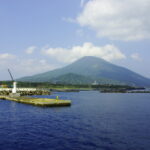
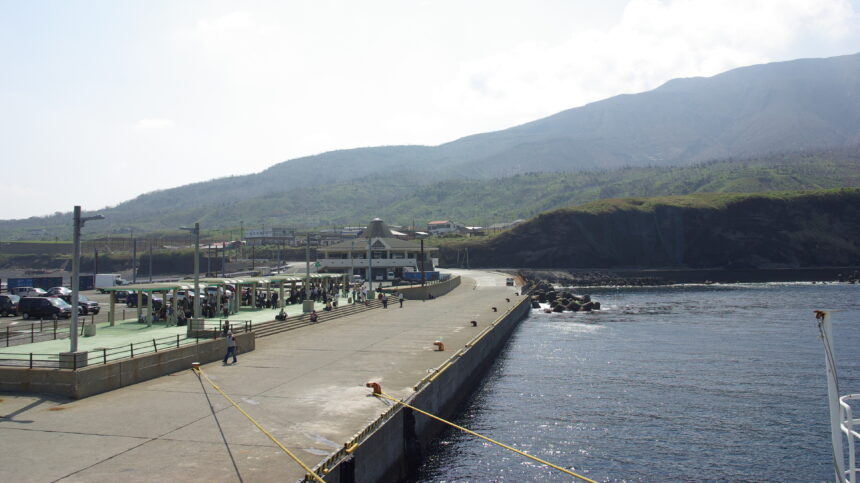
Featured image: Miike Port, Miyakejima by Nagoya Taro on Wikimedia Commons, licensed under CC BY-SA 4.0. The image may be resized for site display. The image is used in editorial transport-travel-guide context and does not imply current departure port, current terminal layout, current operation status, endorsement by the creator, Tokai Kisen, New Central Airservice, Toho Air, Tokyo Metropolitan Government, Miyakejima Tourism Association, Wikimedia, or island communities.
Sources
- Tokai Kisen official timetable
- Tokai Kisen official operation-status page
- Tokai Kisen official checked-baggage page
- Miyakejima Tourism Association access page
- Miyakejima Tourism Association FAQ
- Tokyo Metropolitan Government Miyake Subprefecture access page
- UMISORA / Tokyo Metropolitan Government Miyakejima island access page
- Wikimedia Commons image file and CC BY-SA 4.0 license record
Editorial disclosure: This is an independent planning guide. It is not affiliated with Tokai Kisen, New Central Airservice, Toho Air, Tokyo Metropolitan Government, Miyakejima Tourism Association, Wikimedia, the image creator, or island communities.