Short answer
Miyakejima has three ferry ports that matter for travelers: Miike Port, Sabigahama (Ako) Port, and Igaya Port. The correct port is decided by sea and weather conditions, not by traveler preference. For the Tokyo-bound Tokai Kisen ship, Miyakejima Tourism Association says the port is decided at 11:00, and Tokai Kisen’s status page lists same-day Miyakejima port guidance at 04994-5-0221. Plan your lodging checkout, taxi, rental car, bus, and baggage around that uncertainty.
Last checked: August 21, 2026. Port use, ferry operation status, departure times, checked-baggage handling, local transport, facility hours, accessibility support, phone numbers, weather, and sea conditions can change. Always confirm current details on official operator and local tourism pages before travel.
Why Miyakejima has a three-port problem
Unlike a city ferry terminal, Miyakejima’s ferry plan can shift among three ports: Miike, Sabigahama (Ako), and Igaya. Tokai Kisen’s operation-status page says Miyakejima has these three possible ports and that outbound and inbound ports may differ. The local FAQ says the port used is decided by same-day sea conditions.
That means the port is not a sightseeing choice. It is an operational decision. A good itinerary does not ask, “Which port do I like?” It asks, “How will I check the official port, and how will I move if the port changes?”
Miike Port
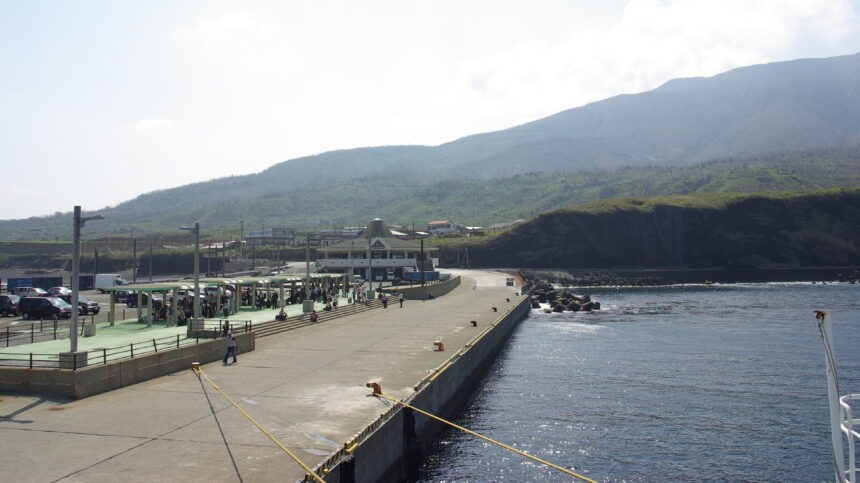
UMISORA, Tokyo Metropolitan Government’s island access site, places Miike Port on the eastern part of Miyakejima. Its facility page gives the address as Tsubota 1260, Miyakejima Miyake Village, Tokyo 100-1211, and lists the phone number as 04994-6-1131. The page also notes the rock in the middle of the quay, preserved from an original reef.
For travelers, the key point is location. If your lodging, rental car, taxi pickup, or sightseeing plan is on another side of the island, Miike can change the final hour of the day. Save the port name and map before travel, but do not assume it will be your port until the official status says so.
Sabigahama (Ako) Port
UMISORA describes Sabigahama (Ako) Port as being on the southwestern part of the island. Its facility page lists the address as Ako 672-3, Miyakejima Miyake Village, Tokyo 100-1212, and the phone number as 04994-5-0221. It also notes that the first floor of the passenger waiting area has tourism association and souvenir functions, and that coin lockers are available.
On the checked Tokai Kisen status page, the 13:45 Tokyo-bound 2400 Tachibana-Maru entry used Sabigahama (Ako) Port. Treat that as a checked example only. The point is not that Sabigahama is always correct. The point is that the current status page can name the port, and your plan should follow the current source.
Igaya Port
UMISORA describes Igaya Port as being on the northwestern part of Miyakejima. Its facility page gives the address as Igaya 299, Miyakejima Miyake Village, Tokyo 100-1103, and lists the phone number as 04994-2-1422. The same page says Igaya complements Miike and Sabigahama (Ako), and also has a role as an evacuation port in the event of volcanic eruption.
For a travel guide, that means Igaya should be treated with respect. It is not just a backup dot on a map. If Igaya is the port, follow official and local instructions, give yourself more time, and keep your transport plan simple.
How to check the port
Use multiple official layers. Tokai Kisen’s operation-status page tells users to refresh the browser for the latest information and lists Miyakejima’s same-day port guidance number as 04994-5-0221. Miyakejima Tourism Association’s FAQ says the Tokyo-bound ship’s port is decided at 11:00 and points travelers to operation status or Tokai Kisen Miyakejima.
UMISORA’s Miyakejima traffic page also gives a same-day operation table and says the page should be refreshed. It notes that large passenger ship updates are generally after 09:00 and that final decisions are around 17:00. For a return day, check before leaving lodging, before returning a car, and before handing over checked baggage.
Local movement and baggage
Miyakejima Tourism Association’s FAQ says prebooked taxis, rental cars, or lodging pickup may be needed for port movement. It also notes that midday ship calls do not necessarily have the same convenient transport pattern as the early morning arrival. That matters because Tokai Kisen’s checked-baggage page lists the island-area checked-baggage cutoff as 50 minutes before departure except Niijima.
If the Tokyo-bound ferry is scheduled at 13:45, the baggage mindset is around 12:55, but the port may only be known at 11:00. Keep lunch, sightseeing, and rental-car returns modest. The port decision and baggage cutoff are closer together than they look on paper.
Port-day checklist
| Need | Where to check | Why it matters |
|---|---|---|
| Current port | Tokai Kisen status page or 04994-5-0221 | Miike, Sabigahama (Ako), and Igaya can differ by day |
| 11:00 decision | Miyakejima Tourism Association FAQ | The Tokyo-bound ferry port is decided the same day |
| Ship status | Tokai Kisen and UMISORA | Conditional operation, timing changes, and weather notes matter |
| Local transfer | Lodging, taxi, rental car, or bus source | A port change can move your pickup point across the island |
| Baggage | Tokai Kisen checked-baggage page | Island checked-baggage cutoff is listed as 50 minutes before departure |
| Facility expectations | UMISORA station pages | Each port has different location and facility context |
| Backup branch | Flight or helicopter operator | Air options are not automatic backups and need separate checks |
Where this fits in the transport hub
Use this as the port-choice branch of the Japan Transport Fan Travel Guide. Read it together with the Tokyo to Miyakejima Overnight Ferry Guide, the Miyakejima to Tokyo Return Ferry Guide, the Miyakejima Airport Area Guide, and the Miyakejima to Mikurashima Ferry Backup Guide.
Photo credit
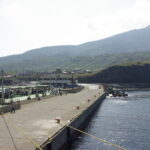
Featured image: Miike Port, Miyakejima by Nagoya Taro on Wikimedia Commons, licensed under CC BY-SA 4.0. The image may be resized for site display. The image is used in editorial transport-travel-guide context and does not imply current departure port, current terminal layout, current operation status, endorsement by the creator, Tokai Kisen, Tokyo Metropolitan Government, Miyakejima Tourism Association, Wikimedia, or island communities.
Sources
- Tokai Kisen official operation-status page
- Tokai Kisen official timetable
- Tokai Kisen official checked-baggage page
- Miyakejima Tourism Association FAQ
- Miyakejima Tourism Association access page
- UMISORA / Tokyo Metropolitan Government Miyakejima island access page
- UMISORA Miyakejima operation-status page
- UMISORA Miike Port page
- UMISORA Sabigahama (Ako) Port page
- UMISORA Igaya Port page
- Wikimedia Commons image file and CC BY-SA 4.0 license record
Editorial disclosure: This is an independent planning guide. It is not affiliated with Tokai Kisen, Tokyo Metropolitan Government, Miyakejima Tourism Association, Wikimedia, the image creator, or island communities.