Short answer
The Tokyo to Miyakejima overnight ferry is one of the most useful Izu Islands transport experiences: you leave Tokyo Takeshiba at night, sleep or rest on a large passenger ship, and arrive at Miyakejima very early the next morning. The key is to plan it as a real overnight journey, not a simple train ride: check Tokai Kisen’s official timetable, reservation, baggage, terminal, operation status, Miyakejima port decision, and your 5:00 arrival plan before travel.
Last checked: August 21, 2026. Timetables, fares, cabin categories, reservation rules, ticketing, baggage handling, terminal hours, operation decisions, Miyakejima ports, weather, and local transport can change. Always confirm current details on official operator and local tourism pages before travel.
The basic overnight route
Tokai Kisen’s official timetable lists the Tokyo-Miyakejima-Mikurashima-Hachijojima route under large passenger ship service. In the checked timetable table, ship code 3400 departs Tokyo at 22:30 and arrives Miyakejima at 5:00 the next morning before continuing to Mikurashima and Hachijojima.
That timing is the appeal. You can finish a Tokyo day, board at night, and wake up near a volcanic island. It is also the trap. A 5:00 arrival means many services are not open yet, and your arrival port may not be known the previous evening.
Start at Tokyo Takeshiba
Tokai Kisen’s terminal guide lists Tokyo Takeshiba Terminal as the boarding terminal. The Japanese terminal page gives the address as 1-12-2 Kaigan, Minato-ku, Tokyo, and lists phone numbers for operation guidance and terminal contact. The English page also lists Tokyo Takeshiba Terminal and a terminal operation-guidance number.
For an overnight ship, arrive with more margin than you would use for a commuter train. You may need to confirm your ticket, check a bag, find the correct boarding area, buy drinks or a meal, and adjust if the ship, gate, or weather notice changes. Late-night calm is lovely only when your paperwork is already handled.
Reservation and ticketing
Tokai Kisen says reservations can be made online, by phone, or through a travel agency. Its reservation-flow page says online reservations require free membership registration, open from two months before the sailing date, and must be paid by one hour before departure. Phone reservations use the customer center numbers 03-5472-9999 or 0570-005710, and the page says the reservation number is needed when buying the ticket.
Do not treat the ferry as a same-night walk-up plan unless you have checked availability and the operator’s current rules. Cabin and berth choice matters on an overnight trip, especially if you need real sleep before driving, hiking, diving, or birdwatching after arrival.
Cabin choice is a travel decision
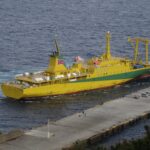
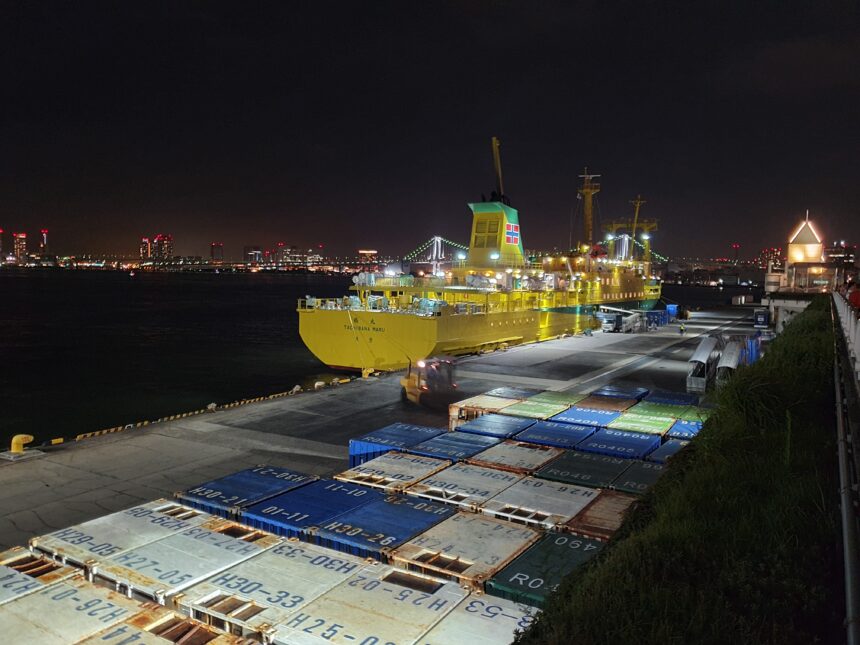
Tokai Kisen’s Tachibana-Maru page says the ship is 118 m, about 5,700 tons, has passenger capacity of 1,000, and normally runs the Tokyo-Miyakejima-Mikurashima-Hachijojima route. The official cabin guide lists options such as Deluxe Cabin, Special 1st Class, 1st Class, Special 2nd Class, and 2nd Class, with several classes described as shared-room or shared-cabin formats.
Choose a cabin class based on the next morning, not only on price. If you will rent a car, meet a guide, dive, hike, or travel with children, sleep quality becomes part of the transport plan. If the ferry itself is the purpose, a simpler class may be enough, but confirm the current layout, availability, and fare on the official page.
Baggage and large items
Tokai Kisen’s checked-baggage page says checked baggage is handled only on large passenger ships. It lists Tokyo’s checked-baggage cutoff as 40 minutes before departure, and says large travel bags up to 200 cm total dimensions and 30 kg total weight can be checked, up to two items per person. It also gives separate handling rules for larger items and bicycles.
That matters for Miyakejima because travelers may bring diving bags, camera gear, fishing rods, hiking equipment, coolers, or bicycles. Do not solve large luggage at 22:10 in the terminal. Check the current baggage page, pay any required handling fee, and separate valuables, medication, chargers, sleep items, and morning essentials into a small bag you keep with you.
Operation status and conditional operation
Tokai Kisen’s operation-status page says large passenger ship information is updated after 9:00 and final decisions are planned around 17:00. The same page warns that even when a ship is shown as operating, sea and harbor conditions may still prevent berthing.
Miyakejima Tourism Association explains this in traveler language: conditional operation means sea conditions may prevent the ship from berthing. It also explains a turn-back situation in which a ship may reach Miyakejima and return toward Tokyo because conditions are poor. Read these notices before you celebrate a simple green status.
The Miyakejima port is not known the night before
Miyakejima Tourism Association says Miyakejima has three ports and that the port is decided by sea conditions. It says the arrival port decision is made around 3:30 early morning, so it is not known the day before. It also points travelers to official operation status or Tokai Kisen Miyakejima at 04994-5-0221.
This is the single most important local detail. Do not promise a taxi, rental car, lodging pickup, or walking route based on one assumed port. Your plan should work for Miike, Sabigahama or Ako, and Igaya, or you should have a local pickup that follows the official port decision.
What 5:00 arrival really means
The tourism association says there is no general place to rest after the 5:00 ship arrival. If you have lodging, ask in advance whether paid early check-in is possible. It also says taxis and rental cars should be booked in advance, that temporary buses wait at the port for early ship arrivals, and that those buses may leave about 15 minutes after arrival, with the next bus 2 to 2.5 hours later.
In practical terms, decide your first two hours before boarding in Tokyo. Are you being picked up? Are you taking the temporary bus? Are you waiting for a rental car office? Do you have breakfast, water, cash, rain gear, and a phone battery? The overnight ship is smoother when the first morning step is already boringly clear.
First-morning plan
| Need | Check before boarding | Why it matters |
|---|---|---|
| Ship departure | Tokai Kisen operation status | The final large-ship decision is weather-sensitive |
| Ticket | Reservation number, payment, ticket pickup | Late-night terminal time disappears quickly |
| Bag | Checked-baggage cutoff and large-item rules | Diving gear and large bags need planning |
| Sleep | Cabin class and shared-room format | The next morning starts around 5:00 |
| Arrival port | Official status or 04994-5-0221 | The port is decided early morning, not the night before |
| Pickup | Lodging, taxi, rental car, or bus plan | There may be no easy waiting place after arrival |
| Breakfast and rest | Food, water, weather gear, phone battery | Island services may not be open yet |
Who should choose the overnight ferry?
Choose the ferry if you like ship travel, want to save daylight, can handle early arrival, and have enough flexibility for weather and port changes. It is especially good for transport fans who want the full Tokyo Bay departure, night ship, island-port arrival, and volcanic-island morning.
Avoid making it the only possible plan if you must attend a fixed morning appointment, cannot sleep in shared spaces, have complicated baggage, or need guaranteed arrival at one specific Miyakejima port. In those cases, compare the Chofu-Miyakejima flight and build more buffer.
Where this fits in the transport hub
Use this as the mainland-to-Miyakejima sea-route branch of the Japan Transport Fan Travel Guide. Read it together with the Miyakejima Airport Area Guide, the Miyakejima to Mikurashima Ferry Backup Guide, and the Chofu Aerodrome Area Guide.
Photo credit
Featured image: Tachibana Maru at Takeshiba Pier by Syced on Wikimedia Commons, dedicated to the public domain under CC0 1.0. Cropping or resizing may be applied for site display. The image is used in editorial transport-travel-guide context and does not imply current ship assignment, current departure time, current boarding process, current terminal layout, endorsement by the creator, Tokai Kisen, Miyakejima Tourism Association, Wikimedia, or island communities.
Sources
- Tokai Kisen official timetable
- Tokai Kisen official operation-status page
- Tokai Kisen official English boarding terminal guide
- Tokai Kisen official Japanese boarding terminal guide
- Tokai Kisen official reservation-flow page
- Tokai Kisen official checked-baggage page
- Tokai Kisen official Tachibana-Maru page
- Tokai Kisen official Miyakejima island page
- Miyakejima Tourism Association FAQ
- Wikimedia Commons image file and CC0 1.0 license record
Editorial disclosure: This is an independent planning guide. It is not affiliated with Tokai Kisen, Miyakejima Tourism Association, Wikimedia, the image creator, or island communities.