Short answer
The Tokyo to Hachijojima overnight ferry is a long, satisfying Izu Islands sea route for travelers who want the full night-ship experience: late boarding at Tokyo Takeshiba, sleep or rest on Tokai Kisen’s large passenger ship, and arrival at Hachijojima the next morning. Plan it as a real overnight journey. Check the official timetable, reservation, baggage, cabin, operation status, Hachijojima arrival port, and first-morning local transport before you travel.
Last checked: August 21, 2026. Timetables, fares, cabin categories, reservation rules, ticketing, baggage handling, terminal hours, operation decisions, arrival ports, weather, and local transport can change. Always confirm current details on official operator and local tourism pages before travel.
The basic overnight route
Tokai Kisen’s official timetable lists the Tokyo-Miyakejima-Mikurashima-Hachijojima route under large passenger ship service. In the checked timetable table, ship code 3400 departs Tokyo at 22:30, calls at Miyakejima and Mikurashima early in the morning, and arrives at Hachijojima at 8:55.
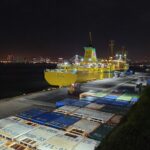
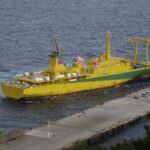
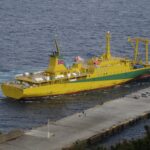
Hachijojima Tourism Association describes the sea route as Tokai Kisen’s Tachibana-Maru running one round trip per day between Tokyo Takeshiba Pier and Hachijojima’s Sokodo or Yaene port, with a one-way travel time of about 10 hours 20 minutes. That duration is exactly why this is more than a simple transfer: your cabin choice, sleep plan, luggage, and morning pickup all matter.
Start at Tokyo Takeshiba
Tokai Kisen’s English terminal guide lists Tokyo Takeshiba Terminal as the boarding terminal. The Japanese terminal page gives the address as 1-12-2 Kaigan, Minato-ku, Tokyo, and lists phone numbers for operation guidance and terminal contact.
For a 22:30 sailing, do not arrive as if this were a local train. You may need to collect or confirm your ticket, handle checked baggage, find the correct waiting area, buy drinks or food, and read any operation or weather notice. The terminal is part of the experience, but it is easier to enjoy when the practical pieces are already done.
Reservation and ticketing
Tokai Kisen says reservations can be made online, by phone, or through travel agencies. Its reservation-flow page says online reservations require free membership registration, open from two months before the sailing date, and must be paid by one hour before departure. Phone reservations use the customer center numbers 03-5472-9999 or 0570-005710, and the page says the reservation number is needed when buying the ticket.
For Hachijojima, reservation planning is not only about getting on the ship. It is about choosing a berth or cabin that matches your next morning. A traveler who plans to drive, dive, hike, or meet a guide after arrival needs a different sleep plan from a ferry fan who simply wants to watch the route unfold.
Cabin choice on Tachibana-Maru
Tokai Kisen’s Tachibana-Maru page says the ship is 118 m, about 5,700 tons, has passenger capacity of 1,000, and normally runs the Tokyo-Miyakejima-Mikurashima-Hachijojima route. The official cabin guide lists options including Deluxe Cabin, Special 1st Class, 1st Class, Special 2nd Class, and 2nd Class, with several categories described as shared-room or shared-cabin formats.
Think of cabin choice as part of the itinerary. A lower-cost shared space may be fine if the ship itself is the main attraction and your first day is gentle. If you need to be alert after landing, a more restful class may be worth comparing. Always check current class names, availability, fare, and onboard amenities on the official page before booking.
Baggage and large items
Tokai Kisen’s checked-baggage page says checked baggage is handled only on large passenger ships. It lists Tokyo’s checked-baggage cutoff as 40 minutes before departure, and says large travel bags up to 200 cm total dimensions and 30 kg total weight can be checked, up to two items per person. It also gives special handling rules for bicycles and other large items, including advance reservation for bicycles not packed in rinko bags.
Hachijojima travelers may carry diving equipment, camera gear, hiking gear, fishing equipment, or bulky luggage. Do not discover the rules at the counter near departure time. Keep valuables, medication, chargers, a light layer, rain gear, earplugs, and morning essentials in a small bag that stays with you.
Operation status and conditional berthing
Tokai Kisen’s operation-status page says large passenger ship information is updated after 9:00 and final decisions are planned around 17:00. The same page warns that even when a ship is shown as operating, sea and harbor conditions may still prevent berthing.
For a remote-island route, that warning is not fine print. A ferry can depart Tokyo and still face sea or harbor conditions near the island. Check the official operation page before leaving for Takeshiba, again before boarding, and again in the morning if you need to coordinate pickup or onward travel.
Sokodo or Yaene: plan for both
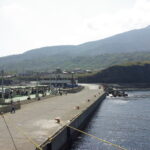
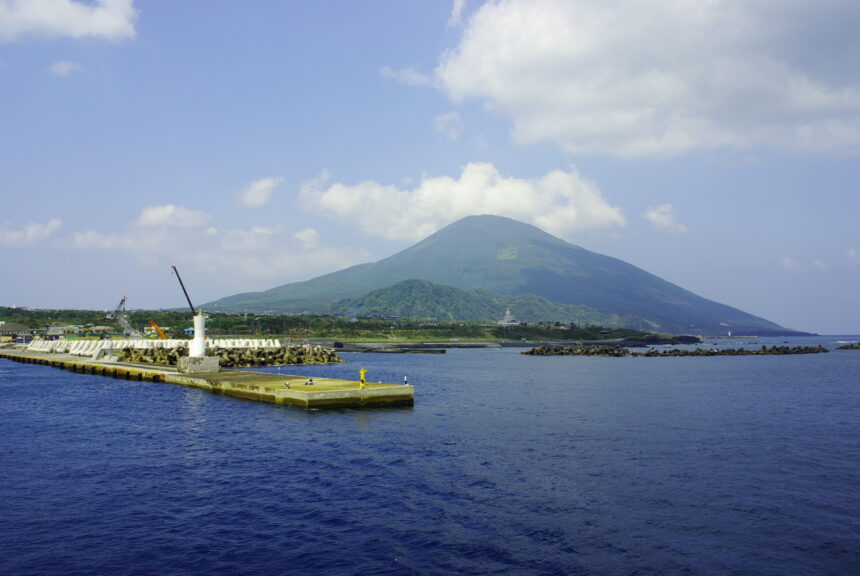
Hachijojima Tourism Association says the sea route uses Hachijojima’s Sokodo or Yaene port. UMISORA, Tokyo Metropolitan Government’s island access site, describes Hachijojima Kamiminato (Sokodo) Port as a gateway for the Takeshiba-Hachijojima passenger-boat route. Its Yaene Port page says Yaene is used when Sokodo / Kamiminato Port is not available.
This is the detail that makes the Hachijojima ferry different from a city transfer. Do not build a plan that works only for one port unless your accommodation, taxi, rental car office, or guide has confirmed how they handle port changes. Save both port names, check the operation page, and keep the local Tokai Kisen Hachijojima contact number 04996-2-1211 handy.
What 8:55 arrival really means
An 8:55 arrival is friendlier than a very early island landing, but it is still a port arrival, not a hotel lobby. UMISORA lists Hachijo Town Bus, taxi operators, rental-car operators, and rental bicycle or bike options on its Hachijojima page, while also warning travelers to contact the operating company because operating time and required time can change by season and weather.
Before boarding in Tokyo, decide your first two island moves. Are you being picked up? Are you taking a bus? Which port should the taxi or rental-car office watch? Can you leave luggage at lodging? Do you have breakfast, water, cash, rain gear, and a charged phone? A long ferry trip feels much better when the first hour after landing is already boringly clear.
First-morning checklist
| Need | Check before boarding | Why it matters |
|---|---|---|
| Ship departure | Tokai Kisen operation status | The large-ship decision is weather-sensitive |
| Ticket | Reservation number, payment, ticket pickup | Late-night terminal time can disappear quickly |
| Bag | Checked-baggage cutoff and large-item rules | Diving gear, bicycles, and large bags need planning |
| Sleep | Cabin class and shared-room format | The trip is about 10 hours 20 minutes |
| Arrival port | Sokodo/Kamiminato or Yaene status | Your pickup point may change with conditions |
| Island transport | Bus, taxi, rental car, or lodging pickup | Local capacity and timing are limited |
| Morning comfort | Food, water, weather gear, phone battery | Do not rely on immediate open services |
Who should choose the overnight ferry?
Choose the ferry if you enjoy ships, want to save daylight, like watching a route connect multiple islands, and can handle weather-sensitive operation. It is especially rewarding for transport fans because the journey includes Tokyo Bay departure, overnight ship life, island calls, and a real ocean arrival at Hachijojima.
Choose a flight instead, or add more buffer, if you must attend a fixed appointment soon after arrival, cannot sleep in shared spaces, have complex baggage, or cannot tolerate the risk of a changed port or delayed arrival. Hachijojima is close to Tokyo by air, but by sea it remains an island route that deserves respect.
Where this fits in the transport hub
Use this as the mainland-to-Hachijojima sea-route branch of the Japan Transport Fan Travel Guide. Read it together with the Hachijojima Airport Area Guide, the Hachijojima Airport to Tokyo Ai-Land Shuttle Transfer Guide, and the Hachijojima to Aogashima Ferry Backup Guide.
Photo credit
Featured image: Sokodo harbor by Nagoya Taro / Commons user NNE on Wikimedia Commons, licensed under CC BY-SA 3.0. The image may be resized for site display. The image is used in editorial transport-travel-guide context and does not imply current arrival port, current ship assignment, current terminal layout, current operation status, endorsement by the creator, Tokai Kisen, Tokyo Metropolitan Government, Hachijojima Tourism Association, Wikimedia, or island communities.
Sources
- Tokai Kisen official timetable
- Tokai Kisen official operation-status page
- Tokai Kisen official English boarding terminal guide
- Tokai Kisen official Japanese boarding terminal guide
- Tokai Kisen official reservation-flow page
- Tokai Kisen official checked-baggage page
- Tokai Kisen official Tachibana-Maru page
- Hachijojima Tourism Association access page
- UMISORA / Tokyo Metropolitan Government Hachijojima island access page
- UMISORA Hachijojima Kamiminato (Sokodo) Port page
- UMISORA Hachijojima Yaene Port page
- Wikimedia Commons image file and CC BY-SA 3.0 license record
Editorial disclosure: This is an independent planning guide. It is not affiliated with Tokai Kisen, Tokyo Metropolitan Government, Hachijojima Tourism Association, Wikimedia, the image creator, or island communities.