Short answer
The Tokyo to Mikurashima overnight ferry is a beautiful but serious Izu Islands route: you board Tokai Kisen’s large passenger ship at Tokyo Takeshiba late at night, sleep or rest on board, and aim to reach Mikurashima early the next morning. The key word is “aim.” Mikurashima is exposed to open-ocean conditions, has one pier, and can be hard for ships to berth at, so this route needs official status checks, flexible time, lodging coordination, and nature-rule awareness.
Last checked: August 21, 2026. Timetables, fares, cabin categories, reservation rules, ticketing, baggage handling, terminal hours, operation decisions, berthing conditions, helicopter connections, weather, lodging pickup, and local nature-tour rules can change. Always confirm current details on official operator and local tourism pages before travel.
The basic overnight route
Tokai Kisen’s official timetable lists the Tokyo-Miyakejima-Mikurashima-Hachijojima route under large passenger ship service. In the checked timetable table, ship code 3400 departs Tokyo at 22:30, calls at Miyakejima around 5:00, reaches Mikurashima at 6:00, and then continues toward Hachijojima.
Tokai Kisen’s route and travel-time page lists Tokyo Takeshiba Terminal to Mikurashima by large passenger ship as an overnight route of at least 7 hours 25 minutes, with travel time varying by operation status. GO TOKYO similarly describes the large passenger ship as departing Takeshiba at night, traveling via Miyakejima, and arriving at Mikurashima the next morning.
Start at Tokyo Takeshiba
Tokai Kisen’s English terminal guide lists Tokyo Takeshiba Terminal as the boarding terminal. The Japanese terminal page gives the address as 1-12-2 Kaigan, Minato-ku, Tokyo, and lists phone numbers for operation guidance and terminal contact.
For a 22:30 sailing, give yourself more margin than you would for a train. You may need to confirm the latest operation notice, collect or confirm your ticket, handle checked baggage, buy food or drinks, and settle into the correct waiting area. For Mikurashima, the practical work starts before boarding, because the morning arrival depends on sea and harbor conditions.
Reservation and ticketing
Tokai Kisen says reservations can be made online, by phone, or through travel agencies. Its reservation-flow page says online reservations require free membership registration, open from two months before the sailing date, and must be paid by one hour before departure. Phone reservations use the customer center numbers 03-5472-9999 or 0570-005710, and the page says the reservation number is needed when buying the ticket.
A reservation is not the same thing as a guarantee of landing. Treat it as one layer of the plan, then check the operation-status page, the weather, your lodging pickup, and your backup dates before you leave for Takeshiba.
Cabin choice on Tachibana-Maru
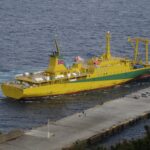
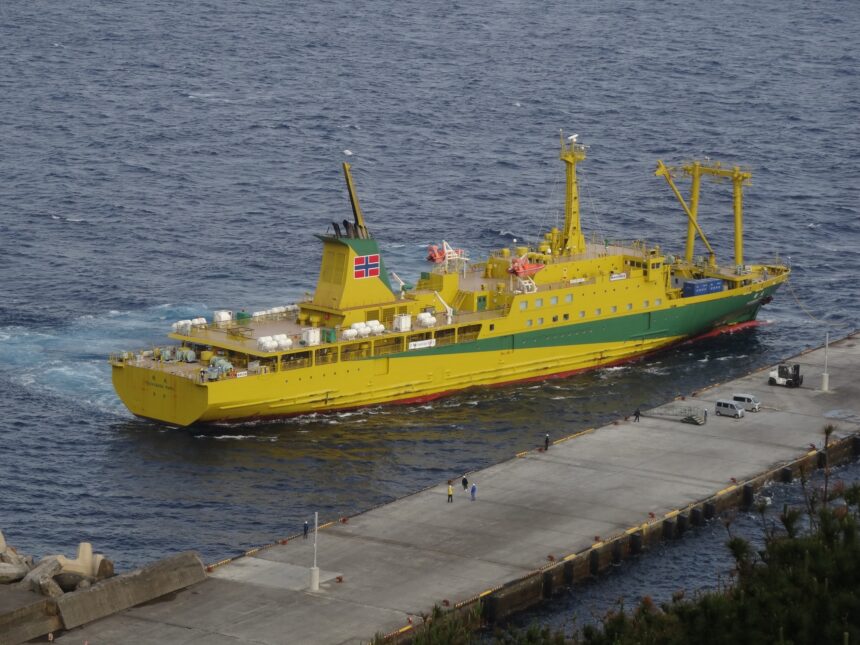
Tokai Kisen’s Tachibana-Maru page says the ship is 118 m, about 5,700 tons, has passenger capacity of 1,000, and normally runs the Tokyo-Miyakejima-Mikurashima-Hachijojima route. The official cabin guide lists options including Deluxe Cabin, Special 1st Class, 1st Class, Special 2nd Class, and 2nd Class, with several categories described as shared-room or shared-cabin formats.
Choose the cabin based on the morning you want to have. A lower-cost shared class may be enough if your first day is slow and flexible. If you need to meet lodging staff, a boat captain, or a guide soon after arrival, sleep quality becomes part of the transport plan.
Baggage, bikes, and what not to improvise
Tokai Kisen’s checked-baggage page says checked baggage is handled only on large passenger ships. It lists Tokyo’s checked-baggage cutoff as 40 minutes before departure, island-area cutoff as 50 minutes before departure except Niijima, and large travel bags up to 200 cm total dimensions and 30 kg total weight as checkable up to two items per person.
The same page gives special handling rules for bicycles, including advance reservation for bicycles not packed in rinko bags, and states that bicycles are prohibited for use on Mikurashima. GO TOKYO also says biking and camping are prohibited. For this island, pack for the rules that exist on the island, not for mainland convenience.
Operation status and berthing risk
Tokai Kisen’s operation-status page tells readers to refresh the browser to see the current information. In the Mikurashima section, the page lists the Tokyo 22:30 large passenger ship and Mikurashima Port status. On the checked page, the Tokyo-departing 3400 Tachibana-Maru entry included a note to check the 17:00 final decision.
The same status page warns that even when a ship is shown as operating, sea and harbor conditions may still prevent berthing. Mikurashima Tourism Association explains why this matters locally: the island sits in open ocean, is affected by tide and wind, has only one pier, and passenger ships can often be cancelled depending on sea conditions.
What 6:00 arrival really means
A 6:00 arrival is early, and on Mikurashima it is not a casual walk-off-then-decide situation. Coordinate lodging and pickup before you board in Tokyo. Ask where you should go if the ship berths, what happens if it cannot berth, and how the lodging or tour operator wants to handle same-day changes.
Do not assume there will be easy taxis, buses, luggage storage, English support, or open services at the port. GO TOKYO notes that island facilities do not offer English support, so save essential names, phone numbers, and simple Japanese phrases before travel.
Dolphin and hiking rules are part of transport planning
Many travelers choose Mikurashima because of dolphins. GO TOKYO says the whole island is designated as a national park and that swimming with dolphins and hiking are permitted only under the supervision of a Tokyo Nature Guide. It also says biking and camping are prohibited.
Mikurashima Tourism Association’s ocean page adds the practical rhythm: confirm dolphin-watching schedules with the captain the day before, receive a briefing on the day, prepare the right gear, use lodging or boat pickup to the pier, be punctual, board carefully, enter the water only when instructed, stay away from the propeller area, and do not walk around town in swimwear or wetsuits. Your ferry plan should support these rules, not compress them.
Helicopter comparison
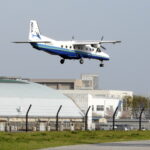
GO TOKYO says helicopter transfer is possible from Miyakejima or Hachijojima, with Miyakejima to Mikurashima taking about 10 minutes and Hachijojima to Mikurashima about 25 minutes. Mikurashima Tourism Association’s access page also lists air and helicopter connection examples and Toho Air contact information.
That does not make the helicopter a guaranteed rescue. Seats are limited, reservations matter, and weather decisions are separate from ship decisions. Use it as a comparison branch, not as an excuse to build a fragile schedule around the last possible ferry.
Before-boarding checklist
| Need | Official check | Why it matters |
|---|---|---|
| Ship schedule | Tokai Kisen timetable | The 22:30 and 6:00 clock can change by season or notice |
| Operation status | Tokai Kisen status page | Final decisions and berthing cautions are weather-sensitive |
| Ticket | Tokai Kisen reservation page | Reservation number, payment, and pickup matter at night |
| Cabin | Tachibana-Maru cabin guide | Sleep quality shapes your first island morning |
| Baggage | Tokai Kisen checked-baggage page | Diving gear and large bags need cutoff-time planning |
| Bike/camping | Tokai Kisen and GO TOKYO | Biking and camping are not casual options on Mikurashima |
| Landing plan | Lodging, guide, captain, local tourism source | One pier and open-ocean conditions require backup time |
| Dolphin or hiking plan | GO TOKYO and Mikurashima Tourism Association | Nature activities require guide and boat-rule awareness |
Who should choose the overnight ferry?
Choose the ferry if you enjoy ship travel, can build in schedule margin, have lodging coordination, and accept that the sea may overrule your plan. It is a memorable transport-fan route precisely because it is a real island lifeline, not a staged sightseeing cruise.
Avoid making it the only possible plan if you must be in Tokyo, Haneda, another island, or a paid activity at a fixed time. For Mikurashima, the best itinerary is the one that gives the ship, the sea, the island, and the wildlife enough room.
Where this fits in the transport hub
Use this as the mainland-to-Mikurashima overnight sea-route branch of the Japan Transport Fan Travel Guide. Read it together with the Miyakejima to Mikurashima Ferry Backup Guide, the Mikurashima Heliport Area Guide, and the Tokyo Ai-Land Shuttle Booking and Baggage Guide.
Photo credit
Featured image: Tachibana Maru at the Port of Mikurajima by Commons user Seiseki Taisen Buubuu, romanized from the Japanese username shown on the Wikimedia Commons file record, licensed under CC BY-SA 4.0. The image may be resized for site display. The image is used in editorial transport-travel-guide context and does not imply current ship assignment, current port condition, current operation status, current berthing guarantee, endorsement by the creator, Tokai Kisen, Toho Air, Tokyo Metropolitan Government, GO TOKYO, Mikurashima Tourism Association, Wikimedia, or island communities.
Sources
- Tokai Kisen official timetable
- Tokai Kisen official route and travel-time page
- Tokai Kisen official operation-status page
- Tokai Kisen official English boarding terminal guide
- Tokai Kisen official Japanese boarding terminal guide
- Tokai Kisen official reservation-flow page
- Tokai Kisen official checked-baggage page
- Tokai Kisen official Tachibana-Maru page
- Mikurashima Tourism Association access page
- GO TOKYO official Mikurashima guide
- Mikurashima Tourism Association ocean and dolphin-watching page
- Wikimedia Commons image file and CC BY-SA 4.0 license record
Editorial disclosure: This is an independent planning guide. It is not affiliated with Tokai Kisen, Toho Air, Tokyo Ai-Land Shuttle, Tokyo Metropolitan Government, GO TOKYO, Mikurashima Tourism Association, Wikimedia, the image creator, or island communities.