Short answer
Mikurashima Heliport is a working island transport point, not a casual observation attraction. For aviation fans, the interest is the network: Tokyo Ai-Land Shuttle links Mikurashima with Hachijojima and Miyakejima, while ships connect the island with the wider Tokyo island route. The right plan is careful, weather-aware, and respectful of a small village known for forest, dolphins, and limited transport.
Last checked: August 21, 2026. Helicopter schedules, fares, seat availability, baggage rules, check-in windows, aircraft, ship operation, weather decisions, visitor rules, dolphin tourism seasons, guide requirements, and local transport availability can change. Always confirm current details with Toho Air / Tokyo Ai-Land Shuttle, Mikurashima Village, UMISORA, ferry operators, tourism operators, and your lodging before travel.
Why Mikurashima matters to transport fans
Mikurashima sits in the part of the Tokyo island network where transport is not just a convenience. UMISORA describes the island as a forested island about 200 km south of Tokyo, with 500m-class mountains, old-growth forest, dolphins, and spring water. That setting makes the heliport important: the helicopter is part of how people move between islands when weather and reservations allow.
For a visitor, the article’s main lesson is restraint. Mikurashima Heliport should be treated as a small working facility. Do not plan fence-line spotting, drones, road stopping, gate photography, or access beyond public and approved areas. If your trip depends on seeing a specific aircraft movement, this is the wrong place to force the plan.
Understand the island-chain timetable
As of August 21, 2026, Tokyo Ai-Land Shuttle’s timetable listed Mikurashima inside the island-to-island chain. Flight 21 was listed as Hachijojima 11:20 to Mikurashima 11:45, followed by flight 22 from Mikurashima 11:55 to Miyakejima 12:05. Later in the day, flight 31 was listed as Miyakejima 14:35 to Mikurashima 14:45, and flight 32 as Mikurashima 14:55 to Hachijojima 15:20.
The same timetable page says check-in must be completed 50 to 30 minutes before departure. That is not a detail to skim. On a small island route, late arrival, overpacked baggage, or a missed check-in window can break the entire day’s logistics. Recheck the official timetable for your actual travel date before you book anything around it.
Fares, baggage, and aircraft context
As of the check date, Tokyo Ai-Land Shuttle’s fare page listed Hachijojima-Mikurashima at 13,820 yen one way for adults and 9,670 yen for children. Miyakejima-Mikurashima was listed at 7,750 yen one way for adults and 5,430 yen for children. Excess baggage was listed at 240 yen per kg, with the fee applying above 5 kg.
The operator’s fleet page lists Leonardo AW139 and Sikorsky S-76 C+/C++ aircraft. Treat aircraft type as context, not a promise for your flight. Weather, maintenance, operations, and emergency priorities can change what a traveler actually experiences.
Know the heliport rules
The official Mikurashima Village heliport ordinance lists Mikurashima Heliport at Katsuo, Mikurashima Village. It states that the heliport’s usage time is 8:00 to 17:00, with special exceptions when the village head recognizes a need. It also allows emergency departures and arrivals by police, fire, or medical aircraft with village approval.
That legal context is a useful reminder: this is village infrastructure. Keep visits practical and quiet. Use the heliport only as part of legitimate transport, follow staff instructions, and stay out of restricted or operational space.
Compare helicopter and ship access
Ship access is part of the planning picture, but it is weather-sensitive. Tokyo Islands access information places Mikurashima in the broader Takeshiba-Oshima-Toshima-Niijima-Shikinejima-Kozushima-Miyakejima-Mikurashima-Hachijojima route context. The island page also says large-ship arrival can fall below 50 percent depending on weather and season.
That makes the helicopter and ship feel complementary rather than interchangeable. A flexible traveler can use both as context, but a tight itinerary should not assume one instantly replaces the other. Confirm current ship status, port calls, and onward connections before travel, especially in rough seas or typhoon season.
On-island movement is sparse
UMISORA’s traffic information for Mikurashima lists no route bus, no sightseeing bus, no taxi, no rental bicycle, and no rental bike. Tokyo Islands tourism information similarly says the island has no bike rentals, car rentals, or public transportation, so travelers move on foot. That changes how you plan the heliport area: arrival is only one piece of the trip.
Confirm lodging, walking distances, luggage handling, weather, and your host’s instructions before arrival. Do not assume you can improvise the way you might in a mainland city or large airport town.
Respect the island’s nature rules
Mikurashima is widely associated with dolphins, but nature tourism here is not a free-for-all. Tokyo Islands tourism information describes dolphin swimming as April to November and states that feeding, touching, and chasing dolphins are prohibited. Mikurashima Tourism Association also says visitors should be accompanied by a local guide when entering deep mountain areas.
For aviation fans, that means the transport plan should support the island, not overwhelm it. Keep helicopter interest secondary to local rules, weather, guide systems, and resident life. If you add dolphin watching or forest walking, book through appropriate local channels and follow the rules even when they limit what you can do.
Simple first-time plan
| Step | What to confirm | Why it matters |
|---|---|---|
| 1 | Choose a gateway: Hachijojima or Miyakejima | Tokyo Ai-Land Shuttle links Mikurashima through the island chain |
| 2 | Check the official timetable, fare, baggage rule, and same-day operation status | Helicopter details are high-update and weather-dependent |
| 3 | Confirm ship status as a separate transport option | Large-ship arrival can be poor depending on weather and season |
| 4 | Confirm lodging and local movement before arrival | There is no route bus, taxi, or rental-bike fallback |
| 5 | Follow dolphin, forest, and village rules | Mikurashima is a living nature island, not only a transport object |
Where this fits in the transport hub
Use this as the Mikurashima branch of the Japan Transport Fan Travel Guide. It pairs with the Aogashima Heliport guide for remote-island helicopter planning, the Hachijojima Airport guide for the southern gateway, and the Miyakejima Airport guide for the island-chain connection. The strongest angle is not aircraft watching; it is understanding how fragile, practical, and community-sensitive island transport can be.
Photo credit
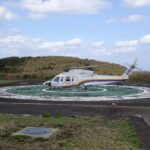
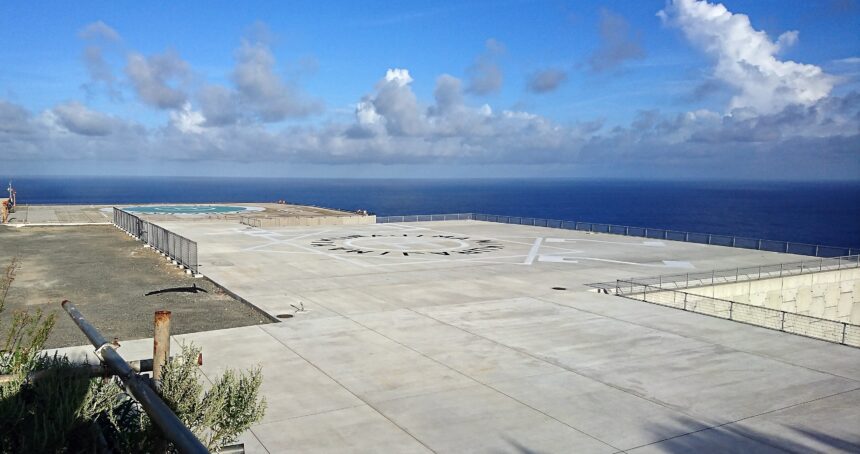
Featured image: Mikurajima heliport by Bruno Plus on Wikimedia Commons, CC BY-SA 4.0. Cropping or resizing may be applied for site display. The image is used in editorial transport-travel-guide context and does not imply endorsement by the photographer, Mikurashima Village, Toho Air, Tokyo Ai-Land Shuttle, Tokyo Metropolitan Government, UMISORA, ferry operators, tourism operators, Wikimedia, or local residents.
Sources
- Tokyo Ai-Land Shuttle: official operation and availability page
- Tokyo Ai-Land Shuttle: routes and timetable
- Tokyo Ai-Land Shuttle: fares and baggage charges
- Tokyo Ai-Land Shuttle: heliport information
- Tokyo Ai-Land Shuttle: aircraft fleet
- Mikurashima Village: heliport management ordinance
- UMISORA / Tokyo Treasure Island Traffic Information: Mikurashima access
- Hachijo Town: access information
- Tokyo Islands: access information
- Tokyo Islands: Mikurashima tourism information
- Mikurashima Tourism Association
- Wikimedia Commons image file and license record
Editorial disclosure: This is an independent planning guide. It is not affiliated with Mikurashima Village, Toho Air, Tokyo Ai-Land Shuttle, Tokyo Metropolitan Government, UMISORA, ferry operators, Hachijo Town, Tokyo Islands, Mikurashima Tourism Association, Wikimedia, the photographer, or local transport providers.