Short answer
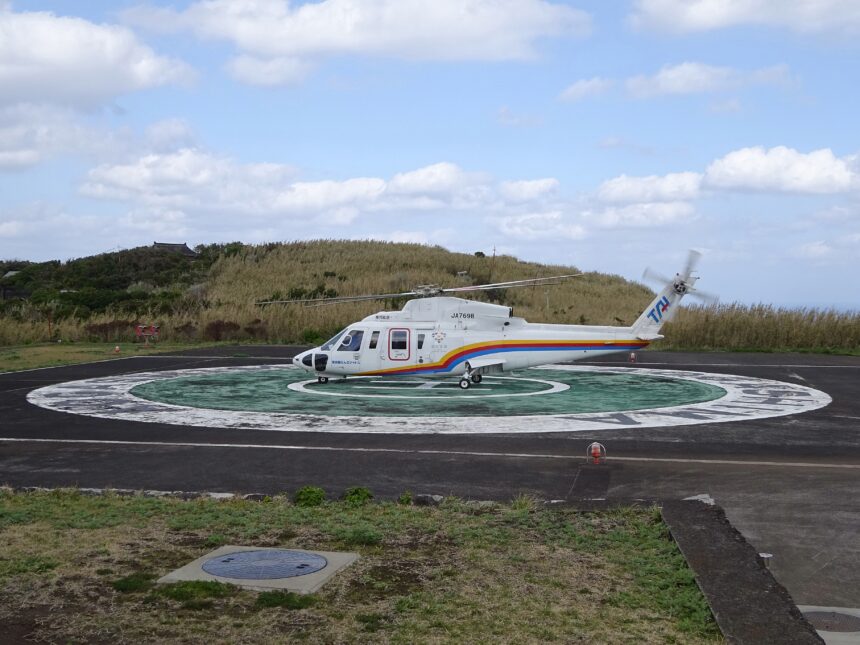
Aogashima Heliport is one of the most interesting places in Japan for transport fans because it is not a normal airport visit. It is the island helicopter access point for Aogashima, a remote Tokyo village reached through Hachijojima. The plan is simple on paper: fly or sail to Hachijojima, use Tokyo Ai-Land Shuttle to Aogashima, and keep a ferry backup in mind. In practice, seats, weather, baggage, lodging, ferry reliability, and same-day operation decisions make this a serious planning route.
Last checked: August 21, 2026. Helicopter schedules, fares, seat availability, baggage rules, check-in windows, aircraft, ferry operation, port choice, lodging availability, rental cars, weather decisions, and safety restrictions can change. Always confirm current details with Toho Air / Tokyo Ai-Land Shuttle, Aogashima Village, UMISORA, ferry operators, Hachijojima transport providers, and your lodging before travel.
Why Aogashima matters to aviation fans
Aogashima is aviation travel at its most practical. It is not an observation-deck airport, a museum, or a casual city detour. It is a working island access point where a small helicopter link helps connect one of Tokyo’s most remote inhabited islands to Hachijojima. Aogashima Village describes the island as about 358 km from Tokyo and about 70 km from Hachijojima, with no direct mainland access, so Hachijojima is the required gateway.
The route is also a rare chance to understand Japan’s island transport system as a network. Hachijojima itself can be reached from Tokyo Haneda by ANA flights or from Tokyo Takeshiba by Tokai Kisen ship service, while the final Aogashima step is handled by helicopter or ferry depending on weather, reservations, and operating status.
Use Hachijojima as the gateway
For most travelers, the practical sequence is Tokyo to Hachijojima, then Hachijojima to Aogashima. Hachijo Town’s official access page says ANA operates three daily round trips between Tokyo Haneda and Hachijojima, taking about 55 minutes one way. The same page says Tokai Kisen operates a daily ship between Tokyo Takeshiba and Hachijojima, taking about 11 hours.
Do not plan Aogashima as a tight same-day add-on from central Tokyo. Aogashima Village notes that the morning Haneda-Hachijojima flight can make a fast Tokyo-to-Aogashima connection possible, but this is still a weather-dependent route with small aircraft, limited seats, and no room for optimistic timing. Build the trip around confirmed lodging and confirmed return options.
Read the helicopter schedule carefully
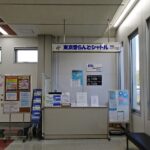
Tokyo Ai-Land Shuttle’s timetable page listed daily Hachijojima-Aogashima service as of August 21, 2026: flight 11 leaves Hachijojima at 09:40 and arrives at Aogashima at 10:00, while flight 12 leaves Aogashima at 10:10 and arrives at Hachijojima at 10:30. Check-in is listed as 08:50-09:10 for flight 11 and 09:20-09:40 for flight 12.
The same timetable page also listed a Thursday-only extra pair from October 2025: flight 813 Hachijojima 15:35 to Aogashima 15:55, and flight 814 Aogashima 16:05 to Hachijojima 16:25. Treat these as current-info details, not permanent facts. Before booking hotels or connecting flights, check the official Tokyo Ai-Land Shuttle page for the date you will actually travel.
Seats, fares, and baggage
Aogashima Village describes Tokyo Ai-Land Shuttle as a 365-day service with 9 passenger seats and about 20 minutes between Hachijojima and Aogashima. That small capacity is the main planning constraint. Reservations are required, and the village page says reservations are accepted from the same date one month before boarding, except Sundays, with reservation hours of 9:00-16:00.
As of the check date, Tokyo Ai-Land Shuttle’s fare page listed the Hachijojima-Aogashima one-way fare as 11,750 yen for adults and 8,230 yen for children, with excess baggage at 240 yen per kg. The operator’s fare note says the excess-baggage fee applies above 5 kg, and the village page warns that large baggage may not fit in the baggage compartment. Pack as if every kilogram matters.
Weather and operation decisions
This route is not only about the published timetable. Tokyo Ai-Land Shuttle’s official page says operation decisions are made after weather checks, with final decisions one hour before each departure. That matters for both directions: getting to Aogashima and getting back out. Keep your onward Tokyo plans loose enough to absorb disruption.
For a transport fan, this is part of the real story. Aogashima’s heliport is not a guaranteed scenic ride; it is a weather-sensitive lifeline. Check the official operation page on the morning of travel, keep phone numbers handy, and ask your lodging what visitors normally do when aircraft or ships are disrupted.
Use the ferry as context, not a simple backup
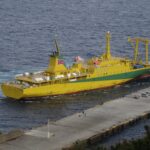
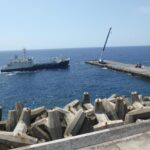
The ferry option is important, but it is not a frictionless plan B. Aogashima Village lists the Kuroshio Maru connection between Hachijojima and Aogashima and says cancellations occur because of weather. The village page also says the ferry service rate can be around 50-60 percent, same-day operation is decided at 07:00, and fares vary monthly because of fuel adjustment.
Hachijo Town’s access page describes the Hachijojima-Aogashima ship link as about 2 hours 30 minutes and about four round trips per week. That makes it useful for flexible travelers, but not something to rely on as an instant replacement for a missed helicopter. Confirm port, time, operation status, and onward transport every time.
On-island movement is limited
UMISORA’s Aogashima page lists no route bus, no sightseeing bus, no taxi, and no rental bicycle or rental bike in its island traffic information section. It lists rental-car options, but availability should be confirmed directly. If you cannot secure lodging and local movement, do not assume the heliport arrival itself solves the trip.
A good first plan is modest: arrive, respect the heliport as a working transport point, move by prearranged local transport or rental car, and leave enough time for weather and road conditions. If your interest is photography, keep it to lawful public places and do not interfere with operations, residents, vehicles, or emergency movement.
Simple first-time plan
| Step | What to confirm | Why it matters |
|---|---|---|
| 1 | Hachijojima access by Haneda flight or Takeshiba ship | Aogashima has no direct mainland route |
| 2 | Tokyo Ai-Land Shuttle reservation and same-day operation status | The Hachijojima-Aogashima helicopter has very limited seats |
| 3 | Check-in window, baggage weight, and large-item limits | Missing the counter window or overpacking can break the plan |
| 4 | Lodging and local movement on Aogashima | There is no normal city-style bus or taxi fallback |
| 5 | Ferry status and weather buffer for the return | Kuroshio Maru is useful context, but weather and weekly frequency matter |
Where this fits in the transport hub
Use this as the remote-island helicopter branch of the Japan Transport Fan Travel Guide. It pairs naturally with the Hachijojima Airport guide, Tokyo Heliport guide, Chofu Aerodrome guide, and the Izu Islands airport guides for Oshima, Niijima, Kozushima, and Miyakejima. The key difference is that Aogashima is not mainly about watching aircraft; it is about understanding how a small helicopter route supports a remote island.
Photo credit
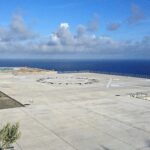
Featured image: Aogashima heliport by Bruno Plus on Wikimedia Commons, CC BY-SA 4.0. Cropping or resizing may be applied for site display. The image is used in editorial transport-travel-guide context and does not imply endorsement by the photographer, Aogashima Village, Toho Air, Tokyo Ai-Land Shuttle, Tokyo Metropolitan Government, UMISORA, ferry operators, Hachijo Town, Wikimedia, or local residents.
Sources
- Tokyo Ai-Land Shuttle: official operation and availability page
- Tokyo Ai-Land Shuttle: routes and timetable
- Tokyo Ai-Land Shuttle: fares and baggage charges
- Tokyo Ai-Land Shuttle: heliport information
- Tokyo Ai-Land Shuttle: aircraft fleet
- Aogashima Village: access information
- UMISORA / Tokyo Treasure Island Traffic Information: Aogashima access
- Hachijo Town: access information
- Wikimedia Commons image file and license record
Editorial disclosure: This is an independent planning guide. It is not affiliated with Aogashima Village, Toho Air, Tokyo Ai-Land Shuttle, Tokyo Metropolitan Government, UMISORA, ferry operators, Hachijo Town, ANA, Tokai Kisen, Wikimedia, the photographer, or local transport providers.