Short answer
Tokyo Heliport is a working Shin-Kiba helicopter base, not a casual observation-deck airport. Tokyo Metropolitan Government records a land heliport with a 120m x 50m landing strip, 90m x 30m runway area, 38 helicopter spots, 8:30-16:30 operating hours, no observation deck, no visitor facility, no public parking, no shops, and no listed carrier. Aviation fans should treat it as a short infrastructure study from public access points, not as a place for fence-line spotting.
Last checked: August 21, 2026. Heliport access, bus schedules, facility rules, emergency operations, based-aircraft data, flight activity, Tokyo Ai-Land Shuttle schedules, aircraft type, fares, check-in rules, bookings, weather, and safety restrictions can change. Always confirm current details on official heliport, operator, transport, and weather pages before travel.
Why Tokyo Heliport matters
Tokyo Heliport is useful for aviation fans because it shows a different side of Tokyo air transport. Tokyo Metropolitan Government’s role page says helicopters support emergency patient and personnel transport, rescue, emergency-material transport, construction-material transport, spraying, press coverage, and other high-mobility work. It also says Tokyo Heliport recorded about 21,000 movements in FY2022, roughly half of annual movements at public heliports nationwide.
The same official page says the heliport functions as a major domestic helicopter base, supported emergency supplies and relay refueling after the Great East Japan Earthquake, and prioritizes disaster-response use when needed. Current listed users include the Metropolitan Police Department Aviation Unit, Tokyo Fire Department Aviation Unit, Kawasaki Fire Aviation Unit, private hangar-owning companies, and aviation-fuel companies.
Know the facility limits first
This is the most important planning point: Tokyo Heliport is not built like a passenger airport visit. Tokyo Metropolitan Government’s information page says it has no general information desk, no tourist information center, no lounge, no delivery service, no baggage storage, no wheelchair rental, no rental-car desk, no food or retail shop, no smoking area, and no observation deck or other visitor facility. The parking area is for management-office business use and cannot be used by the general public.
Use public transport, public sidewalks, and lawful public spaces only. Do not attempt gate photography, fence-line spotting, drone flights, roadside stopping, hangar approaches, service-road access, or private-property shortcuts. If the trip feels too thin without entering the site, pair it with Shin-Kiba, Wakasu, Tokyo Bay infrastructure, or another public waterfront branch.
Read the official heliport facts
The official airport-information page records Tokyo Heliport as a land heliport in Koto, Tokyo, at 35 degrees 38 minutes 10 seconds north and 139 degrees 50 minutes 22 seconds east. It lists a total area of 147,153 square meters, a 120m x 50m landing strip, a 90m x 30m runway area, two 48m x 15m taxiways, 38 spots, safety and lighting facilities, and a single-wheel load limit under 8.5 tons unless approved.
Operating hours are listed as 8:30-16:30. Outside-hours departures and arrivals require prior permission, and night use from sunset to sunrise is generally not permitted. The page lists fuel handling for JET A-1 and AVGAS, a step-free route from the heliport entrance to the boarding gate, a multipurpose restroom, an ostomate facility, and a baby bed.
Use Shin-Kiba bus access
Tokyo Metropolitan Government tells visitors to use Toei Bus from Shin-Kiba Station, which is served by the JR Keiyo Line, Tokyo Metro Yurakucho Line, and Rinkai Line. The official page says to get off at Tokyo Heliport-mae, about 7 minutes from Shin-Kiba Station. Check the current Toei Bus timetable before you go because bus frequency and route patterns can change.
A practical aviation plan is short: confirm the bus, ride to Tokyo Heliport-mae, understand the heliport from legal public areas, then continue to Shin-Kiba or Wakasu. Keep the route flexible, especially in rain, strong wind, summer heat, event traffic, or emergency-operation periods.
Connect it to island helicopter travel carefully
Tokyo Ai-Land Shuttle is related helicopter context, but it should not be confused with a Tokyo Heliport passenger route. Toho Air describes Tokyo Ai-Land Shuttle as a heli-commuter service connecting six Tokyo Izu Islands, and the official Tokyo Ai-Land Shuttle timetable lists island-to-island services such as Hachijojima-Aogashima, Hachijojima-Mikurashima, Mikurashima-Miyakejima, Miyakejima-Oshima, and Oshima-Toshima. Check-in locations are island airport or heliport counters, not Tokyo Heliport.
For transport fans, the comparison is still useful. Chofu Aerodrome explains the mainland small-aircraft routes; Tokyo Heliport explains the working helicopter base in Tokyo; Tokyo Ai-Land Shuttle explains the island-to-island helicopter network. The official fleet page lists Leonardo AW139 and Sikorsky S-76 C+/C++ aircraft, and the timetable page tells passengers to complete check-in 50 to 30 minutes before departure.
Simple first-time plan
| Step | What to do | Why it works |
|---|---|---|
| 1 | Check Tokyo Metropolitan Government heliport information, Toei Bus, weather, and any operator notices | The heliport is a working facility with limited public-facing services |
| 2 | Travel by train to Shin-Kiba and use Toei Bus to Tokyo Heliport-mae | There is no general public parking at the heliport |
| 3 | Keep the stop short and stay in lawful public areas only | There is no observation deck or visitor facility |
| 4 | Add one nearby public branch: Shin-Kiba, Wakasu, Tokyo Bay infrastructure, or a waterfront walk | The branch makes the trip worthwhile without forcing unsafe spotting |
| 5 | Use Tokyo Ai-Land Shuttle pages only for island-helicopter context unless you are actually flying between islands | The shuttle is not a Tokyo Heliport passenger departure plan |
Where this fits in the transport hub
Use this as the Tokyo Heliport branch of the Japan Transport Fan Travel Guide. It pairs with Chofu Aerodrome for Tokyo’s small-aircraft side, with Oshima, Miyakejima, Hachijojima, and other island-airport guides for Izu Islands logistics, and with Tokyo Ai-Land Shuttle pages for island helicopter operations. Tokyo Heliport itself is best understood as a working base for emergency, public-service, press, company, sightseeing, and operator activity.
Photo credit
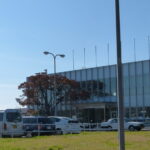
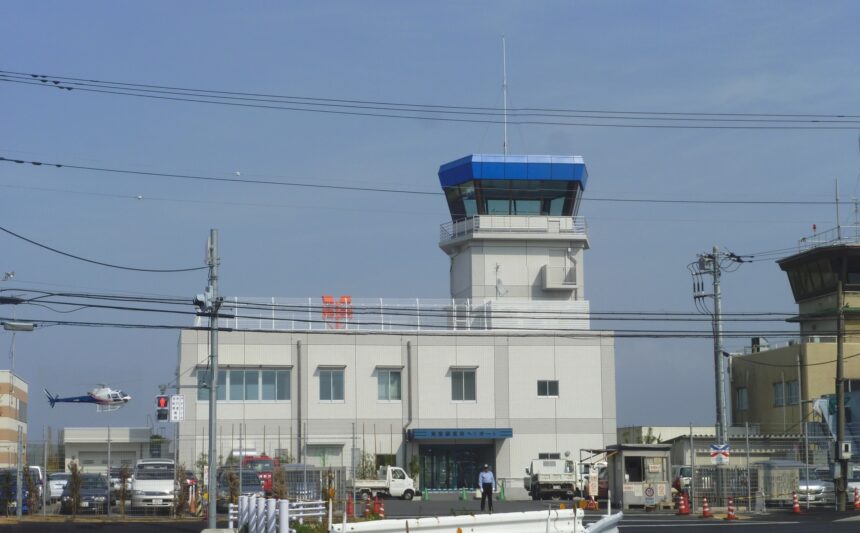
Featured image: Tokyo Heliport 2011 sunny by Nesnad on Wikimedia Commons, CC BY-SA 3.0. Cropping or resizing may be applied for site display. The image is used in editorial transport-travel-guide context and does not imply endorsement by the photographer, Tokyo Metropolitan Government, Tokyo Heliport, Toho Air, Tokyo Ai-Land Shuttle, police or fire agencies, private operators, fuel companies, MLIT, or Wikimedia.
Sources
- Tokyo Metropolitan Government: Tokyo Heliport information
- Tokyo Metropolitan Government: Tokyo Heliport role and noise measures
- Tokyo Ai-Land Shuttle: official operation and availability page
- Tokyo Ai-Land Shuttle: routes and timetable
- Tokyo Ai-Land Shuttle: aircraft fleet
- Toho Air official site
- MLIT Tokyo Civil Aviation Bureau: airport and heliport list
- Wikimedia Commons image file and license record
Editorial disclosure: This is an independent planning guide. It is not affiliated with Tokyo Metropolitan Government, Tokyo Heliport, Toho Air, Tokyo Ai-Land Shuttle, MLIT, Tokyo Civil Aviation Bureau, police or fire agencies, private operators, fuel companies, Wikimedia, or the photographer.