Short answer
The Miyakejima-Mikurashima ship leg can be a useful backup branch, but it is not a simple replacement for a cancelled helicopter. Plan it as its own weather-sensitive route: check Tokai Kisen’s official timetable, same-day operation status, Miyakejima port, Mikurashima berthing risk, reservation and baggage rules, and any nature-tour rules before you commit.
Last checked: August 21, 2026. Ship timetables, fares, operation status, berthing decisions, Miyakejima ports, reservations, baggage rules, helicopter timetables, availability, weather, and local nature-tour rules can change. Always confirm current details on official operator and local tourism pages before travel.
Why this route needs backup thinking
Tokai Kisen’s official timetable lists the Tokyo-Miyakejima-Mikurashima-Hachijojima route as a daily large-passenger-ship service in the checked season table. Southbound, the ship departs Tokyo at night, reaches Miyakejima early in the morning, then continues to Mikurashima. Northbound, it leaves Hachijojima in the morning, calls at Mikurashima, then reaches Miyakejima in the early afternoon before continuing to Tokyo.
That makes Miyakejima and Mikurashima look close on paper. The practical issue is not only distance. Tokai Kisen’s operation page warns that even when a ship is listed as operating, sea and harbor conditions may prevent berthing. For Mikurashima, that warning is central to planning.
The ship clock
In the current Tokai Kisen timetable table checked for this guide, ship code 3400 departs Miyakejima at 5:10 and arrives Mikurashima at 6:00. The return-direction ship code 2400 departs Mikurashima at 12:40 and arrives Miyakejima at 13:35. Treat these as official timetable examples, not permanent promises.
Tokai Kisen says island departure ports can change because of weather and that travelers should check the same-day operation page or customer center. Its operation-status page says large passenger ship information is updated after 9:00 and final decisions are planned around 17:00. If you are using an evening Tokyo departure to reach Miyakejima and Mikurashima the next morning, check both the evening decision and the next morning’s island status.
Miyakejima port choice matters
Miyakejima is not a one-port assumption. The Tokai Kisen operation page lists a same-day Miyakejima port-information phone number, 04994-5-0221, and notes that Miyakejima has multiple possible arrival and departure ports. Local guidance commonly refers to Miike Port, Sabigahama or Ako Port, and Igaya Port.
This matters if you plan to connect from a flight, lodging, rental car, bus, taxi, or the Miyakejima Airport heli counter. A port change can turn an easy plan into a stressful transfer. Check the official port status before you leave your lodging or the airport.
Mikurashima berthing risk
Mikurashima’s port is the fragile part of the sea plan. Tokai Kisen’s status page explicitly warns that a ship may depart but be unable to berth because of sea or harbor conditions. GO TOKYO also describes Mikurashima as a small island with steep coastal scenery, and local tourism pages treat the surrounding sea as an open-ocean environment.
For planning, that means a ship backup should include extra nights, flexible lodging, and a return plan that can survive a missed berth or cancellation. If you must be in Tokyo, Haneda, or another island at a fixed time, do not build the plan around the last possible ship.
Reservation and ticketing basics
Tokai Kisen says reservations can be made online, by phone, or through a travel agency. Online reservations require free registration, open from two months before the sailing date, and must be paid by one hour before departure. Phone reservations use the customer center, 03-5472-9999 or 0570-005710, and the official page says the reservation number is needed when purchasing the ticket.
Use the reservation as only one layer of the plan. A seat or berth reservation does not remove the need to check the current operation page, the port, and the local weather situation.
Baggage and diving-gear caution
The large passenger ship is more forgiving than a small helicopter, but it still has rules. Tokai Kisen says checked baggage is handled only on large passenger ships, with cutoff times before departure. It also says large travel bags up to 200 cm total dimensions and 30 kg can be checked, up to two items per person, while larger items have separate handling.
Do not improvise with diving bags, large camera cases, coolers, or bicycles. Tokai Kisen says bicycles not in rinko bags require advance reservation by three days before sailing, and it also states that bicycles cannot be used on Mikurashima. For a Mikurashima nature trip, pack for the island’s rules, not for mainland convenience.
Helicopter comparison
Tokyo Ai-Land Shuttle is the fast comparison branch. The official timetable lists flight 31 from Mikurashima to Miyakejima at 11:20-11:30 and flight 32 from Miyakejima to Mikurashima at 14:35-14:45, with check-in from 50 to 30 minutes before departure. The home page says final operation decisions are made after a weather check one hour before each departure.
The helicopter can solve some timing problems, but it brings its own constraints: small aircraft, limited seats, strict check-in, reservation availability, and weather decisions. Compare the ship and helicopter on official pages the same day. Do not assume one will automatically rescue the other.
Dolphin-tourism sensitivity
Many travelers care about Mikurashima because of dolphins. GO TOKYO says swimming with dolphins and hiking are permitted only under the supervision of a Tokyo Nature Guide, and that biking and camping are prohibited. The Mikurashima Tourism Association says dolphin watching is an open-ocean activity that can be physically demanding, and that reservations are handled through lodging or partner boats rather than the tourism association itself.
The local rules are not decorative. The tourism association tells visitors not to disturb natural dolphin behavior, not to approach groups with small calves, not to touch or feed dolphins, not to approach by scuba, not to use artificial-sound devices, not to use camera flash, and not to bring selfie sticks into the water. A transport backup that ignores these rules is not a good travel plan.
Backup checklist
| Question | Official check | Planning reason |
|---|---|---|
| Is the ship operating? | Tokai Kisen operation-status page | Large passenger ship decisions and notices change with weather |
| Can the ship berth at Mikurashima? | Tokai Kisen status notes and local conditions | Operating does not always mean successful berthing |
| Which Miyakejima port is used? | Tokai Kisen same-day port information | Transfers depend on Miike, Sabigahama/Ako, or Igaya |
| Do I have a real ticket plan? | Tokai Kisen reservation and ticketing page | Reservation timing, payment, and ticket pickup matter |
| Can my baggage move legally? | Tokai Kisen baggage pages | Diving bags, bikes, and large items have specific rules |
| Is helicopter better today? | Tokyo Ai-Land Shuttle status and timetable | Ship and helicopter decisions run on different clocks |
| Are nature activities appropriate? | GO TOKYO and Mikurashima Tourism Association | Dolphin watching and hiking require local rules and guides |
When to use this branch
Use the ship branch when you have flexible time, a confirmed official operation plan, a realistic port transfer, and a nature itinerary that already respects local booking and guide rules. Avoid it when you need a guaranteed same-day return, have a tight flight connection, cannot absorb a missed berth, or are trying to force a dolphin activity into a narrow weather window.
For transport fans, the ship-helicopter comparison is fascinating. For actual travelers, the best plan is the one that gives the island, the sea, the crew, and the wildlife enough room.
Where this fits in the transport hub
Use this as the Miyakejima-Mikurashima sea-route branch of the Japan Transport Fan Travel Guide. Read it together with the Mikurashima Heliport Area Guide, the Miyakejima Airport Area Guide, the Tokyo Ai-Land Shuttle Booking and Baggage Guide, and the Tokyo Ai-Land Shuttle Aircraft Guide.
Photo credit
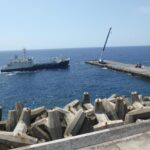
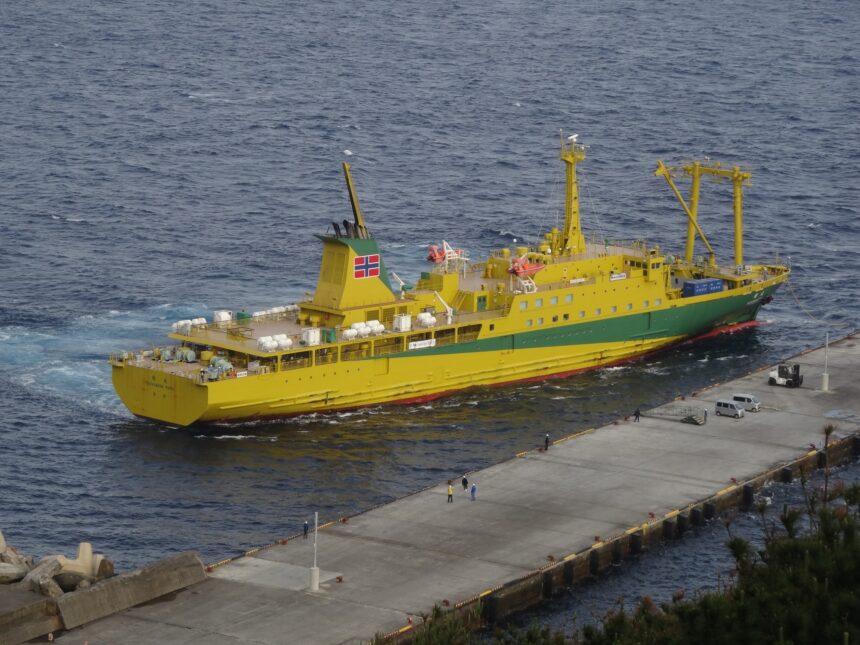
Featured image: Tachibana Maru at the Port of Mikurajima by Commons user Seiseki Taisen Buubuu, romanized from the Japanese username shown on the Wikimedia Commons file record, licensed under CC BY-SA 4.0. Cropping or resizing may be applied for site display. The image is used in editorial transport-travel-guide context and does not imply current ship assignment, current port condition, current operation status, current berthing guarantee, endorsement by the creator, Tokai Kisen, Toho Air, Tokyo Metropolitan Government, GO TOKYO, Mikurashima Tourism Association, Wikimedia, or island communities.
Sources
- Tokai Kisen official timetable
- Tokai Kisen official operation-status page
- Tokai Kisen official route and travel-time page
- Tokai Kisen official reservation-flow page
- Tokai Kisen official checked-baggage page
- Tokai Kisen official Tachibana-Maru page
- Tokyo Ai-Land Shuttle official operation, reservation, and availability page
- Tokyo Ai-Land Shuttle official timetable
- GO TOKYO official Mikurashima guide
- Mikurashima Tourism Association ocean and dolphin-watching rules
- Wikimedia Commons image file and CC BY-SA 4.0 license record
Editorial disclosure: This is an independent planning guide. It is not affiliated with Tokai Kisen, Toho Air, Tokyo Ai-Land Shuttle, Tokyo Metropolitan Government, GO TOKYO, Mikurashima Tourism Association, Wikimedia, the image creator, or island communities.