Short answer
Toshima Heliport is the Oshima-connected end of the Tokyo Ai-Land Shuttle island chain. For aviation fans, the appeal is not an observation deck or a big airport experience; it is the precision of a small working heliport on a compact island where weather, ship status, luggage, lodging, and walking distance all matter. Treat it as real transport infrastructure first.
Last checked: August 21, 2026. Helicopter schedules, fares, seat availability, baggage rules, check-in windows, aircraft, ship operation, sea conditions, weather decisions, lodging support, local transport availability, and visitor facilities can change. Always confirm current details with Toho Air / Tokyo Ai-Land Shuttle, Toshima Village, UMISORA, ship operators, and your lodging before travel.
Why Toshima matters to transport fans
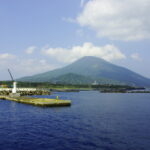
Toshima is small enough that access itself becomes the story. UMISORA describes it as a beautiful cone-shaped island, and Toshima Village’s visitor Q&A says the island is reached by sea or air, with cancellation risk depending on weather. That makes Toshima Heliport a useful case study in how Tokyo’s island transport network works at village scale.
The island is also culturally distinct from a normal airport area. Tokyo Islands tourism information describes Toshima as a major camellia-oil island, with about 200,000 camellia trees. A good transport-fan visit should respect that local identity instead of treating the heliport as a standalone photo target.
Use Oshima as the helicopter gateway
As of August 21, 2026, Tokyo Ai-Land Shuttle’s timetable listed the Oshima-Toshima pair as flight 61 from Oshima at 12:10 to Toshima at 12:20, and flight 62 from Toshima at 12:25 to Oshima at 12:35. The listed check-in windows were 11:20-11:40 at Oshima Airport for flight 61 and 11:35-11:55 at Toshima Heliport for flight 62.
The same official page says passenger check-in must be completed 50 to 30 minutes before departure. That timing matters because the sector is only about 10 minutes, but the trip can still fail if you miss the counter window, overpack, or assume island transport works like a city station.
Fares, baggage, and heliport facts
As of the check date, Tokyo Ai-Land Shuttle’s fare page listed Oshima-Toshima one-way fare as 7,370 yen for adults and 5,160 yen for children. Excess baggage was listed at 140 yen per kg, with the fee applying above 5 kg. Pack lightly and confirm current baggage rules before travel.
The official heliport page lists Toshima Heliport at Tokyo-to Toshima-mura 1709-1, with telephone 04992-9-0125. UMISORA lists the same location and phone number and describes Toshima Heliport as the departure and arrival point for Tokyo Ai-Land Shuttle, a heli-commuter service connecting islands from Oshima to Hachijojima including Toshima.
Do not treat it as a spotting site
Toshima Heliport is working village infrastructure. Do not plan fence-line spotting, drones, road stopping, gate photography, or any approach into operational space. If you are flying, follow staff instructions. If you are not flying, keep your interest to lawful public movement and do not make the heliport the reason to loiter around local roads.
The better aviation lesson is operational: how a short Oshima-Toshima helicopter sector fits with ships, sea conditions, small-island timing, and a route that must remain useful for residents as well as visitors.
Compare helicopter and sea access
Toshima Village’s visitor Q&A lists sea access by large passenger ship from Tokyo Takeshiba, high-speed boat from Tokyo Takeshiba, and Ferry Azalea from Shimoda, while warning that weather can cause cancellations. It also gives sample air access by Tokyo Ai-Land Shuttle between Oshima Airport and Toshima Heliport.
Sea access and helicopter access should be treated as separate plans, not automatic substitutes. Ships can be delayed or cancelled by sea conditions, while helicopter operation depends on weather and same-day decisions. Confirm both with the operating companies and keep the return plan flexible.
On-island movement is simple but limited
Toshima Village’s visitor Q&A says Toshima has no bus, taxi, or rental cycle secondary transport. It says some inns lend cars, so visitors should ask their lodging, and that the island’s circumference is about 8 km, with an adult able to walk around it in about 2 to 2.5 hours. That sounds easy until luggage, slopes, rain, heat, and timing enter the picture.
Before arrival, confirm lodging, pickup or luggage support, walking route, meals, weather, and what to do if the return helicopter or ship does not operate. The same Q&A notes that there is no pharmacy and only one clinic, so travelers should bring regular medicine and a health insurance card.
Seasonal planning
Toshima Village says January-February is camellia season, when flowers bloom across the island, but also says that period has high cancellation risk and visitors should reserve the helicopter. It says June to late September often has more stable seas, excluding typhoon effects. These are useful planning hints, not guarantees.
For a first-time aviation-focused visit, do not build a tight same-day chain around the heliport. A slower plan with confirmed lodging, flexible return options, and current operation checks will feel less dramatic and far more realistic.
Simple first-time plan
| Step | What to confirm | Why it matters |
|---|---|---|
| 1 | Choose whether Oshima helicopter access or direct sea access fits your route | Toshima can be reached by more than one transport pattern |
| 2 | Check Tokyo Ai-Land Shuttle timetable, fare, baggage, and same-day operation status | The Oshima-Toshima helicopter sector is short but high-update |
| 3 | Confirm ship status and weather separately | Sea and helicopter disruptions are different risks |
| 4 | Confirm lodging, luggage help, and local movement | There is no bus, taxi, or rental cycle fallback |
| 5 | Keep heliport behavior quiet and practical | It is working infrastructure for a small village |
Where this fits in the transport hub
Use this as the Toshima branch of the Japan Transport Fan Travel Guide. It pairs naturally with the Oshima Airport guide, Tokyo Ai-Land Shuttle context, and the Aogashima and Mikurashima heliport guides. Toshima is especially useful for understanding the northern end of the island-helicopter chain and how small-island access depends on multiple transport modes.
Photo credit
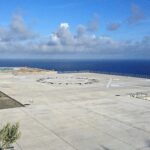
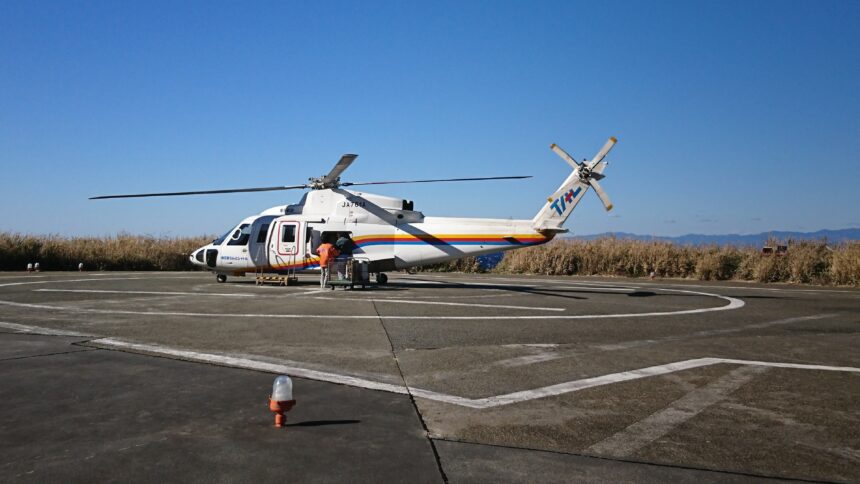
Featured image: Toshima.heliport by Bruno Plus on Wikimedia Commons, CC BY-SA 4.0. Cropping or resizing may be applied for site display. The image is used in editorial transport-travel-guide context and does not imply endorsement by the photographer, Toshima Village, Toho Air, Tokyo Ai-Land Shuttle, Tokyo Metropolitan Government, UMISORA, ship operators, tourism operators, Wikimedia, or local residents.
Sources
- Tokyo Ai-Land Shuttle: official operation and availability page
- Tokyo Ai-Land Shuttle: routes and timetable
- Tokyo Ai-Land Shuttle: fares and baggage charges
- Tokyo Ai-Land Shuttle: heliport information
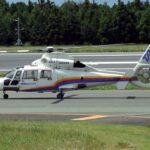
- Tokyo Ai-Land Shuttle: aircraft fleet
- UMISORA / Tokyo Treasure Island Traffic Information: Toshima access
- Toshima Village: visitor Q&A
- Tokyo Islands: access information
- Tokyo Islands: Toshima tourism information
- Wikimedia Commons image file and license record
Editorial disclosure: This is an independent planning guide. It is not affiliated with Toshima Village, Toho Air, Tokyo Ai-Land Shuttle, Tokyo Metropolitan Government, UMISORA, ship operators, Tokyo Islands, Wikimedia, the photographer, or local transport providers.