Short answer
Hachijojima Airport is a strong island-airport day for aviation fans because Tokyo Metropolitan Government lists a free observation deck, the airport-use rules record a 2,000m x 45m runway, and the island can be planned by either Haneda flights or the Takeshiba overnight ship. Build the day around the official deck, terminal services, Sokodo or Yaene port choice, local bus, taxi, rental-car, and weather-aware volcanic-island branches.
Last checked: August 21, 2026. Flight operations, airline schedules, airport services, observation-deck access, terminal hours, ship sailings, arrival port, helicopter routes, bus timetables, taxi availability, rental-car inventory, hiking conditions, diving conditions, weather, sea conditions, and typhoon disruption can change. Always confirm current details on official airport, airline, ferry, town, tourism, transport, and weather pages before travel.
Why Hachijojima works for aviation fans
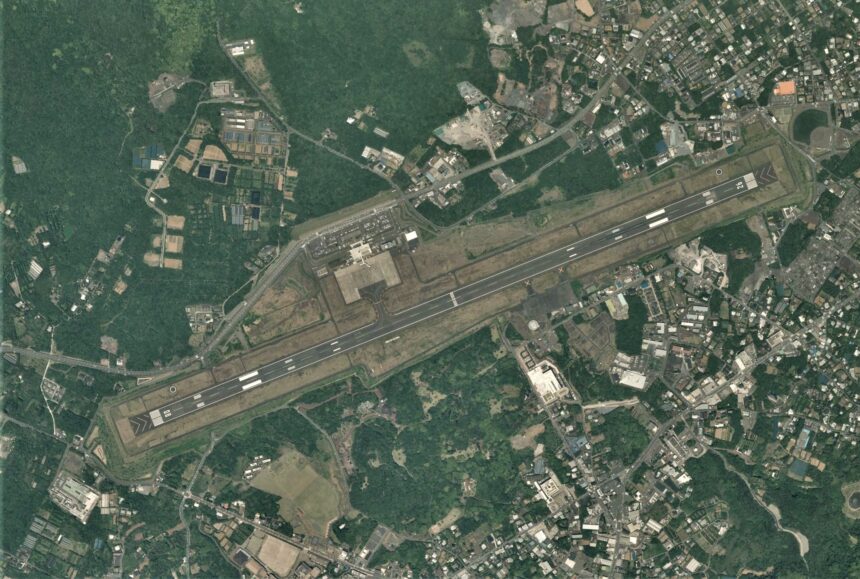
Hachijojima Airport has the rare combination of an official viewing point and island-transport complexity. Tokyo Metropolitan Government’s airport-services page lists a free observation deck, while its airport-use rules record a 2,000m x 45m runway, apron positions for small jets and smaller aircraft, and an ILS facility. The same airport-services page lists ANA as the airline, with routes and schedules to be checked on airline pages.
This makes the airport more than a simple arrival point. You can watch aircraft from the official deck when open, compare air and sea access, and decide whether the island day should lean toward Hachijo-Fuji, Mihara-yama, hot springs, ocean sports, local food, or port logistics. Keep aircraft viewing within public terminal areas, the official deck, legal roads, sidewalks, ports, and properly used parking areas. Avoid fence lines, service roads, private land, drone use, and anything that interferes with airport or road operations.
Start with the deck and terminal
The airport-services page lists the airport operating time, terminal business hours, terminal administrator, airport administrator, a smoking area, and cleaning reception details. The Tokyo Sightseeing Accessibility Guide adds practical context: Hachijojima Airport is a compact three-story terminal, with arrival and departure lobbies, souvenir stores, restaurants, tourist information, and other functions concentrated on the second floor. It also says the third-floor deck gives close-up aircraft views, but access to the third floor is by stairs only.
That stairs-only note matters. Do not assume the deck is barrier-free, and do not design a plan that depends on deck access without checking current conditions. For a simple visit, use the terminal for orientation, local transport decisions, food or shopping, and a short deck session if it is open and suitable for your group.
Compare air with the overnight ship
Hachijo Town’s official access page lists ANA scheduled flights between Tokyo Haneda Airport and Hachijojima Airport, and Tokai Kisen passenger-ship service between Tokyo Takeshiba Pier and either Sokodo Port or Yaene Port. JNTO similarly describes the island as reachable from Tokyo by air in under an hour or by an overnight boat from Takeshiba Pier to Sokodo Port. Tokyo’s accessibility guide notes that the large passenger ship may arrive at Sokodo Port or Yaene Port.
That gives aviation fans a clean planning question: do you want a fast airport-focused trip, or an air-and-sea comparison? The answer depends on weather, ship operation, port choice, lodging location, and how much time you have after arrival. Do not assume the same port every time. Check the operator, the town access page, current weather, and your accommodation before building a tight connection.
Choose local movement before arrival
Tokyo’s accessibility guide says island transport includes Hachijo Town Bus, taxis, rental cars, and accessible transport options. Its traffic page also reminds travelers to confirm details because operator information, bus service, and accessibility arrangements can change. For most aviation-focused island days, the movement choice should be made before arrival.
A rental car is often the most flexible way to connect the airport, ports, Hachijo-Fuji, Mihara-yama, hot springs, volcanic coastline, viewpoints, food stops, and lodging. A bus plan can work if it follows the current timetable and keeps a modest route. A taxi plan should account for dispatch and return movement. Hiking, cycling, diving, hot spring, or coastal add-ons should be built around weather, wind, surf, daylight, local rules, and the return flight or ship.
Add one volcanic-island branch
GO TOKYO and Tokyo Islands describe Hachijojima as a volcanic, subtropical island with Hachijo-Fuji, Mihara-yama, diving, hot springs, volcanic coastline, island shochu, traditional crafts, and local culture. For a first airport-area day, choose one branch. A transport branch can compare the airport with Sokodo or Yaene port. A volcano branch can use Hachijo-Fuji or a coastal lava landscape. A culture branch can focus on food, hot springs, or traditional craft context.
Keep the plan light. Hachijojima can feel close to Tokyo by air, but flights, ships, hiking, and ocean activities are all weather-sensitive. A good first plan protects the return window and keeps a backup indoor or low-movement option ready.
Simple first-time plan
| Step | What to do | Why it works |
|---|---|---|
| 1 | Check flight status, ANA schedule, airport services, observation-deck access, ship status, arrival port, bus timetable, taxi availability, rental-car reservation, and weather | Hachijojima plans depend on air, sea, port, road, and weather conditions |
| 2 | Use the public terminal, official free observation deck, shops, restaurants, tourist information, and 2,000m runway context as the aviation anchor | The airport has both viewing and transport value |
| 3 | Decide whether your day is airport-based, Sokodo-based, Yaene-based, bus-based, taxi-based, or rental-car-based | Port and movement choices shape the whole route |
| 4 | Add one branch: port logistics, Hachijo-Fuji, Mihara-yama, hot spring, volcanic coast, food, craft, or a short scenic drive | One branch keeps the island day resilient |
| 5 | Leave buffers before flight departure, ship boarding, rental return, bus connection, sunset, and bad-weather changes | Island travel rewards spare time |
Where this fits in the transport hub
Use this as the Hachijojima branch of the Japan Transport Fan Travel Guide. It pairs naturally with Haneda, Oshima, Miyakejima, Niijima, Kozushima, Fukue, Tsushima, Iki, Tanegashima, Yakushima, and other island-airport guides, but Hachijojima stands out because its official deck, jet service, overnight ship, and volcanic-island weather all matter at once.
Photo credit
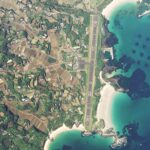
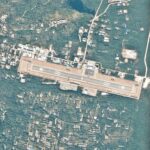
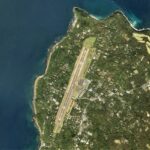
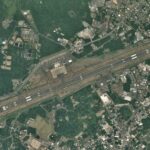
Featured image: Hachijojima Airport Aerial photograph.2013, by Geospatial Information Authority of Japan, made based on National Land Image Information (Color Aerial Photographs), Ministry of Land, Infrastructure, Transport and Tourism, via Wikimedia Commons. MLIT National Land Image Information permission allows use for any purpose with proper attribution. Cropping or resizing may be applied for site display. The image is used in editorial transport-travel-guide context and does not imply endorsement by MLIT, GSI, Tokyo Metropolitan Government, Hachijojima Airport, airport operators, airlines, ferry operators, tourism organizations, Wikimedia, or the uploader.
Sources
- Tokyo Metropolitan Government: Hachijojima Airport services
- Tokyo Metropolitan Government: Hachijojima Airport use rules
- Hachijo Town: access to Hachijojima
- Japan National Tourism Organization: Hachijo Island
- Tokyo Sightseeing Accessibility Guide: Hachijojima course details
- Tokyo Sightseeing Accessibility Guide: Hachijojima access and traffic
- GO TOKYO: Hachijojima Island
- Tokyo Islands: Hachijojima
- Wikimedia Commons image file and license record
Editorial disclosure: This is an independent planning guide. It is not affiliated with Tokyo Metropolitan Government, Hachijo Town, Hachijojima Airport, Hachijojima Airport Terminal Building, ANA, Tokai Kisen, Toho Air Service, Hachijo Town Bus, taxi operators, rental-car companies, JNTO, GO TOKYO, Tokyo Islands, MLIT, GSI, Wikimedia, or the image uploader.