Short answer
Niijima Airport is a compact island-airport day for aviation fans because Tokyo Metropolitan Government’s airport-use rules record an 800m x 25m runway, no ILS, and small-aircraft apron positions for Dornier 228-class aircraft, while New Central Airservice connects Niijima with Chofu. Build the day around the official airport deck, Chofu turboprop flights, Niijima Port, Wakago Fishing Port, Ferry Nishiki, free bus, taxi, rental-car, bicycle or motorbike caution, Habushiura Beach, koga-stone moyai, and weather-aware return planning.
Last checked: August 21, 2026. Flight operations, aircraft type, fares, reservations, airport services, observation-deck access, shop and restaurant hours, ferry sailings, arrival port, Ferry Nishiki, bus timetables, temporary Wakago bus operation, taxi availability, rental inventory, tunnel rules, surf conditions, weather, sea conditions, fog, wind, and typhoon disruption can change. Always confirm current details on official airport, airline, ferry, village, tourism, transport, and weather pages before travel.
Why Niijima works for aviation fans
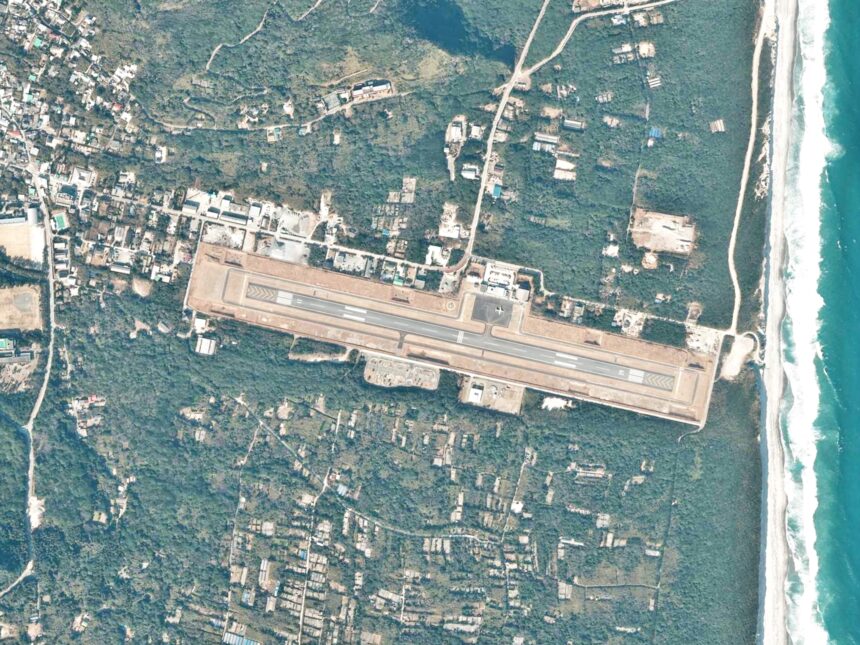
Niijima Airport is not a big-airport spectacle. Its appeal is the opposite: a short runway, small turboprop operation, and island logistics that make every arrival feel connected to the rest of the trip. Tokyo Metropolitan Government’s airport-use rules record an 800m x 25m runway, three small-aircraft apron berths for Dornier 228-class aircraft, and no ILS facility. New Central Airservice describes its Chofu-Izu Islands network and Dornier 228 twin-turboprop aircraft, making Niijima a good branch for travelers who want to understand Tokyo’s smaller island air routes.
Keep the airport portion simple and public. Use the terminal, official visitor areas, observation deck, public roads, ports, buses, taxis, and booked rentals. Do not use fence lines, airport service roads, private land, drone flights, tunnel walking or cycling where prohibited, or roadside behavior that could disturb local traffic or airport operations.
Start with the small-airport layout
The Tokyo Sightseeing Accessibility Guide says Niijima Airport is on the east side of the center of the gourd-shaped island and serves as the air gateway between Niijima and the mainland. It describes airline counters, restaurants, and stores on the first floor, with an observation deck on the second floor. It also notes no steps at the entrance or inside the facility, wheelchair-accessible restrooms, wheelchair parking near the terminal, and attendant assistance for boarding and disembarking from aircraft.
That makes the airport a clear first anchor. Use the deck for the aviation moment when open, then use the terminal to decide whether your day should be flight-focused, port-focused, Shikinejima-connected, beach-focused, or a slow island-movement plan. Because the runway is short and the aircraft are small, protect the schedule from wind, fog, sea conditions, and return-transport pressure.
Compare Chofu flights with sea routes
Niijima Village’s access page says Niijima and Shikinejima can be reached by sea and air. It lists Takeshiba high-speed boat, Takeshiba large passenger ship, Shimoda passenger ship, and Chofu small aircraft, while warning travelers to confirm current routes, fares, travel times, and operation because sea and air routes are weather-sensitive. GO TOKYO also lists Chofu Airport to Niijima by New Central Airservice at about 40 minutes, with travel times varying by weather.
The port choice matters. Tokyo’s accessibility guide says the Takeshiba high-speed ferry can arrive at Niijima Port or Wakago Fishing Port, while the large passenger ship arrives at Niijima Port. It also notes that Ferry Nishiki connects Niijima and Shikinejima in about 15 minutes. For an aviation fan, the clean plan is either Chofu in and Chofu out, or one air leg plus one sea leg only when the current operator schedules and the weather make the connection realistic.
Choose local movement before arrival
Tokyo Treasure Island Traffic Information lists Niijima’s local movement options as free shuttle bus, rental car, taxi, rental bicycle, and rental bike. The Niijima Tourism Office adds the practical detail: the free Fureai Bus runs three times a day and connects with Ferry Nishiki schedules, while a temporary bus may run between Niijima Port/Kurone and Wakago Fishing Port when sea conditions move jet-boat operations to Wakago.
A rental car is the safest flexible choice if you want to connect Niijima Airport, Niijima Port, Wakago, Habushiura Beach, Ishiyama viewpoints, hot springs, food stops, and lodging. A bicycle can work near the central village, but the Tourism Office warns that the Heisei Niijima Tunnel cannot be used by bicycle; car or motorbike movement is needed for the northern side. Taxis, rentals, bikes, and buses should be checked before arrival, especially during holidays, summer, bad weather, or when carrying surfboards and other large luggage.
Add one island branch
Niijima should not be reduced to the runway. Tokyo Treasure Island Traffic Information describes Niijima as a leading surfing island and notes its koga-stone moyai statues. JNTO’s Tokyo Islands guide also points to surfing in the clear blue water of the Izu Islands, while local tourism material highlights beaches, viewpoints, hot springs, and the Shikinejima connection.
For a first airport-area day, choose one branch. A transport branch compares Niijima Airport, Niijima Port, Wakago Fishing Port, and Ferry Nishiki. A beach branch keeps the focus on Habushiura and weather-safe movement. A culture branch uses koga-stone moyai and village-area walking. A Shikinejima branch should only be attempted with current Ferry Nishiki operation, enough spare time, and a clear return plan.
Simple first-time plan
| Step | What to do | Why it works |
|---|---|---|
| 1 | Check New Central Airservice, airport services, deck access, ferry status, arrival port, Ferry Nishiki, free bus, temporary Wakago bus, taxi, rental options, surf conditions, and weather | Niijima plans depend on air, sea, port, road, and weather conditions |
| 2 | Use the public terminal, second-floor observation deck, 800m runway context, restaurant, shop, and short-runway aircraft notes as the aviation anchor | The airport is small, specific, and useful for official aircraft viewing |
| 3 | Choose a movement base: airport, Niijima Port, Wakago Fishing Port, Ferry Nishiki, free bus, taxi, rental-car, bicycle, or motorbike | Local movement shapes the whole day |
| 4 | Add one branch: Habushiura Beach, koga-stone moyai, Ishiyama viewpoint, hot spring, village walk, port logistics, or Shikinejima connection | One branch keeps the trip resilient |
| 5 | Leave buffers before flight departure, ship boarding, rental return, bus connection, tunnel movement, sunset, fog, wind, and bad-weather changes | Island travel rewards spare time |
Where this fits in the transport hub
Use this as the Niijima branch of the Japan Transport Fan Travel Guide. It pairs naturally with Oshima, Hachijojima, Kozushima, Miyakejima, Haneda, Chofu-related island flights, Fukue, Tsushima, Iki, Tanegashima, Yakushima, and other island-airport guides. Niijima stands out because a very small runway, Chofu turboprop flights, surf-island weather, two port possibilities, and the Shikinejima ferry connection can all affect the same travel day.
Photo credit
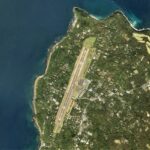
Featured image: Niijima Airport Aerial photograph 2013 by Bruno-plus on Wikimedia Commons, CC BY 4.0. The file is also made based on National Land Image Information (Color Aerial Photographs), Ministry of Land, Infrastructure, Transport and Tourism. Cropping or resizing may be applied for site display. The image is used in editorial transport-travel-guide context and does not imply endorsement by the creator, MLIT, GSI, Tokyo Metropolitan Government, Niijima Airport, airport operators, airlines, ferry operators, tourism organizations, Wikimedia, or the uploader.
Sources
- Tokyo Metropolitan Government: Niijima Airport services
- Tokyo Metropolitan Government: Niijima Airport use rules
- New Central Airservice official site
- New Central Airservice: timetable and fare page
- Niijima Village: access
- Tokyo Sightseeing Accessibility Guide: Niijima and Shikinejima traffic
- Tokyo Treasure Island Traffic Information: Niijima Island
- Niijima Tourism Office: island movement
- GO TOKYO: Going to Islands
- Wikimedia Commons image file and license record
Editorial disclosure: This is an independent planning guide. It is not affiliated with Tokyo Metropolitan Government, Niijima Village, Niijima Airport, New Central Airservice, Tokai Kisen, Shinshin Kisen, Ferry Nishiki, Toho Air Service, taxi operators, rental companies, Niijima Tourism Office, Tokyo Islands, GO TOKYO, MLIT, GSI, Wikimedia, or the image creator/uploader.