Halal food in Japan for Muslim travelers: what to check before you eat
Short answer: halal food is available in Japan, especially in major cities, but you need to separate halal-certified, Muslim-friendly, self-declared, and unverified options. Check certification, alcohol, pork, meat sourcing, stock, mirin, cooking sake, soy sauce, miso additives, gelatin, animal fats, utensils, storage, and kitchen separation before relying on a meal.
For the wider practical planning map, start with Practical Food Guides in Japan. For food formats such as ramen, sushi, udon, soba, convenience stores, breakfast, food halls, and izakaya, use Japanese Food Basics.
Last checked: August 16, 2026. Certification status, restaurant policies, menus, kitchen procedures, alcohol use, meat sourcing, prayer spaces, hotel services, and English-language help can change. Confirm the exact restaurant, shop, hotel, tour, product, or certification source before relying on it.
Start with the label type, not the dish photo
JNTO notes that Japan is becoming more attuned to Muslim travelers, but also warns that there is no central agency for halal accreditation. That means the wording matters. A halal-certified restaurant, a Muslim-friendly restaurant, a no-pork menu, a vegetarian-looking dish, and an ordinary seafood meal are not the same thing.
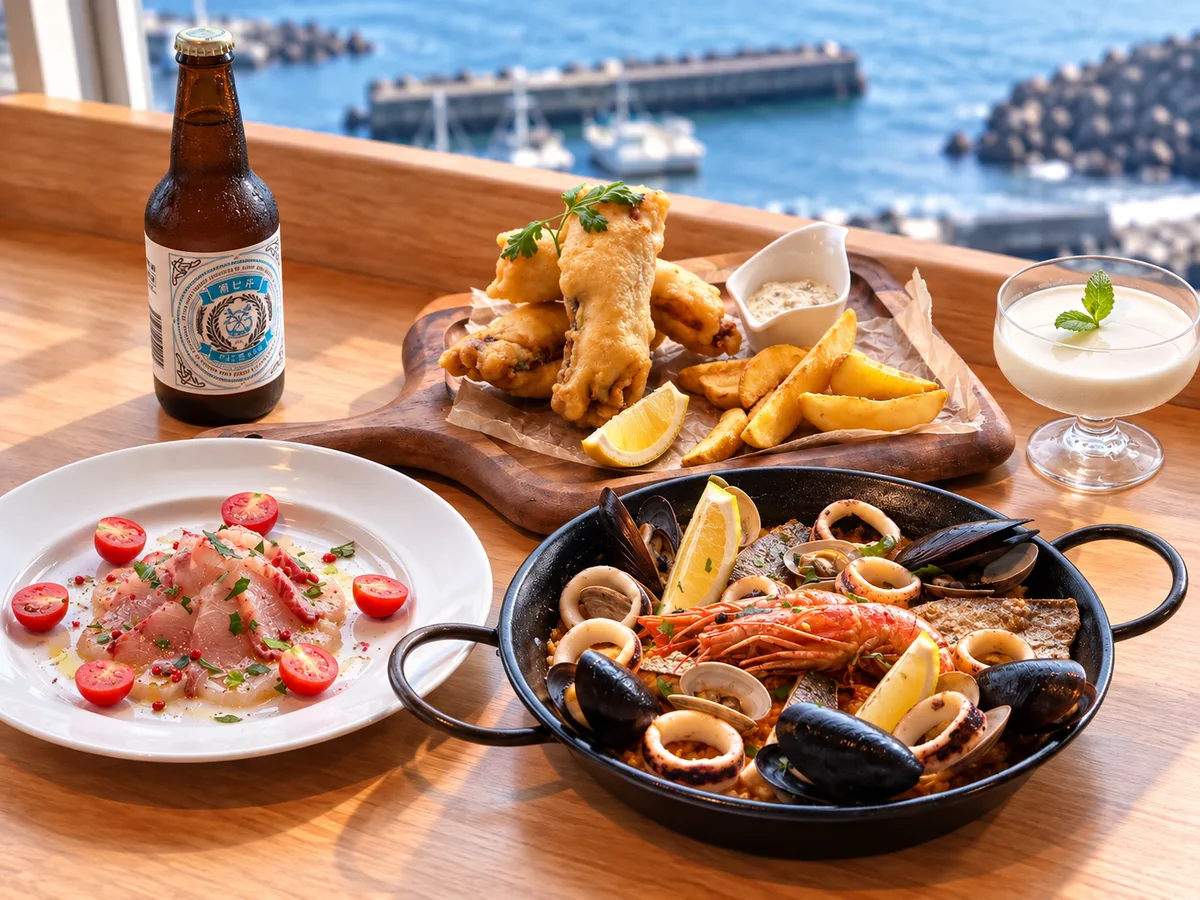
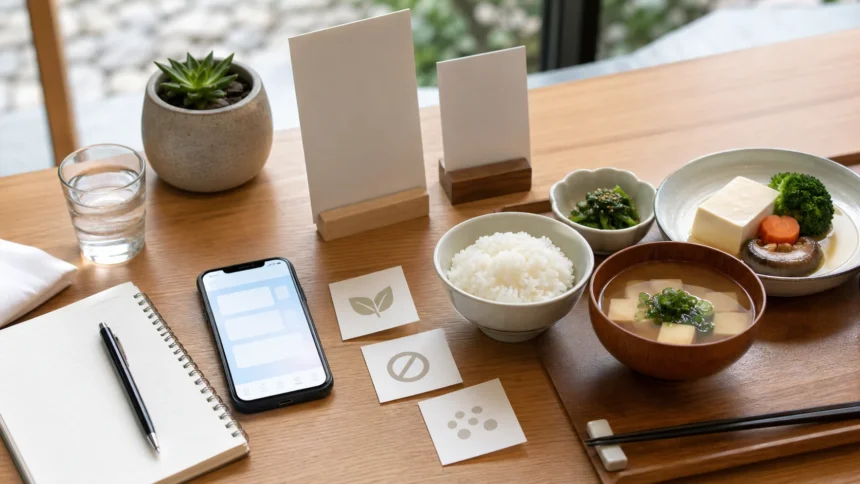
A photo cannot show whether alcohol, mirin, cooking sake, pork-derived ingredients, gelatin, meat extract, shared utensils, or storage conditions are involved. Use the current official restaurant, hotel, product, guide, or certifier information.
Four terms to keep separate
| Term | What it may mean | What to confirm |
|---|---|---|
| Halal-certified | A certifying body has issued a certificate for a product, restaurant, kitchen, or process. | Who certified it, what exactly is covered, current validity, and whether the certificate applies to the meal you will eat. |
| Muslim-friendly | The venue may offer services for Muslim travelers, such as no-pork dishes, prayer space, or staff awareness. | Whether it is certified, whether alcohol is served, whether utensils and kitchen areas are separated, and what ingredients are used. |
| Self-declared halal or no pork | The venue describes its own policy without obvious third-party certification. | Meat source, alcohol, pork derivatives, stock, sauces, gelatin, storage, and personal acceptability. |
| Unverified | No current reliable information is available. | Use a different meal or ask the venue before ordering if your standard requires certainty. |
Why Japanese food still needs checks
Japanese cuisine may look halal-friendly at first because rice, seafood, vegetables, and tofu are common. JNTO specifically warns, however, that cooking sake, mirin, soy sauce, some miso, gelatin, and animal fats may matter. Alcohol is also served in many Japanese restaurants.
For some travelers, a dish cooked with alcohol is not acceptable even if the alcohol is heated. Others may have a different personal standard. This article does not give a religious ruling. It helps you ask better questions and avoid assuming that a menu item is suitable.
Before booking or ordering, ask these questions
- Is this halal-certified? If yes, ask what is covered: product, kitchen, menu item, restaurant, meat, or process.
- Is alcohol used? Check cooking sake, mirin, sauces, marinades, desserts, and drinks served nearby.
- Is pork or pork-derived ingredient used? Check broth, gelatin, lard, toppings, sauces, and shared fryers.
- Where does the meat come from? Chicken, beef, and wagyu are not automatically halal without sourcing confirmation.
- Are utensils, storage, and cooking surfaces separated? Muslim-friendly does not always mean a halal-only kitchen.
- Can the venue answer before the meal? If the answer matters, ask before booking or before the cancellation deadline.
Good planning options
| Option | Why it helps | Check carefully |
|---|---|---|
| Halal-certified restaurant or product | Best starting point when current certification is clear. | Certifier, scope, date, menu coverage, and any changed operations. |
| Muslim-friendly hotel | May offer prayer mats, prayer space, kitchenettes, concierge help, or restaurant guidance. | Food policy, kitchen separation, alcohol service, and current room or meal-plan details. |
| Apartment or suite with kitchenette | Can give more control over ingredients and storage. | Nearby groceries, cookware, cleaning, refrigerator, and whether halal products are easy to buy. |
| Ethnic grocery or halal grocery | May carry halal meat, frozen products, spices, or prepared curry meals. | Label, certification, storage, cooking instructions, and transport time. |
| Halal-friendly tour | Can reduce stress by planning meals, mosque stops, and prayer timing. | Operator details, meal source, certification, cancellation rules, and itinerary flexibility. |
| Vegetarian or seafood meal | May be useful only for some travelers and some standards. | Alcohol, mirin, fish stock, pork-derived ingredients, utensils, and personal acceptability. |
Convenience stores and supermarkets
Average supermarkets may not stock many halal products, according to JNTO. Convenience stores can still help with drinks, fruit, packaged snacks, rice, and emergency items, but they are not automatically halal-friendly. Check labels and avoid assuming that no visible pork means halal.
For packaged-food workflow, use the Japanese Convenience Store Food Guide. For food allergy safety, use Japan Food Allergy Guide for Travelers; allergies and halal requirements are different checks.
Reservations matter more for halal meals
Walk-in questions can be difficult during a busy service. If a meal is important, contact the restaurant, hotel, tour, or ryokan before booking. Ask what they can and cannot accommodate, and accept a refusal if they cannot meet your standard. For booking mechanics, read How to Reserve Restaurants in Japan.
Make the decision fit the day
Halal Food in Japan for Muslim Travelers is most useful when it solves one concrete travel decision. Start with halal verification, alcohol and pork questions, prayer-time planning, and route flexibility; then choose the option that fits the route already on the calendar. A famous format is not automatically the best choice if it adds a long detour, a hard reservation, or a new problem for the group.
Before leaving for Halal Food in Japan for Muslim Travelers, set the route anchor, the latest acceptable meal time, and one trigger for changing plans. For this topic, the trigger may be a sold-out slot, a long queue, bad weather, luggage, a dietary boundary, a tired child, or a train that cannot be missed. Decide it while the group is calm, not after the original plan has failed.
| Travel situation | First choice | Confirm before committing |
|---|---|---|
| The topic is the day’s main goal | Reserve or arrive early and keep the surrounding route light. | Official hours, entry format, current menu, payment, and cancellation or late-arrival rules. |
| The topic is a pleasant extra | Choose a nearby option with a normal meal or rest stop beside it. | Walking time, queue length, seating, toilets, and whether the group can leave easily. |
| The group has a constraint | Prefer the clearest option and save a second choice in the same area. | Ingredients, access, child needs, weather cover, luggage space, and a way to communicate questions. |
Check the exact venue or area
For halal food in japan for muslim travelers, use maps and social posts to discover candidates, then verify the exact official venue or area page before changing the itinerary. Branch hours, menus, reservations, campaign dates, tenant lists, payment methods, and access can differ. Recheck near the visit when weather, events, or stock could change the decision.
When planning halal food in japan for muslim travelers from overseas, check Japan local time, phone-number requirements, language options, card support, and visit-day evidence. Save the official page, confirmation screen, address, nearest station exit, and reservation or timed-entry details before leaving reliable Wi-Fi.
Keep the backup in the same movement pattern
For halal food in japan for muslim travelers, the backup should preserve the same movement pattern with less friction. Match an early train with a station option, rain with a hotel or mall, a late arrival with a convenience store or supermarket, and a failed campaign or queue with an ordinary restaurant. A backup that crosses the city is usually too expensive in time and energy.
Use the parent guide after this decision is clear. It can help compare areas, seasons, or purposes; this page should remain the practical answer for halal verification, alcohol and pork questions, prayer-time planning, and route flexibility. When a child or sibling article is added, link it from the parent and keep the promise of each page distinct so readers can move from the broad map to the next small choice.
FAQ
Should I plan this before booking my trip?
Only when halal verification, alcohol and pork questions, prayer-time planning, and route flexibility is a major reason for the trip or has a limited reservation window. Otherwise, place it as a flexible option near a route you already want to take. This keeps the plan useful even when dates, weather, or availability change.
What is the safest way to handle changing information?
For Halal Food in Japan for Muslim Travelers, record the date, location, and rule you actually confirmed, then save one nearby alternative. An old review, translated summary, or single branch should explain where to look next, not become a universal rule for the whole category.
What should I decide first?
Decide whether the topic is the anchor, a meal, a short break, or a backup. Then set the time and location around that role. The route becomes easier when the article has one job instead of trying to rank every possible choice.
Common mistakes
- Assuming seafood, vegetarian, or no-pork food is automatically halal.
- Assuming Muslim-friendly means halal-certified.
- Ignoring mirin, cooking sake, sauces, miso additives, gelatin, animal fats, or shared utensils.
- Depending on an old restaurant list without checking the current official page.
- Trying to confirm a strict requirement only after arriving for a course meal.
- Using certification logos or claims from a third-party page without checking the certifier or venue.
FAQ
Is halal food easy to find in Japan?
It depends on the city, route, and standard you follow. Major cities usually have more halal-certified or Muslim-friendly options than rural areas. Build backups before travel.
Is Muslim-friendly the same as halal-certified?
No. Muslim-friendly can mean helpful services or reduced-risk options, but it does not automatically mean halal-certified or halal-only kitchen procedures. Check the exact venue.
Are seafood and vegetarian meals halal in Japan?
Not automatically. Sauces, stock, alcohol, mirin, soy sauce, miso additives, shared utensils, and personal standards still matter.
Can I rely on a halal restaurant list?
Use lists as starting points only. Check the current official restaurant, hotel, product, or certifier information before relying on a meal.
Related guides
For the parent practical map, use Practical Food Guides in Japan. For vegetarian and vegan planning, read Vegetarian and Vegan Food in Japan for Travelers. For allergy safety, read Japan Food Allergy Guide for Travelers. For food formats, start with Japanese Food Basics.
Sources
- JNTO: Muslim Travelers
- JNTO: Japanese Cuisine for All, Including Vegan, Vegetarian and Halal Selections
- Japan Muslim Association: Halal Certification
- Japan Muslim Association: Halal Policy
Editorial disclosure: This guide is independent. It does not certify restaurants, products, kitchens, meat, halal status, religious suitability, allergy safety, or medical suitability.