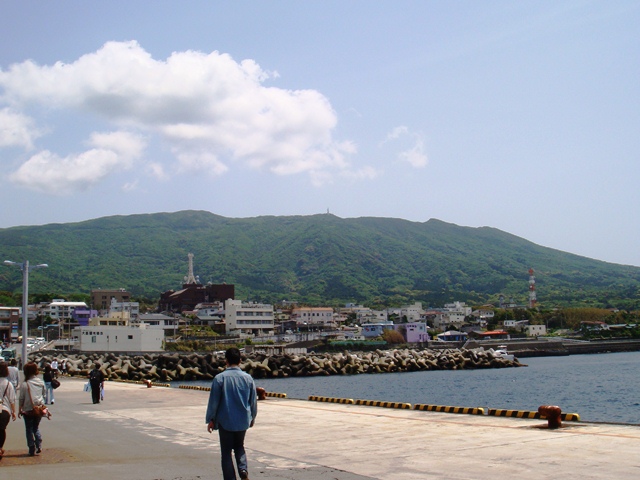
The port is part of the itinerary
Short answer: For Izu Oshima, do not write your plan as “arrive at the port” until you know which port. Ferries may use Okada Port or Motomachi Port, and Tokai Kisen warns that arrival and departure ports may differ. Your bus, taxi, rental car, lodging pickup, and first sightseeing stop should all be checked against the active port of the day.
Last checked: August 27, 2026. Port assignments, bus timetables, taxi availability, payments, rental-car pickup, and transfer routes can change. Check official Tokai Kisen, Oshima Bus, and local tourism pages before travel.
Okada and Motomachi in practical terms
Okada Port is often the port travelers meet first when conditions favor the island’s north side. Motomachi Port is closer to the main town area and some west-side services. The important point is not to memorize one as the “normal” port. The useful habit is to check the operation status page before you leave Tokyo, then check it again before your return.
Tokai Kisen’s operation status page has a specific Oshima section and lists an Oshima port guidance phone number, 04992-2-5522, for same-day port guidance. Use that source when your plan depends on meeting someone, catching a bus, returning a rental car, or reaching accommodation at a particular time.
Bus transfers
Oshima Bus is the basic public-transport tool for many visitors. Its official route bus page publishes current timetables and tourist-map information. The bus is especially useful if you are building an island day around Motomachi, Oshima Park, Habu Port, Gojinka Onsen, Mt. Mihara access, or other main-route stops.
Payment deserves attention. Oshima Bus FAQ says IC cards such as Suica and PASMO are not accepted, and that cash or PayPay can be used. Carry small cash even if you expect to use a phone payment app, because island travel is easier when you have a backup.
Early arrivals also need care. Oshima Bus FAQ explains that buses can connect with early large-passenger-ship arrivals, but the timing depends on ship arrival and travelers should move to the bus stop promptly after disembarking. If you are arriving tired after an overnight sailing, decide your first direction before you land.
Taxis are useful, but not something to improvise late at night
The Oshima Tourism Association transport page says taxis do not cruise around the island, night service is mostly not operating, most taxis wait at ports or the airport, and travelers should call by phone. That is very different from central Tokyo. If your lodging, restaurant, trailhead, or return plan depends on a taxi, contact a local taxi company in advance rather than assuming one will appear when needed.
For short, simple arrivals during active ferry hours, a taxi may be straightforward. For early morning, late evening, remote coast, bad weather, or a tight return ferry, it should be preplanned. If you cannot confirm a taxi, adjust the itinerary around bus routes, rental vehicles, or a simpler port-town plan.
Rental cars, bikes, and hotel pickups
Rental cars and bikes can make Izu Oshima much easier, especially for volcano viewpoints, south-coast stops, and multi-stop days. The port-change issue still applies. When booking, ask how pickup changes if the active ferry port changes between Okada and Motomachi. If your accommodation offers pickup, confirm where and when they check the port of the day.
For first-time visitors, keep the first hour after arrival simple: disembark, confirm the port, find the bus stop or meeting point, and avoid scheduling a reservation immediately after landing. Island travel is much calmer when the first plan has slack.
Transfer checklist
- Check Tokai Kisen operation status before leaving for the Tokyo terminal.
- Write down whether your sailing uses Okada or Motomachi.
- Check the return port separately; do not assume it matches arrival.
- Use Oshima Bus official timetables for current routes and seasonal changes.
- Carry small cash because Suica and PASMO are not accepted on Oshima Bus according to its FAQ.
- Call ahead for taxis when the plan involves night, remote areas, luggage, or tight connections.
- Tell rental-car, lodging, or activity providers that the ferry port can change.
Related Oshima ferry guides
- Izu Oshima Ferry Guide: Ships, Tickets, Boarding, and Ports
- Izu Oshima Ferry With a Pet: Carrier Rules, Tickets, and Backup Plans
- Izu Oshima Ferry Disruption and Rebooking Guide
Photo credit
Featured image: View from Motomachi Port, Izu Oshima, Tokyo, Japan by (WT-shared) Shoestring at wts.wikivoyage via Wikimedia Commons, licensed under CC BY-SA 4.0. Cropping or resizing may be applied for site display. Use here does not imply endorsement by the photographer, Wikimedia, Tokai Kisen, Oshima Bus, Tokyo Oshima Town, taxi companies, or tourism operators.
Sources
- Tokai Kisen operation status
- Tokai Kisen boarding flow
- Oshima Tourism Association transport page
- Oshima Bus route bus page
- Oshima Bus FAQ
- Tokyo Treasure Island Oshima transport page
- Wikimedia Commons image file and license record
Editorial disclosure: This is an independent travel-planning guide. It is not affiliated with Tokai Kisen, Oshima Bus, Tokyo Oshima Town, Izu Oshima Photo Studio, taxi companies, or tourism operators.