Short answer: July is Japan’s first serious summer food-planning month: heat, fireworks, festivals and late-day crowds shape the meal. Use chilled noodles, early lunches, station food, evening snacks, shaved ice and convenience-store cold meals as practical tools, not just seasonal novelties.
This guide is for travelers visiting Japan in July, when rainy season may be ending in many areas and summer events begin to dominate evenings. Use it with summer foods in Japan, the Japan food festivals calendar and the parent Japan seasonal food calendar.
Last checked: July 22, 2026. Heat, rain, fireworks dates, festival operations, food stalls, restaurant hours, menus, labels, allergens, prices and payment methods can change. Confirm the current official event and venue information before relying on a fixed July plan.
July Food Planning Map
| July situation | Food move | Planning caution |
|---|---|---|
| Hot sightseeing day | Early lunch, cold noodles, cafe break, hotel rest | A famous late lunch can become exhausting in heat. |
| Fireworks night | Eat before the event or buy simple station food early | After-event crowds can overwhelm restaurants and transport. |
| Festival route | Treat yatai snacks as a bonus, not dinner security | Stall lineup, payment, allergens and queues vary by event. |
| Beach or river day | Use nearby restaurants and drinks, avoid fragile takeaway | Heat changes safe carrying time and appetite. |
| Mountain escape | Station bento, soba, local cafe, early return meal | Return transport and closing times matter. |
What July Means For Food Travelers
JNTO’s July and summer guidance emphasizes heat, summer activities, festivals and fireworks. For food travelers, July rewards a different rhythm: eat earlier, rest during the hottest part of the day, then decide whether the evening is for fireworks, festival walking or a reserved dinner.
The mistake is stacking a hard-to-reach restaurant on top of an outdoor event. A better July plan has one anchor per evening. If fireworks are the anchor, simplify dinner. If dinner is the anchor, avoid making a crowded event the same-night requirement.
Foods And Food Stops To Look For
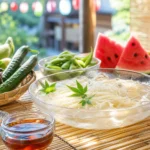
Chilled Noodles
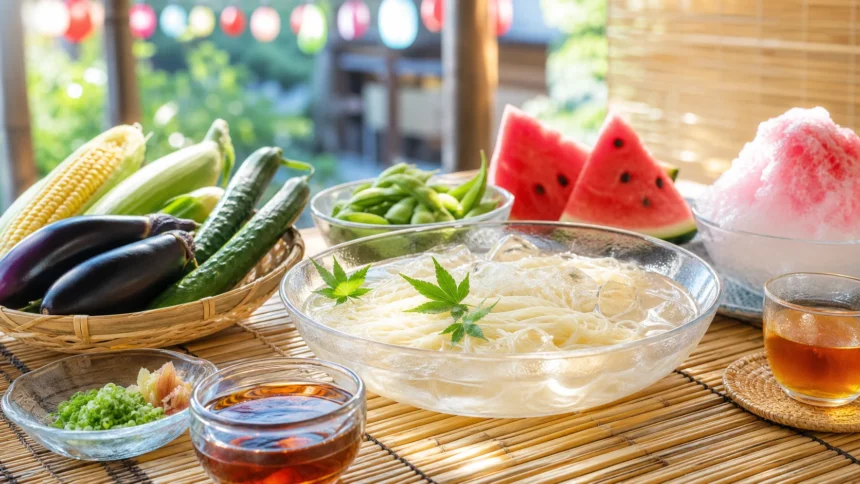
Cold noodle formats can be useful in July because they match heat and shorter lunch breaks. Check sauce and broth ingredients because wheat, soy, fish stock, sesame, egg or toppings may matter for allergies and diets.
Festival Snacks
JNTO’s festival guidance describes local festivals and food-stall culture, but exact stalls are event-specific. Bring cash if needed, read signs, and do not assume a stall can answer complex allergy questions during a rush.
Fireworks Food Timing
Fireworks nights are a timing problem. Buy drinks and a simple meal before the area fills, or eat near your hotel before traveling to the event. After the finale, stations and restaurants may be crowded.
Shaved Ice, Fruit And Cold Drinks
Cold sweets and drinks help, but they are still ingredient decisions. Milk, egg, gelatin, nuts, alcohol flavoring and shared equipment can appear in summer desserts.
Two July Route Patterns
City Fireworks Day
Use a light lunch, an afternoon rest, early dinner near the event route, then simple drinks or snacks. Keep the return route more important than finding a perfect late meal.
Heat Escape Day
Choose a mountain, river, museum or aquarium route, then keep food near transit. Station bento, soba, cafes and hotel-area dinners are more reliable than long outdoor wandering.
July Mistakes To Avoid
- Waiting until after fireworks to find dinner.
- Carrying perishable food through a long hot day.
- Making stalls the only dinner plan for children or allergy travelers.
- Booking a far restaurant after a beach, hike or festival route.
- Ignoring hydration and rest because the food list looks exciting.
How To Build A July Evening
If Fireworks Are The Main Event
Move dinner earlier. Eat near the event route before the area fills, then use snacks, drinks or shaved ice as part of the atmosphere. After the fireworks, focus on leaving smoothly instead of starting a restaurant search with the crowd.
If Dinner Is The Main Event
Keep the evening simpler. A reserved dinner and a major fireworks crowd on the same night can be too much. Choose one anchor, then make the other optional. This is especially important with children, older travelers, strict diets or luggage.
If You Are Unsure
Choose a station-area dinner and keep the event flexible. You can still enjoy summer atmosphere without locking the whole evening to a riverside crowd or festival route.
Food Safety And Comfort In July Heat
July changes how long food can comfortably travel with you. Buy chilled or fragile food close to when you will eat it. If a shop provides storage instructions, follow them. For festival and beach days, prioritize water, shade, rest and toilets as much as the menu. A modest meal that keeps everyone functional is better than a famous snack that leaves the group overheated.
July Decision Checklist
- Is the main outdoor event more important than dinner, or is dinner the anchor?
- Will you eat before fireworks, rather than after the exit crowd begins?
- Is there a shaded or indoor place to rest between lunch and evening?
- Can the group handle festival food, or do allergies and children require a safer meal first?
- Are drinks and a simple backup available before the route becomes crowded?
If you cannot answer these, choose a station-area meal and make the event optional. July is much more enjoyable when food supports the evening instead of competing with it.
Make the decision fit the day
Use Japan in July Food Guide: Summer Festivals, Chilled Noodles and Fireworks as a planning window, not a promise that every seasonal food or event will be available everywhere. The useful question is how the month changes your route: what can be eaten near the day’s anchor, what needs an early check, and what still works if weather or transport changes.
Before leaving for Japan in July Food Guide: Summer Festivals, Chilled Noodles and Fireworks, set the route anchor, the latest acceptable meal time, and one trigger for changing plans. For this topic, the trigger may be a sold-out slot, a long queue, bad weather, luggage, a dietary boundary, a tired child, or a train that cannot be missed. Decide it while the group is calm, not after the original plan has failed.
| Travel situation | First choice | Confirm before committing |
|---|---|---|
| The topic is the day’s main goal | Reserve or arrive early and keep the surrounding route light. | Official hours, entry format, current menu, payment, and cancellation or late-arrival rules. |
| The topic is a pleasant extra | Choose a nearby option with a normal meal or rest stop beside it. | Walking time, queue length, seating, toilets, and whether the group can leave easily. |
| The group has a constraint | Prefer the clearest option and save a second choice in the same area. | Ingredients, access, child needs, weather cover, luggage space, and a way to communicate questions. |
Check the exact venue or area
For japan in july food guide, use maps and social posts to discover candidates, then verify the exact official venue or area page before changing the itinerary. Branch hours, menus, reservations, campaign dates, tenant lists, payment methods, and access can differ. Recheck near the visit when weather, events, or stock could change the decision.
When planning japan in july food guide from overseas, check Japan local time, phone-number requirements, language options, card support, and visit-day evidence. Save the official page, confirmation screen, address, nearest station exit, and reservation or timed-entry details before leaving reliable Wi-Fi.
Keep the backup in the same movement pattern
For japan in july food guide, the backup should preserve the same movement pattern with less friction. Match an early train with a station option, rain with a hotel or mall, a late arrival with a convenience store or supermarket, and a failed campaign or queue with an ordinary restaurant. A backup that crosses the city is usually too expensive in time and energy.
Use the parent guide after this decision is clear. It can help compare areas, seasons, or purposes; this page should remain the practical answer for heat, festival crowds, fireworks timing, chilled food, and evening transport. When a child or sibling article is added, link it from the parent and keep the promise of each page distinct so readers can move from the broad map to the next small choice.
FAQ
Should I plan this before booking my trip?
Only when heat, festival crowds, fireworks timing, chilled food, and evening transport is a major reason for the trip or has a limited reservation window. Otherwise, place it as a flexible option near a route you already want to take. This keeps the plan useful even when dates, weather, or availability change.
What is the safest way to handle changing information?
For Japan in July Food Guide: Summer Festivals, Chilled Noodles and Fireworks, record the date, location, and rule you actually confirmed, then save one nearby alternative. An old review, translated summary, or single branch should explain where to look next, not become a universal rule for the whole category.
What should I decide first?
Decide whether the topic is the anchor, a meal, a short break, or a backup. Then set the time and location around that role. The route becomes easier when the article has one job instead of trying to rank every possible choice.
Related Guides
- Summer foods in Japan
- Japan food festivals calendar
- Japan convenience store seasonal food guide
- Japan seasonal food calendar
- Japan food allergy guide for travelers
FAQ
Is July a good month for food travel in Japan?
Yes, especially for summer food culture, festivals and fireworks, but the heat makes route design more important than a long restaurant checklist.
What should I eat in July?
Try chilled noodles, shaved ice, festival snacks, early dinners, fruit desserts, cold drinks and practical station or convenience-store meals.
Can I rely on festival stalls for dinner?
Not completely. Stalls are fun, but queues, menus, payment and allergy clarity vary. Have a simple backup.
Official Sources
- JNTO: Japan in July
- JNTO: Summer in Japan
- JNTO: Get Involved in Local Japanese Festivals
- GO TOKYO: Tokyo in July
Editorial disclosure: Kuroneko Aji Meguri creates English food travel guides as independent editorial planning pages. We prioritize official tourism, government, venue and producer information where possible. This article does not sell a tour, restaurant reservation or medical service, and it cannot guarantee availability, safety or opening hours on your travel date.