Short answer: summer foods in Japan are easiest to enjoy when you plan around heat, rain, crowds and timing. Look for chilled noodles, summer vegetables, watermelon and fruit, shaved ice, festival-stall food, beer gardens, yakiniku or BBQ, convenience-store cold meals, market breakfasts and cooler-region food routes. June, July and August are not the same. Rainy season, extreme humidity, Obon travel demand, fireworks crowds, typhoons, food carrying, payment, seating and allergy questions can all change the best meal choice.
This guide is for international travelers visiting Japan from June to August. It is not a list of famous restaurants. It is a practical summer food plan: what to eat, when to eat it, where the risk is, and how to keep backup meals close when the weather or crowds are doing their own little opera.
If you are still choosing the best season for your trip, start with our Japan seasonal food calendar. If this is your first food-focused Japan trip, use the Japan food travel guide for first-time visitors before locking in special meals.
Last checked: August 16, 2026. Weather, rainy-season timing, heat warnings, typhoons, festival dates, fireworks schedules, Obon demand, restaurant hours, food-stall lineups, farm calendars, menus, prices, transport, payment methods, seating, rubbish rules and dietary accommodation can change. Recheck current official information before travel and again before going to a specific venue or event.
Start With Summer Travel Logic
JNTO’s summer guide describes much of Japan’s summer as hot and humid, especially across Honshu and Kyushu. That matters more than a perfect food checklist. A heavy lunch after standing in the sun may be worse than a simple cold noodle meal near your next station. A famous festival stall may be fun, but not if the queue erases your train buffer or your allergy question cannot be answered.
The useful summer plan has three layers. First, eat earlier or indoors when the heat is strongest. Second, choose food formats that match the day: cold noodles, fruit, shaved ice, prepared foods, market breakfast, casual station meals or a reserved dinner after sunset. Third, keep a weather and crowd fallback in the same area.
| Summer situation | Best food strategy | What to avoid | Useful backup |
|---|---|---|---|
| Rainy June day | Indoor food hall, cafe, station restaurant, museum cafe, reserved dinner | Outdoor market plans with no indoor alternative | Department-store basement near your hotel |
| Hot July sightseeing | Early breakfast, cold noodles, light lunch, indoor afternoon break | Long midday queue in direct sun | Convenience store cold food or station meal |
| Fireworks or festival night | Eat before entering the crowd, then sample stalls lightly | Depending on one stall for dinner | Prebought food or late meal near accommodation |
| Obon travel period | Reserve key meals, buy train food early, keep hotel-area options | Tight transfers plus popular restaurants | Ekiben, supermarket, hotel breakfast |
| Island, coast or rural route | Check weather, transport and cancellation terms before committing | Nonrefundable food plans after a fragile flight or ferry | Permanent city restaurant or indoor attraction |
What Foods Are Associated With Summer?
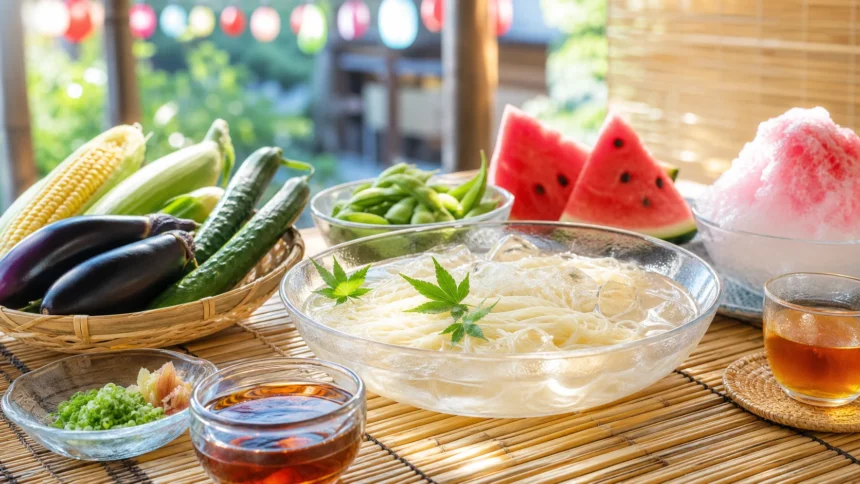
MAFF’s seasonal material gives summer examples such as cucumber, tomato, horse mackerel and watermelon. JNTO also uses chilled somen noodles, yakiniku BBQ and beer as summer food cues. Read these as travel themes, not national guarantees. A tomato can be sold outside summer; a summer festival can happen without the specific stall you imagined; a chilled noodle dish can still contain fish, wheat, soy, sesame or egg.
The best summer foods are often the ones that protect your energy. A cold noodle lunch near your route can beat a famous heavy meal across town. A supermarket fruit cup can be better than carrying market fruit through six hours of heat. A simple hotel breakfast can make a festival evening easier.
Common summer food themes
- Chilled noodles: somen, zaru soba, cold udon, hiyashi chuka-style ramen and other cool noodle formats.
- Summer vegetables: cucumber, tomato, eggplant, corn, edamame and vegetable side dishes.
- Fruit and cold sweets: watermelon, peaches, grapes, melon, parfaits, shaved ice and chilled desserts.
- Festival-stall food: yakitori, takoyaki, okonomiyaki-style items, hashimaki, fried snacks, sweets and drinks depending on the event.
- Convenience-store cold meals: cold noodles, salads, sandwiches, yogurt, fruit, drinks, ice cream and packaged desserts.
- Evening social meals: beer gardens, yakiniku, izakaya, rooftop dining and casual restaurants after the heat weakens.
- Cooler-region routes: Hokkaido, highlands, mountains or northern areas when central cities feel too hot.
June: Rainy Season And Indoor Food Planning
JNTO’s June guide frames the month as the rainy start of summer. Rainy periods differ by region: Okinawa starts earlier, Tohoku later, and Hokkaido is less affected. For food travelers, June is not a bad month. It simply rewards indoor planning.
Choose food days that work in rain: department-store food halls, station food floors, cafes, cooking classes, museums, covered markets, hotel restaurants and reserved dinners. If you want a market or outdoor food street, put it early in the day and keep a nearby indoor fallback.
Good June food moves
- Use a food hall or station area on heavy-rain days instead of crossing town for one outdoor shop.
- Try chilled noodles when humidity rises, but check broth, sauce and toppings if allergens matter.
- Book one indoor dinner if the meal is important, then leave lunch flexible.
- Carry less perishable food. Rain plus humidity plus long sightseeing is not friendly to fragile purchases.
For noodle ordering and allergy boundaries, use our udon and soba guide and ramen styles guide.
July: Heat, Festivals, Fireworks And Cold Meals
JNTO’s July guide notes that the rainy season winds down in many areas and temperatures and humidity rise. This is when meal timing becomes part of the itinerary. Eat breakfast before the day gets hot, keep lunch near your route, and save the more social meal for evening.
July also brings major festivals, fireworks, beaches, mountains and beer gardens. Festival food is part of the fun, but it should not be your only dinner plan. Food-stall lineups, cash needs, crowd movement, seating, trash rules and allergy communication vary by event.
Festival food planning
| Question | Why it matters | Safer move |
|---|---|---|
| Will there be stalls? | Not every event has the same layout or food lineup each year. | Check the current official event page and local signs. |
| Can I pay cashless? | Small stalls may be cash-only or have unstable connectivity. | Carry yen and small bills. |
| Where can I eat? | Some areas restrict eating while walking or require designated areas. | Follow event signs and staff instructions. |
| Where does rubbish go? | Bins may be limited or stall-specific. | Return packaging as directed or carry it until disposal is available. |
| Can ingredients be confirmed? | Stalls may use shared grills, oil, batter, sauces and tools. | Do not eat if a serious allergy cannot be answered clearly. |
For markets and public eating rules, use the markets and food streets guide. For payment, keep the cash, cards and IC payments guide close.
August: Obon, Fireworks, Fruit And Weather Buffers
JNTO’s August guide identifies the Bon holiday period in early to mid-August as one of the busiest and most expensive times for Japan travel. For food planning, that means reservations, transport and backup meals matter more than usual. A restaurant may be open, closed, full, on a special schedule or surrounded by festival traffic. The national season label does not decide the venue-level answer.
August is also strong for fireworks, festival nights, cold sweets, fruit and late dinners after heat starts to ease. It is a good month for simple food logistics: buy train food early, keep water and snacks sensible, and avoid long hot carrying times for perishable items.
Obon food rules
- Book anchor meals earlier if the meal is important.
- Check station food and ekiben availability before a long rail day.
- Do not put a special restaurant immediately after a fragile intercity transfer.
- Keep a hotel-area supermarket, convenience store or casual restaurant as the fallback.
- Check whether a festival changes local streets, taxis, buses, restaurants and trash rules.
If your August route includes islands, ferries, beaches or Okinawa, build more weather space. Our Okinawa food guide for travelers explains why typhoon and island logistics affect meals, not only sightseeing.
Where To Find Summer Food
Summer food is often easiest in ordinary places. Department-store basements, supermarkets, convenience stores, station floors and cafes give you air conditioning, labels, payment clarity and backup choices. Markets and festivals can be memorable, but they need more heat and crowd planning.
| Venue | Summer advantage | Main caution | Useful linked guide |
|---|---|---|---|
| Convenience store | Cold noodles, drinks, fruit, ice cream, breakfast and backup meals | Label reading, eating location and perishable timing | Convenience store food |
| Department-store basement | Air-conditioned comparison of fruit, sweets, bento and side dishes | Limited seating and late-day crowding | Markets and food streets |
| Station food floor | Good before trains, bad weather or hot afternoons | Gate-side confusion and departure pressure | Tokyo Station food guide |
| Noodle shop | Cold soba, udon or ramen-style dishes can fit hot days | Broth, dipping sauce and noodle-allergy issues | Udon and soba |
| Festival stall | Strong atmosphere and portable foods | Queues, cash, shared equipment and unclear ingredients | Food etiquette |
Cooler Routes And Regional Choices
If your schedule is flexible, consider using geography to reduce heat stress. JNTO’s summer and July guidance points travelers toward beaches, mountains and cooler climates. For food travelers, that can mean Hokkaido seafood and dairy, mountain resort breakfasts, highland cafes, northern markets or an early market meal followed by an indoor afternoon.
Use the best local foods in Japan by region guide before choosing a summer detour. Hokkaido can be a strong summer food route, but exact restaurant, market and transport details still need checking. Start with the Hokkaido food guide if you are comparing Sapporo, Hakodate, Otaru or a dairy-and-produce route.
Allergies, Vegetarian Needs And Festival-Stall Risk
Summer foods can create hidden ingredient problems. Cold noodles may contain wheat, buckwheat, egg, soy sauce, fish-based broth, sesame, shellfish toppings or shared boiling water. Festival foods may use shared grills, shared oil, batter, sauces, mayonnaise, bonito flakes, seafood, meat extract or the same utensils across several items. Shaved ice and sweets can include milk, gelatin, nuts, alcohol-derived ingredients, coloring or shared equipment.
The Consumer Affairs Agency’s allergy information is essential for packaged food, but restaurants, stalls and unpackaged prepared food require direct confirmation. For serious allergies, do not treat a busy festival stall as safe because the food looks simple. If the seller cannot answer the ingredient and cross-contact question clearly, use a packaged-food or prechecked restaurant backup.
Use our Japan food allergy guide for travelers before planning a festival, buffet, food hall, market, noodle shop or rural summer meal.
Food Safety And Heat Practicalities
Heat changes food decisions. Avoid carrying sushi, raw seafood, dairy desserts, cut fruit, prepared salads or chilled meals through a long hot sightseeing day. Follow storage instructions on packaged food. Eat perishable purchases soon when appropriate. Do not assume your hotel room has refrigeration, plates, utensils or disposal options.
At festivals, keep food simple and contained. In crowds, a small drink and one easy snack may be better than a full meal. Keep hands clean, manage packaging, and do not block walkways while eating or photographing food.
Sample Summer Food Plans
Tokyo or Osaka in July
Eat breakfast early, plan an indoor lunch such as cold noodles or a food hall, and place the main meal after sunset. If a festival or fireworks event is the highlight, eat before entering the crowd and treat stalls as sampling, not guaranteed dinner.
June rainy-season trip
Build the day around indoor neighborhoods: station food, covered shopping, cafes, department-store basements and one reserved dinner. Keep outdoor markets optional rather than central.
August Obon route
Reserve transport and key meals earlier. Buy train food before the last minute. Leave space around festivals, family-travel crowds and possible weather disruption. Keep one simple food option close to your accommodation every night.
FAQ
What are the best foods to eat in Japan in summer?
Good summer choices include chilled noodles, summer vegetables, watermelon and fruit, shaved ice, festival-stall food, convenience-store cold meals, beer gardens, yakiniku or BBQ, market breakfasts and regional cool-climate foods.
Is Japan too hot for food travel in summer?
Not necessarily, but the itinerary must respect heat and humidity. Eat earlier, choose indoor lunches, avoid long midday queues, and keep chilled or perishable food close to where you will eat it.
What should I eat at a Japanese summer festival?
Common stall foods may include yakitori, takoyaki, hashimaki, fried snacks, sweets and drinks, depending on the event. Check current event rules, carry cash, manage rubbish and do not rely on stalls for serious allergy accommodation.
What should I eat in Japan during rainy season?
Use indoor food halls, cafes, station restaurants, department stores, cooking classes, hotel restaurants and noodle shops. Keep outdoor markets or food streets flexible.
Is Obon a good time for food travel?
It can be, but it is busy. Reserve important meals and transport earlier, check restaurant calendars, and keep backups near your accommodation or station.
Are cold noodles safe for allergies?
Only after checking. Cold noodle dishes can involve wheat, buckwheat, egg, soy, fish broth, shellfish, sesame and shared equipment. Ask before ordering and use a safer backup when the answer is unclear.
Official Sources
- JNTO: Summer in Japan
- JNTO: Japan in June
- JNTO: Japan in July
- JNTO: Japan in August
- JNTO: Get Involved in Local Japanese Festivals
- JNTO: Matsuri Street Food
- JNTO: Japanese Festivals And Events
- MAFF: Japan’s Four Seasons And Ingredients
- Consumer Affairs Agency: Food Allergy Information
- Consumer Affairs Agency: Eating Out And Prepared Food Allergy Material
Editorial disclosure: This article was independently planned for international travelers and is not a translation of a Japanese article. Official tourism and government sources were used for summer travel, festivals, seasonal-food and allergy-context claims. No restaurant, festival organizer, farm, railway company, tourism body, booking platform, hotel, event organizer or food brand paid for inclusion. There are no affiliate links, sponsorships, PR placements or paid rankings in this article. Check current official information before travel and again before ordering.