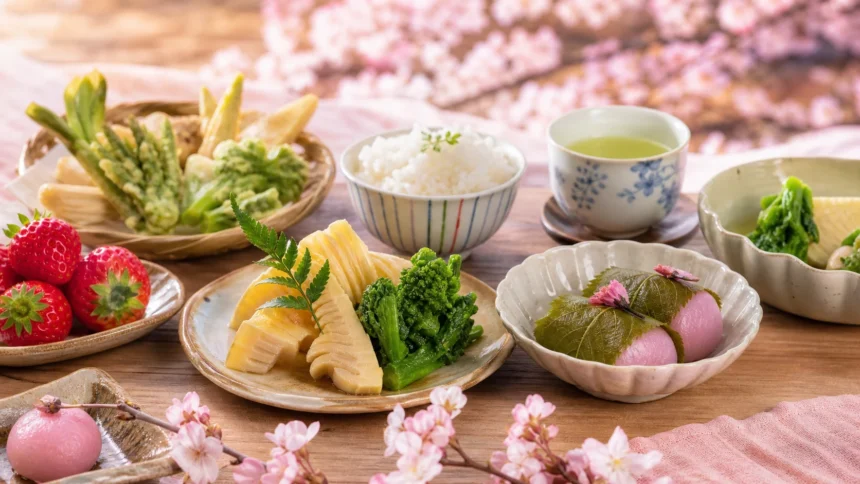
Short answer: the most useful spring foods in Japan for travelers are not one fixed checklist. Think in three layers: hanami picnic food and sakura sweets for the cherry-blossom mood, seasonal ingredients such as strawberries, bamboo shoots, nanohana and clams, and regional spring seafood or produce that must be checked by place and date. March, April and May feel different. Bloom timing, farm calendars, catches, Golden Week crowds, weather, reservations and allergy information can all change, so build a spring food plan with one or two planned meals and several flexible backups.
This guide is for international travelers visiting Japan from March to May. It explains what to look for, where spring food fits into a route, and how to avoid turning a beautiful season into a brittle itinerary.
If you are choosing between seasons, start with our Japan seasonal food calendar. If this is your first food-focused Japan trip, pair this article with the Japan food travel guide for first-time visitors.
Last checked: August 16, 2026. Cherry blossom forecasts, farm calendars, crop timing, catches, restaurant menus, event dates, Golden Week operating hours, market access, park rules, prices, reservations, payment methods and dietary accommodation can change. Recheck the exact city, venue, official event page, farm, market, restaurant or transport operator before relying on details.
Start With Spring Travel Logic
Spring in Japan is famous for cherry blossoms, but a good food plan should not depend on standing under one tree on one perfect day. JNTO’s spring guidance describes cherry blossoms as a major seasonal highlight and notes that timing varies by area. Warmer regions can move earlier, colder or higher places can move later, and each year behaves differently. Food planning should be more flexible than a photo plan.
The stronger approach is to choose a spring theme that works even if the weather or bloom timing shifts. For example, you can combine a hanami picnic, a department-store food hall, one reserved seasonal meal, and a market or farm visit. If the flowers are early, late or washed out by rain, the food route still works.
| Spring goal | Good food format | What to verify | Backup |
|---|---|---|---|
| Cherry-blossom mood | Hanami picnic, sakura sweets, tea, bento, cafe dessert | Park rules, weather, crowding, eating areas, rubbish rules | Depachika or cafe near the same station |
| Seasonal ingredients | Restaurant course, supermarket, food hall, casual set meal | Current menu, origin, price, allergy information | Another seasonal dish in the same neighborhood |
| Fruit or farm visit | Strawberry picking, farm cafe, local fruit shop | Reservation, ripe fruit status, time limit, weather, access | Urban fruit counter or packaged dessert |
| Regional seafood | Market, restaurant, museum or official local food facility | Season, catch, opening day, transport, cooking style | Permanent seafood restaurant or station food hall |
| Golden Week travel | Reserved anchor meal plus simple backups | Holiday hours, booking window, cancellation terms, queues | Convenience store, supermarket, hotel area meal |
What Foods Are Associated With Spring?
MAFF’s seasonal food material gives useful spring examples such as nanohana, strawberries, clams and bamboo shoots. It also notes that cultivation, breeding and distribution have made many foods available outside old narrow windows. That distinction matters for travelers. A food can be spring-coded on a menu, sold in another season, or available in one region before another.
Use spring foods as menu-recognition clues rather than promises. If a restaurant says a course uses bamboo shoots, ask whether the dish is included on your date. If a farm advertises strawberries, check its current picking calendar and reservation rules. If a shop sells sakura sweets, remember that the flavor, color and design are part of seasonal culture; they do not necessarily mean the product contains cherry blossoms or local spring produce.
Common spring food themes
- Sakura sweets and drinks: blossom-shaped wagashi, sakura-flavored sweets, seasonal cafe desserts, limited packaged products and pink spring designs.
- Hanami picnic food: bento, onigiri, sandwiches, karaage, dango, sweets, tea, soft drinks and convenient food bought near the park.
- Strawberries: farm experiences, fruit counters, desserts, parfaits, cakes and hotel or cafe sweets.
- Bamboo shoots: spring restaurant dishes, simmered dishes, mixed rice, tempura or regional preparations.
- Nanohana: spring greens that may appear in vegetable dishes, pasta, tempura, small sides or seasonal sets.
- Clams and shellfish: soups, rice dishes, sushi, izakaya plates or regional seafood meals.
- Regional spring seafood: examples may include place-specific catches such as firefly squid themes in Toyama, but availability must be confirmed locally.
March: Early Spring, Strawberries, Clams And First Blossom Plans
March is a transition month. In some places it feels like spring; in northern or mountain areas it can still feel wintry. JNTO’s March guide is useful because it frames the month as a bridge into cherry blossom season rather than a single national switch. Food plans should do the same.
For many first-time travelers, March works well for a mix of indoor and outdoor food. You can plan one seasonal restaurant meal, look for strawberries and sakura sweets in food halls, and keep a flexible picnic plan if the weather cooperates. If you are traveling with children or older relatives, avoid building the day around a long outdoor wait in cold rain.
Good March food moves
- Use department-store basements and station food floors to compare spring sweets, bento and fruit without committing to one weather-dependent stop.
- Check strawberry farms directly if picking is the main plan. Look for reservation method, time limit, open dates, access and cancellation rules.
- Try clams, nanohana or bamboo shoots when they appear on a current menu, but do not assume every restaurant will have them.
- Keep a simple dinner near your hotel on arrival or long-transfer days.
If your March route starts in Tokyo, the Tokyo Station food guide and Shinjuku food guide help you find practical food floors, station meals and backups around busy bases.
April: Hanami Food, Seasonal Courses And Crowded Weekends
April is the month many travelers imagine when they picture Japan in spring. In reality, it is several overlapping calendars: cherry-blossom viewing, school and work-year movement, weekend crowds, spring restaurant menus and the beginning of Golden Week near the end of the month. JNTO’s April and spring guidance is clear enough for planning direction, but exact bloom and crowd conditions still need current checking.
Hanami food is best treated as picnic planning. Buy food before entering a crowded park, confirm whether eating is allowed in the area you choose, and follow signs about mats, alcohol, open flames, photography, queues and trash. JNTO’s hanami guidance emphasizes enjoying the custom while respecting local rules and other visitors.
Build a hanami food plan
| Need | Good option | Practical caution |
|---|---|---|
| Easy picnic meal | Bento, onigiri, sandwiches, karaage, salads or packaged sweets | Buy early; popular shops and park entrances can get crowded. |
| Seasonal mood | Sakura sweets, dango, tea, pink desserts or spring-only packaging | Check ingredients if flavor, alcohol, gelatin, wheat, egg, milk or nuts matter. |
| Comfort | Cafe, food hall or restaurant near the viewing area | Queues can be longer than usual on bloom weekends. |
| Bad weather | Indoor food hall, museum cafe, hotel lounge, station restaurant | Do not force an outdoor picnic just because the date is famous. |
| Allergy-sensitive group | Prechecked packaged food or contacted restaurant | Busy stalls and shared picnic food can make ingredient control weaker. |
For etiquette and payment basics, keep the Japanese food etiquette guide and cash, cards and IC payments guide open before a park, market, festival or food-floor day.
May: Late Spring, Golden Week And Lighter Food Days
May can be wonderful for travel, but the first part of the month overlaps with Golden Week, one of Japan’s busiest domestic travel periods. JNTO’s spring guide flags this period as crowded. For food travelers, the issue is not only hotels and trains. Restaurant hours, popular queues, reservation availability, market crowds, day-trip transport and attraction dining can all become less forgiving.
Late spring food planning should therefore be practical. Reserve the meal that truly matters, keep easy food near your accommodation, and avoid placing a fragile rural restaurant reservation immediately after a long transfer. If you are planning a day trip, choose a destination with more than one food option near the station or main area.
May planning rules
- Check the exact Golden Week dates for your travel year and then check each venue’s own calendar.
- Make restaurant reservations earlier when the meal is a core reason for the trip.
- Do not assume a national holiday means every restaurant is closed or open. Venue-level information wins.
- Use convenience stores, supermarkets, bakeries and hotel-area restaurants as backup layers.
- Expect day-trip trains, station food areas and famous neighborhoods to feel busier than ordinary weekdays.
For booking logic, use our restaurant reservation guide. If you are building a Tokyo base with one seasonal side trip, the food day trips from Tokyo guide helps compare routes without overcommitting.
Where To Find Spring Food
You do not need a famous restaurant to eat seasonally in spring. Many useful spring foods are easier to find in ordinary places: food halls, supermarkets, station shops, cafes, hotel breakfasts, market-adjacent restaurants and regional visitor facilities. The goal is to match the venue to the task.
| Venue | Why it works in spring | What can go wrong | Best linked guide |
|---|---|---|---|
| Department-store basement | Easy comparison of sweets, bento, fruit, side dishes and seasonal packaging | Crowds, no seating, label limits, closing-time discounts causing rush | Markets and food streets |
| Station food floor | Good before trains, day trips or bad weather | Gate-side confusion, queues, limited seating, time pressure | Tokyo Station food guide |
| Restaurant seasonal course | Best for bamboo shoots, spring seafood, vegetables or composed seasonal meals | Reservation needs, substitutions, price, cancellation terms | Reservations |
| Farm or fruit-picking site | Strong for strawberries and regional produce experiences | Weather, ripe fruit volume, reservation slots, rural access | Regional food guide |
| Convenience store | Useful for picnic food, early starts, children and backup meals | Eating-location rules, labels, limited allergy confidence | Convenience store food |
Regional Spring Food Ideas
Spring timing changes by region, so do not ask only what is in season in Japan. Ask what is plausible in your route. Tokyo and Osaka are strong for comparing national supply in food halls and restaurants. Kyoto is strong for seasonal presentation, sweets and course meals. Hokuriku and the Sea of Japan side can support seafood-focused spring trips when exact local information confirms it. Hokkaido’s calendar can lag central Japan, which may help travelers who arrive after Tokyo’s main blossom period.
Use the best local foods in Japan by region guide before choosing a special detour. A regional spring dish is only useful if the transport, restaurant, market, weather and fallback all fit the rest of your trip.
Allergies, Vegetarian Needs And Ingredient Traps
Spring foods can hide familiar allergens and animal ingredients. Sakura sweets may contain wheat, egg, milk, gelatin, nuts, alcohol-derived ingredients, coloring or shared-equipment risk. Bento and picnic foods may include fish, shellfish, egg, soy sauce, sesame, wheat, mayonnaise, broth or meat extract. Clams and seafood are obvious problems for shellfish-sensitive travelers, but sauces and side dishes need separate checks too.
Do not assume that seasonal, natural, local, pink, vegetable-based or traditional means vegetarian, vegan, gluten-free, halal, organic or allergy-safe. For serious allergies, packaged labels can help only within their scope, and restaurant or loose market food requires direct confirmation. Use our Japan food allergy guide for travelers before relying on a picnic, buffet, festival stall, farm dessert or restaurant course.
Food Safety And Picnic Practicalities
Spring weather can swing between cool, rainy and warm. Do not carry perishable food through a long sightseeing day because it looked fresh at a morning market. Follow storage directions on packaged food, use food soon after purchase when appropriate, and avoid buying more chilled items than your route can handle. A hotel room may not have the refrigeration, plates, utensils or disposal setup you imagine.
At parks, respect local rules. Some places restrict mats, alcohol, open flames, drones, tripods, music, garbage disposal, early spot-holding or eating areas. A crowded hanami spot is not the right place to improvise a complicated meal. Keep the food simple, contain packaging, and leave the area clean.
Sample Spring Food Plans
Tokyo and Kyoto, late March to early April
Use Tokyo for flexible food halls, station meals, ramen or sushi, then reserve one Kyoto seasonal meal if it matters. Build one hanami picnic only after checking weather and park rules. Keep a rainy-day food hall or cafe plan in the same area.
Tokyo base with one spring day trip
Choose a day trip that has several food options, not only one famous item. If the main idea is strawberries or seafood, confirm the farm or local facility before travel. Hold a station-area backup for the return evening.
Golden Week trip
Book the anchor meal early, avoid stacking reservations on transfer days, and keep simple food near the hotel. Bring yen backup and expect popular station areas to be busy. If a famous shop has a long queue, switch to your second choice without treating the day as failed.
FAQ
What are the best foods to eat in Japan in spring?
Good spring themes include sakura sweets, hanami picnic food, strawberries, bamboo shoots, nanohana, clams, seasonal restaurant courses and regional seafood. The best choice depends on your city, month, budget, dietary needs and how much flexibility your itinerary has.
Is cherry blossom season the same as spring food season?
No. Cherry blossom viewing is one spring travel theme. Food seasonality also includes crops, catches, restaurant menus, farms, market supply and annual customs, each with different timing.
Can I rely on cherry blossom forecasts for food planning?
Use forecasts for direction, not as the only structure of the day. Build a food plan that still works if blossoms are early, late, crowded or affected by rain.
Do I need restaurant reservations in spring?
Reserve special meals, small restaurants, course meals, popular weekends and Golden Week anchor meals. Stay flexible for ordinary meals, food halls, station food, convenience stores and casual restaurants.
Are spring foods in Japan safe for vegetarians or people with allergies?
They can be, but only after checking. Dashi, soy sauce, wheat, egg, milk, fish, shellfish, gelatin, sesame, meat extract and shared equipment can appear in seasonal foods. Ask specific questions and use a backup when the answer is unclear.
What should I eat during hanami?
Choose portable, tidy food: bento, onigiri, sandwiches, karaage, dango, packaged sweets, tea or soft drinks. Check park rules and bring only what you can carry, eat safely and dispose of correctly.
Official Sources
- JNTO: Spring Guide
- JNTO: Japan in March
- JNTO: Japan in April
- JNTO: Cherry Blossoms
- JNTO: Enjoy Hanami
- JNTO: Hanami Manners
- MAFF: Japan’s Four Seasons And Ingredients
- MAFF: Kinome-Ae Of Bamboo Shoots
Editorial disclosure: This article was independently planned for international travelers and is not a translation of a Japanese article. Official tourism and government sources were used for spring travel, hanami, seasonal-food and food-culture claims. No restaurant, farm, railway company, tourism body, booking platform, hotel, event organizer or food brand paid for inclusion. There are no affiliate links, sponsorships, PR placements or paid rankings in this article. Check current official information before travel and again before ordering.