Short answer: autumn foods in Japan are best planned as a harvest-and-weather system, not as one fixed menu. Look for new rice, soba, persimmons, Japanese pears, chestnuts, sweet potatoes, safe mushroom dishes, sake, autumn festival food, warm evening meals and regional seafood or produce that you can confirm locally. September can still feel hot and typhoon-prone, October is the clearest harvest month, and November brings foliage crowds, cooler nights and busy Kyoto/Nikko-style routes. Build the food plan around your dates, region, crowd tolerance and backup meals.
This guide is for international travelers visiting Japan from September to November. It explains what to eat, when autumn food actually fits a route, and how to avoid turning harvest season into a brittle restaurant chase.
If you are still comparing seasons, start with our Japan seasonal food calendar. If this is your first food-focused Japan trip, use the Japan food travel guide for first-time visitors before locking in special meals.
Last checked: July 22, 2026. Harvest dates, restaurant menus, fruit picking, market stock, festival dates, foliage timing, weather, typhoons, prices, reservations, payment methods, transport, opening hours and dietary accommodation can change. Recheck current official information before travel and again before going to a specific venue, farm, event, restaurant or market.
Start With Autumn Travel Logic
JNTO’s autumn guide describes the season as a time when humidity drops, temperatures fall and travel becomes comfortable in many regions. That does not mean every autumn month behaves the same. September often still feels like the end of summer, October is the strongest harvest-planning month, and November is when foliage crowds can shape food decisions in Kyoto, Tokyo day-trip zones and temple towns.
A good autumn food route has three layers. First, choose one harvest theme such as rice, fruit, soba, chestnut, sweet potato or sake. Second, choose the region or venue that can actually support it. Third, keep a nearby fallback because foliage crowds, typhoons, farm calendars and restaurant menus do not obey old travel checklists.
| Autumn situation | Best food strategy | What to avoid | Useful backup |
|---|---|---|---|
| September trip | Keep summer-style heat and typhoon buffers while testing early autumn foods | Nonrefundable rural food plans after fragile flights or ferries | Station food, hotel-area restaurant or supermarket |
| October harvest route | Use farms, markets, soba shops, sake regions or regional restaurants | Assuming harvest, retail and restaurant menu dates are identical | Department-store food hall with labeled seasonal products |
| November foliage trip | Eat near the route, reserve key dinners and avoid peak-viewing meal bottlenecks | Crossing town for one famous shop after a crowded temple day | Cafe, station floor, hotel breakfast or early dinner |
| Autumn festival day | Check the current official event page and eat before the crowd if needed | Depending on one stall lineup for dinner | Permanent restaurant near the station |
| Mushroom interest | Use restaurants, retailers or supervised operators | Self-foraging or eating gifted wild mushrooms | Clearly identified commercial mushroom dish |
What Foods Are Associated With Autumn?
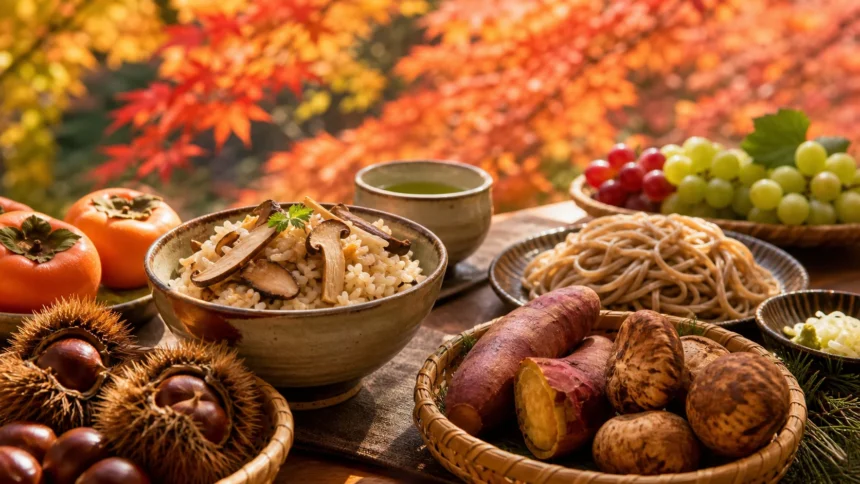
MAFF’s seasonal material gives autumn examples such as sweet potato, persimmon, Pacific saury and chestnut. JNTO’s October guide also names Japanese pears, persimmon, rice, soba and sake as autumn tastes. These are strong menu-recognition clues, but they are not a national guarantee. A restaurant may start a seasonal course later than harvest. A shop may sell stored rice or fruit from another region. A farm may close early if supply runs short.
Use autumn foods as a planning vocabulary. Look for words like new rice, soba, chestnut, persimmon, sweet potato, autumn fruit, mushroom and sake on current menus or labels, then check the exact venue. If origin matters, ask what the label or staff statement actually confirms.
Common autumn food themes
- New rice and rice regions: rice-focused meals, onigiri, regional set meals, sake regions and countryside harvest scenery.
- Soba: autumn soba travel, mountain routes, hot or cold soba shops and regional noodle comparisons.
- Fruit: persimmons, Japanese pears, grapes, apples and fruit desserts depending on region and cultivar.
- Chestnut and sweet potato: sweets, roasted snacks, cafe desserts, wagashi, cakes and seasonal packaged items.
- Mushrooms through safe venues: restaurant dishes, commercial products and clearly identified retailer items.
- Sake: rice regions, brewery visits, seasonal releases and warm or cool serving styles depending on venue.
- Autumn festival food: stalls, regional snacks and temporary event foods that need current event confirmation.
September: Late Heat, Typhoons And Early Autumn
JNTO’s September guide says the month can still be hot in much of Japan, while Hokkaido cools earlier and some areas begin seeing autumn color. It also warns that typhoons are frequent from late August through much of September. For food travelers, September is a transition month. Keep summer-style flexibility while looking for early harvest signals.
Use permanent venues more than fragile outdoor plans. A market breakfast, station lunch, regional restaurant or food hall is easier to adjust than a rural booking after a ferry, flight or long-distance train that weather may disrupt. If your route includes Okinawa, islands, beaches or coastal markets, give yourself more slack.
Good September food moves
- Keep heat-aware meal timing from summer: early breakfast, lighter lunch and flexible dinner.
- Use Hokkaido or higher-altitude routes if cooler early-autumn travel is important.
- Check typhoon and transport risk before booking a nonrefundable rural meal.
- Start looking for autumn fruit, rice, soba and sweets, but confirm current local availability.
For typhoon-prone island planning, use the Okinawa food guide. For broader regional choices, compare the best local foods in Japan by region.
October: Harvest Food, Soba, Rice, Fruit And Sake
JNTO’s October guide calls the month a time of harvest and harvest festivals, and specifically mentions Japanese pears, persimmon, rice, soba and sake. This makes October the strongest month for a harvest-themed food trip. The mistake is assuming all harvest-related foods appear on the same day everywhere.
Harvest, retail and restaurant menus are different calendars. Rice may be harvested in one region before another; a restaurant may begin a new-rice menu after supply stabilizes; a farm may require reservations and close when ripe fruit is gone. Sake regions may offer tasting, brewery visits or seasonal context, but age restrictions, opening days, language support and transport matter.
October harvest planning
| Theme | Good venue | Check before going |
|---|---|---|
| New rice | Regional restaurant, onigiri shop, ryokan meal, food hall | Origin, new-crop claim, menu date, price and reservation |
| Soba | Soba shop, mountain town, regional noodle route | Opening day, queue, buckwheat allergy, broth ingredients |
| Fruit | Farm, fruit counter, cafe, dessert shop | Reservation, cultivar, ripe fruit status, time limit, access |
| Sake | Brewery, sake bar, regional restaurant, museum | Age rules, booking, transport after drinking, language support |
| Harvest festival | Official event route and permanent local restaurants | Date, crowd flow, stall lineup, payment, rain plan |
For soba ordering, allergy boundaries and noodle formats, use the udon and soba guide. For reservations, use the restaurant reservation guide.
November: Foliage Crowds, Warm Meals And Late-Autumn Routes
JNTO’s November guide describes clear skies, cooler weather and brilliant autumn foliage in much of Japan. It also warns that Kyoto can be particularly busy at the end of November when leaves peak. This is a food-planning issue, not only a sightseeing issue. Crowded buses, temple areas, cafes and restaurants can make a perfect meal idea feel clumsy.
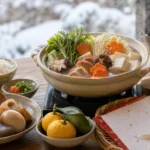
Plan meals near the route. If you are going to a popular foliage area, eat before entering the peak crowd, reserve dinner near your base, or identify a station food floor for the return. Warm meals, hot tea, soba, ramen, izakaya dishes, seasonal sweets and hot-spring town dinners can fit November well.
November food planning rules
- Expect Kyoto, Nikko, Kamakura and famous foliage areas to create lunch and cafe pressure.
- Reserve important dinners, but avoid stacking one with a long uncertain sightseeing transfer.
- Bring layers so a chilly evening does not force a poor food choice.
- Use station food, hotel breakfast or early dinner when the viewing area is crowded.
- Check illumination and temple-night-event rules before assuming food is available nearby.
If your route includes Kyoto, use the Kyoto food guide. For a Tokyo-based foliage day, compare the food day trips from Tokyo guide.
Where To Find Autumn Food
Autumn food can be found in several low-friction places: department-store basements, supermarkets, station food floors, regional restaurants, soba shops, fruit counters, cafes and markets. Use farms and festivals when they fit the route, but do not make every meal dependent on a limited event.
| Venue | Autumn advantage | Main caution | Useful linked guide |
|---|---|---|---|
| Department-store basement | Easy comparison of fruit, sweets, bento, chestnut and sweet potato items | Limited seating, label limits and evening crowds | Markets and food streets |
| Soba shop | Strong autumn mood and practical lunch format | Buckwheat allergy, broth ingredients, queues, rural access | Udon and soba |
| Fruit farm | Good for pears, grapes, apples, persimmons or local fruit depending on region | Reservation, cultivar, ripe fruit status, weather and transport | Regional food guide |
| Regional restaurant | Best for seasonal courses, rice, mushrooms, fish, sake and local produce | Menu date, substitution limits, booking and dietary requests | Reservations |
| Autumn festival | Atmosphere, local snacks and temporary food stalls | Crowds, cash, stall lineup, rain and allergy ambiguity | Food etiquette |
Mushroom Safety: Do Not Self-Forage
Autumn is associated with mushrooms, but this guide does not teach wild identification or recommend self-foraging. Japan’s Ministry of Health, Labour and Welfare warns that food poisoning occurs when poisonous mushrooms are mistaken for edible ones. Its public message is simple: if a mushroom cannot be identified with certainty as edible, do not pick it, eat it, sell it or give it to others.
Enjoy autumn mushrooms through established restaurants, retailers, supervised operators or clearly identified commercial products. Even then, check allergy and kitchen concerns. Wild, seasonal, local or gifted does not mean safe.
Autumn Festivals And Food
JNTO’s autumn guide and October materials describe harvest festivals and autumn events across Japan. Nagasaki Kunchi is one example where JNTO notes performances and food stalls. Use examples like this as inspiration, not as a permanent stall list. Event dates, paid seating, route restrictions, food vendors, payment and crowd flow can change.
If the event is the reason for your trip, check the current official event page and then build food around the crowd. Eat before the most congested part, carry yen, identify toilets and rubbish rules, and keep a permanent restaurant or station meal as backup.
Allergies, Vegetarian Needs And Autumn Ingredients
Autumn foods can hide familiar ingredients. Soba raises buckwheat questions; sauces and broth may contain wheat, soy, fish, shellfish or meat extract; sweets can include egg, milk, gelatin, nuts or alcohol-derived ingredients; festival food may use shared oil, grills, batter and utensils. Mushroom dishes can share pans, stock or toppings with meat or seafood.
The Consumer Affairs Agency’s allergy information is useful for packaged food, but restaurants, stalls and loose prepared food require direct confirmation. For serious allergies, do not rely on a seasonal name or a visible ingredient. Ask before ordering and use a backup when ingredients or cross-contact cannot be explained.
Use our Japan food allergy guide for travelers before planning soba, festival food, seasonal sweets, restaurant courses or farm experiences.
Sample Autumn Food Plans
Tokyo and Kyoto in late November
Reserve one important dinner, eat near foliage routes, and keep lunches flexible. Use station food floors, cafes and hotel breakfast to avoid fighting peak temple-area crowds for every meal.
October harvest route
Choose one harvest theme: rice, fruit, soba, sake, chestnut or sweet potato. Match it to a region and venue, then check the current calendar. Keep a city food hall or permanent restaurant as backup.
September regional trip
Plan like late summer with autumn curiosity. Keep typhoon buffers, avoid tight rural bookings after vulnerable transport, and use Hokkaido or higher-altitude routes if cooler weather matters.
FAQ
What are the best foods to eat in Japan in autumn?
Good autumn themes include new rice, soba, persimmons, Japanese pears, chestnuts, sweet potatoes, safe mushroom dishes, sake, autumn festival food and warm meals after foliage sightseeing.
Is September autumn in Japan for food travel?
It is a transition month. It can still feel hot in much of Japan, and typhoons are a concern, but early autumn foods and cooler northern routes can work with flexible planning.
What should I eat in Japan in October?
October is strong for harvest themes: rice, soba, pears, persimmons, sake, chestnut and sweet potato. Confirm the exact region, farm, shop or restaurant because harvest and menu dates differ.
Is November a good month for food travel?
Yes, but foliage crowds matter. Eat near your route, reserve important dinners and keep station or hotel-area backups for crowded Kyoto, Nikko, Kamakura and popular temple areas.
Can travelers go mushroom hunting in Japan?
This guide does not recommend self-foraging. MHLW warns against picking, eating, selling or giving away mushrooms that cannot be identified with certainty as edible. Use restaurants, retailers or supervised operators instead.
Are autumn foods safe for allergies?
Only after checking. Soba, sauces, broth, sweets, festival foods and mushroom dishes can involve common allergens or shared equipment. Ask specific questions and keep a safe backup.
Official Sources
- JNTO: Autumn in Japan
- JNTO: Japan in September
- JNTO: Japan in October
- JNTO: Japan in November
- JNTO: Nagasaki Kunchi
- MAFF: Japan’s Four Seasons And Ingredients
- MHLW: Poisonous Mushroom Food Poisoning Warning
- Consumer Affairs Agency: Food Allergy Information
Editorial disclosure: This article was independently planned for international travelers and is not a translation of a Japanese article. Official tourism and government sources were used for autumn travel, harvest, festival, seasonal-food and food-safety claims. No restaurant, festival organizer, farm, railway company, tourism body, booking platform, hotel, event organizer or food brand paid for inclusion. There are no affiliate links, sponsorships, PR placements or paid rankings in this article. Check current official information before travel and again before ordering.