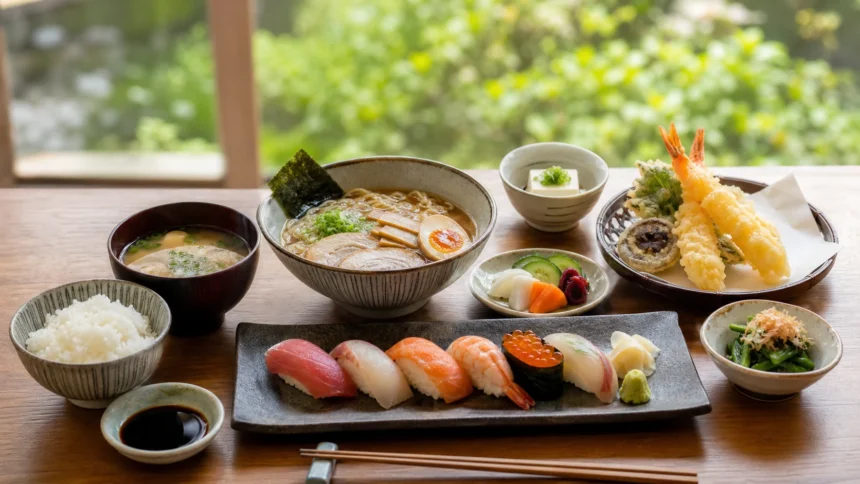
Short answer: Japanese ramen is easier to understand when you stop treating shoyu, shio, miso, and tonkotsu as four complete, mutually exclusive recipes. Shoyu, shio, and miso usually tell you about the seasoning in the soup. Tonkotsu tells you that pork bones form the stock. A shop can combine those layers, then change the oil, noodles, toppings, and service system again.
For a first bowl, decide in this order: dietary boundary, soup or dipping format, regional or flavor interest, shop workflow, then extras. Look for a ticket machine before joining the line, ask about ingredients before buying a non-refundable ticket, carry a cash fallback, and follow the exact shop’s queue and seating instructions. Slurping is acceptable but optional, and you do not have to finish the soup.
If you are still choosing between ramen, sushi, udon, soba, convenience stores, breakfast, markets, and hotel dining, start with Japanese Food Basics.
Last checked: July 21, 2026. Menus, recipes, prices, hours, limited quantities, queues, ticket-machine interfaces, language options, payment, reservations, accessibility, dietary accommodation, and certification can change. Recheck the exact shop and current official source before travel.
Read A Ramen Bowl In Layers
A menu name is a clue, not a complete ingredient list. The most useful mental model has five layers.
| Layer | What it does | Examples you may see | What the name may hide |
|---|---|---|---|
| Stock or broth | Provides the liquid body | Pork bone, chicken, seafood, dried fish, vegetables, or a blend | Several animal or seafood sources may be combined |
| Seasoning / tare | Sets the salt and flavor direction | Shoyu, shio, miso | Soy, wheat, fish, alcohol or other ingredients can appear |
| Aroma oil | Adds fragrance and richness | Lard, chicken oil, sesame oil, garlic oil, flavored plant oil | A clear or meat-free-looking soup may still use animal fat |
| Noodles | Controls bite, thickness and soup pickup | Thin, thick, straight, wavy, firm, soft | Wheat is standard; egg and shared production vary |
| Toppings and condiments | Add texture and final flavor | Chashu, egg, bamboo shoots, nori, green onion, corn, butter, garlic, spice | Sauces, marinades and shared utensils add more questions |
JNTO’s two official ramen guides support this layered reading. They describe shoyu, shio, and miso as seasoning categories, while tonkotsu is a pork-bone stock. They also state that stocks and seasonings are mixed from region to region and shop to shop. That is why a bowl can reasonably be called tonkotsu-shoyu or miso over a pork-based stock.
This model is practical, not pedantic. A pork-avoiding traveler needs the stock and oil, not only the word shoyu. A soy-allergic traveler needs the tare and toppings, not only the word shio. A person who dislikes rich soup cannot assume every shio bowl is light or every tonkotsu bowl feels the same.
Tonkotsu is not tonkatsu. Tonkotsu means pork bone in this ramen context. Tonkatsu is a breaded, fried pork cutlet. The similar spelling causes ordering mistakes, but the foods are different.
Four Common Labels Without The Four-Box Trap
| Label | Useful signal | Still unknown | Ask before ordering when |
|---|---|---|---|
| Shoyu | Soy-sauce seasoning is central | Chicken, pork, fish or vegetable stock; oil; noodle; topping recipe | You avoid soy, wheat, fish, meat, alcohol or shared equipment |
| Shio | Salt-based seasoning is central | Stock, seafood content, richness, oil and toppings | You assume a clear or pale soup is vegetarian or allergy-safe |
| Miso | Miso seasoning is central | Miso blend, stock, lard, sesame, dairy, spice and toppings | You avoid soy, pork, sesame, dairy, wheat or alcohol |
| Tonkotsu | Pork-bone stock is central | Tare, added chicken or seafood, garlic, sesame, noodle and toppings | You avoid pork or need exact halal, allergy or cross-contact confirmation |
Shoyu: a seasoning direction, not “only soy sauce”
A shoyu label points toward soy-sauce seasoning. It does not tell you what was simmered for the stock. JNTO uses classic Tokyo-style shoyu as an example that may sit over pork-bone or chicken stock. Other shops may use seafood, vegetables, or a combination. Soy sauce commonly raises both soy and wheat questions, and a tare may include alcohol-related ingredients.
Choose shoyu when you want that seasoning direction and the shop’s stock fits your needs. Do not choose it merely because it looks clear. Ask, “What is the stock made from?” when animal, fish, shellfish, or religious-diet boundaries matter.
Shio: salt does not guarantee a light or meat-free bowl
Shio identifies salt-based seasoning. The underlying stock can still be substantial, oily, animal-based, or seafood-based. Color is especially unreliable: a pale bowl can carry chicken fat, pork, shellfish, dried fish, or a concentrated tare.
Shio is useful for a diner who wants the stock and aroma to be prominent, but “lightest” is a shop-level tasting judgment rather than a national rule. If your concern is dietary, ask about the stock, oil, and noodles instead of asking only whether the bowl is shio.
Miso: strongly associated with Sapporo, available far beyond it
Miso is fermented soybean seasoning. Sapporo’s official tourism site treats miso ramen as a signature local tradition and describes a classic association with medium-thick crinkled noodles and vegetables. The same source also says Sapporo ramen now includes soy, salt, crab, and other variations. Regional identity therefore guides a food trip without fixing every bowl.
Miso can hide a meat stock, lard, sesame, butter or other dairy, spice, and shop-specific blends. Do not assume that a vegetable topping makes the soup vegetarian or that all Sapporo ramen includes corn or butter.
Tonkotsu: a pork-bone stock with many possible finishes
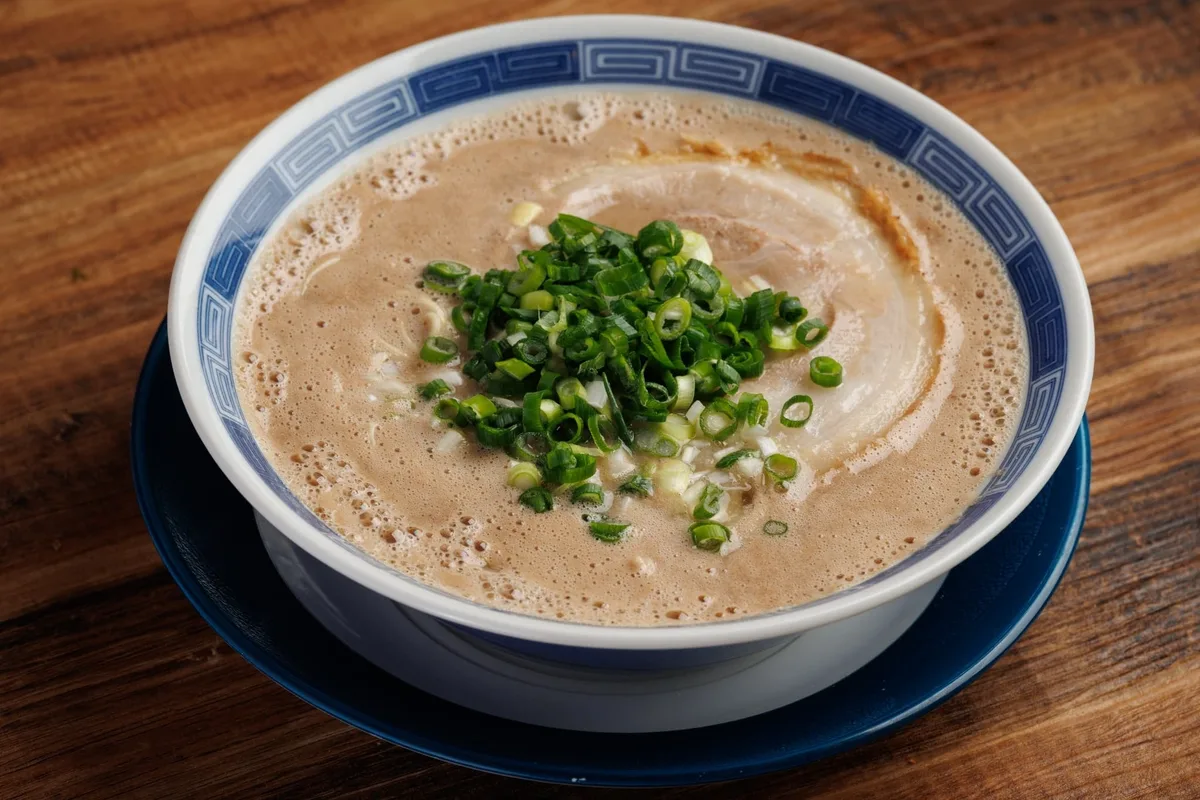
Tonkotsu is the clearest dietary boundary among the four labels: the stock is pork-bone based. But it still does not reveal the complete bowl. The seasoning may be soy, salt, miso, or a proprietary blend. Chicken, seafood, garlic, sesame, aroma oil, egg, and other ingredients may join it.
Fukuoka’s official tourism guide associates Hakata ramen with pork-bone soup, thin noodles, selectable firmness, and kaedama, an additional noodle portion. Those are useful regional clues, not promises at every tonkotsu shop in Japan.
Ramen, Tsukemen, And Mazesoba Are Different Decisions
| Format | How it reaches the table | How to eat it | Dietary warning |
|---|---|---|---|
| Ramen | Noodles are served in soup | Eat noodles and toppings from the bowl; soup is optional | The liquid combines stock, tare and oil; ingredients may be invisible |
| Tsukemen | Noodles and concentrated dipping soup arrive separately | Dip a manageable portion of noodles; follow the shop for any finishing soup | Separate serving does not reduce wheat, animal, fish or cross-contact risk |
| Mazesoba / abura soba | Noodles arrive with sauce and oil, with little or no soup | Mix thoroughly before eating unless the shop says otherwise | Soba here does not prove buckwheat; noodles are generally wheat-based |
| Tantanmen | Usually a ramen-family bowl with spice and sesame associations | Check spice before adding table condiments | Sesame is common but recipes, meat, nuts and heat vary |
JNTO explicitly identifies tsukemen as noodles with a separate dipping soup and mazesoba as a soupless or strongly sauced related format. That format-level distinction is reliable. The recipe is not. A tsukemen dipping soup may be intensely concentrated, but its meat, fish, soy, wheat and egg content remains a shop question.
Do not read soba inside abura soba, mazesoba, or chuka soba as proof of buckwheat. If wheat or buckwheat is medically important, ask about the exact noodle and cross-contact rather than relying on the English menu label.
Regional Ramen Worth Planning Around
| Destination | Officially supported association | Why it may fit a trip | Do not freeze as fact |
|---|---|---|---|
| Sapporo | Miso ramen; medium-thick crinkled noodles in the city’s classic account | A strong local meal within a wider Hokkaido itinerary | One topping set, one origin story, shop lineup, queue or hours |
| Fukuoka / Hakata | Pork-bone broth, thin noodles, firmness choice and kaedama | Useful ordering vocabulary and a clear Kyushu food theme | Every firmness term, refill availability, price or cash policy |
| Kitakata | Thick, wavy noodles, soy-sauce-broth association and morning ramen culture | A destination meal that can reshape the morning, not only lunch | Every shop opening early or using the same stock and toppings |
| Kumamoto | Official city guide describes pork-bone/chicken stock, medium straight noodles, roasted garlic and garlic oil | A distinct stop within a Kumamoto or central-Kyushu itinerary | Every shop’s blend, garlic level, animal ingredients, current operation |
| Tokyo | JNTO describes a classic dark shoyu direction and access to many regional styles | Low-friction sampling when the trip already uses Tokyo | That Tokyo reproduces the cultural context of the source region |
Sapporo: plan the city, not only one bowl
Sapporo’s official tourism site presents a specific history of miso ramen and names current alleys and shops. This guide uses only the durable association. Shop rosters, coupons, queues, holidays, and menu details can change. Build the meal around a Sapporo day that also works if the first shop is closed or full.
Hokkaido food is much broader than ramen. Our Hokkaido food guide helps balance seafood, dairy, produce, markets, weather, and transport instead of turning the trip into a queue list.
Fukuoka and Hakata: learn kaedama before you need it
Kaedama is an extra portion of noodles added to remaining soup. It is strongly associated with Hakata ramen and documented by Fukuoka tourism, but the order timing, portion, price, noodle firmness, and payment vary. Do not drink all the soup if you intend to request another portion, and do not assume the option exists just because the bowl is tonkotsu.
Some shops ask for noodle firmness. “Normal,” “firm,” and “soft” are safer planning terms than memorizing an extreme ladder from one menu. Follow the choices printed by the shop. Our Kyushu food guide places ramen beside markets, seafood, hot-pot dishes, transport, and regional differences.
Kitakata: morning ramen changes the itinerary
Kitakata’s tourism association documents asa-ra, or morning ramen culture, and acknowledges several explanations for how that practice developed. This is useful because it opens a breakfast route, but it does not mean every restaurant opens early. Check the current local shop map and each operator before traveling.
JNTO’s Fukushima guide associates Kitakata ramen with thick, wavy noodles and a soy-sauce-based broth. Keep that as a regional clue rather than a fixed recipe. Shop stock, toppings, noodle production, opening time, and breakfast service still require current operator checks.
Kumamoto: garlic is a clue, not a guarantee
Kumamoto City’s official guide describes roasted garlic, garlic oil, medium straight noodles, and a blend of pork-bone and chicken stock. That makes Kumamoto useful for a traveler comparing Kyushu styles. It does not establish every shop’s formula. A diner avoiding chicken as well as pork needs to ask; a garlic-sensitive diner should not assume the oil can be removed after the soup is built.
Tokyo: a sampling hub with its own limits
JNTO says Tokyo offers its classic shoyu direction and many regional or inventive styles. This makes the capital practical when time is short. It does not make a Tokyo branch equivalent to a Fukuoka morning, a Sapporo winter day, or Kitakata’s local culture. Use regional names to choose, then judge the route honestly.
For a broader region-first framework, see our guide to local foods in Japan by region.
Before You Join The Queue
Five seconds outside the shop can prevent fifteen minutes of confusion.
- Read the entrance. Look for the queue end, waiting list, numbered tickets, sold-out notices, party instructions, and luggage restrictions.
- Find the ordering system. Identify a ticket machine, counter, table menu, tablet, QR code, or staff direction.
- Check payment. Look for cash, card, IC, QR, or app logos; do not assume a logo outside applies to every machine.
- Check the dietary boundary before purchase. A machine ticket may be non-refundable once the kitchen starts.
- Protect the next commitment. A line can stop accepting customers before the posted closing time or before the final bowl sells out.
A line shows demand, not a guaranteed wait or objective quality ranking. If the queue threatens a train, museum reservation, child-rest break, or weather safety, leave. A nearby shop with a clear menu is often a better travel meal than a famous bowl eaten under time pressure.
How To Use A Ramen Ticket Machine
JNTO describes a common sequence: insert money, select ramen and extras, collect the tickets and change, then hand the printed tickets to staff. Treat that as one branch, because machines differ.
- Confirm the machine belongs before the queue. Some shops require a ticket first; others ask you to queue first.
- Find the main bowl. Start with ramen size and soup, then add toppings or sides. A prominent button is not necessarily the simplest bowl.
- Check sold-out indicators. A dark, covered, or disabled button may be unavailable.
- Insert the supported payment only when ready. Some machines take cash, some support cashless payment, and some separate the two.
- Select each item once. Watch the total and the number of issued tickets.
- Take all tickets, receipts, and change. More than one paper slip may appear.
- Hand over the tickets when directed. Staff may ask about noodle firmness, portion, spice, or seating after the machine step.
If the machine rejects payment, stop before repeated attempts. Check the supported note, coin, card, or QR logo; ask staff; or use a clearly different accepted method. If you cannot identify a safe bowl, do not buy a random ticket from a photo. Our complete restaurant ticket-machine guide covers change, sold-out buttons, refunds, translation, and failure recovery.
One named example: ICHIRAN
ICHIRAN’s official guide documents its own seating display, written preference sheet, call button, ticket handover, and sensor-based extra-noodle system. It is useful precisely because it shows how specialized a single operator can be. Booths, forms, sensors, partition rules, and customization options should never be described as the national ramen workflow.
When There Is No Ticket Machine
A ramen shop may take the order at the counter, at the seat, on a tablet, through a QR page, or from a staff member outside the queue. Payment may happen before eating, after eating, or inside a digital system. Follow signs and staff rather than forcing the ticket-machine sequence.
| System | First action | Payment point | Failure fallback |
|---|---|---|---|
| Physical meal-ticket machine | Check main bowl, sold-out state and payment | Usually before seating | Ask staff before pressing an uncertain button |
| Counter order | Choose from the board or menu | Before or after, as shown | Point to the exact item and confirm total |
| Table order | Sit only when directed and read the menu | Table or register after eating | Ask “Pay here or at the register?” |
| Tablet / QR | Select language if offered; verify table and quantity | Digital, table or register | Call staff if the order status is unclear |
| Numbered / timed queue | Register the party accurately | Depends on shop | Do not leave the area unless the system allows it |
Never assume an English screen, foreign-card support, free Wi-Fi, phone reception, or staff translation. Keep the title or menu photo ready, but do not use an image to bypass a serious ingredient question.
Customize Only Inside The Shop’s Vocabulary
Some ramen shops deliberately offer only one tuned bowl. Others ask several questions. Neither model is rude or incomplete.
- Noodle firmness: use the printed choices. Futsu means normal, katame firmer, and yawarakame softer, but availability varies.
- Portion: identify regular, small, large, extra noodles, or extra toppings. A large bowl and kaedama are not the same decision.
- Spice and garlic: ask before assuming they can be removed. They may already be in the tare or oil.
- Toppings: removing chashu changes the visible topping, not the stock, tare, oil, or shared process.
- Allergy modifications: a kitchen may be unable to rebuild a prepared soup. “No topping” is not “no allergen.”
If staff say a modification is impossible, accept that boundary and choose another bowl or venue. A casual shop is not required to redesign its production line during service.
Payment, Reservations, And Queue Strategy
JNTO advises visitors that smaller businesses may still be cash-reliant even as card acceptance grows. Carry a modest yen fallback, but do not assume a machine accepts every note or that staff can break a large bill. Check the exact logos and screen before paying.
Many ramen meals are walk-in and quick. Some popular or small shops use reservations, timed tickets, web queues, numbered cards, limited quantities, or an early queue cutoff. A map listing marked “open” does not prove the line is accepting new customers.
| Travel situation | Best posture | Same-day check | Switch when |
|---|---|---|---|
| Ordinary neighborhood shop | Walk in with a cash fallback | Open status, queue end, machine and sold-out signs | Dietary answer is unclear or wait threatens the day |
| Limited or destination bowl | Check operator’s current queue method | Reservation, numbered ticket, quantity and cutoff | The trip depends on an unconfirmed service |
| Station transfer | Use a firm exit time | Queue, order-to-serve time, platform route | You lose the connection buffer |
| Group with children or luggage | Choose space and clarity over fame | Party seating, stroller, bags, child order and toilet | The shop cannot safely fit the group |
| Late-night meal | Protect the last train and hotel access | Last order, queue cutoff and current transport | The only fallback is an uncertain taxi |
Do not book a ramen shop merely because a third-party site shows a reservation button. Confirm that the exact branch and service accept that booking and read cancellation terms. Our Japan restaurant reservation guide explains no-show, card guarantee, hotel help, and fallback decisions.
For wallet resilience, see our cash, cards, and IC payment guide. A transit IC card is not automatically accepted because the restaurant is near a station.
Ramen Etiquette Without Folklore
JNTO gives unusually clear ramen-specific guidance. Slurping is not considered rude, but it is not a performance requirement. Finishing the soup is optional. Conversation is acceptable, but diners should not linger after finishing when people are waiting.
| Safe default | Observe or ask | Do not claim as universal |
|---|---|---|
| Join the marked end of the queue | Whether the full party must be present | Every line means a fixed or worthwhile wait |
| Keep doors, pavements and neighboring shops clear | Where luggage, umbrellas or strollers go | Every shop can store bags |
| Order through the displayed system | Whether each seated person must order a bowl | One-item rules are national law |
| Eat at a comfortable pace and leave after finishing | Whether trays or bowls are returned | Slurping or finishing soup is mandatory |
| Ask before photographing staff or other guests | Food-photo and video restrictions | Every shop welcomes filming |
| Do not add a tip at an ordinary ramen shop | Any displayed charge or special service | No-tip culture erases all venue fees |
If you misunderstand a line or seat, apologize briefly and follow staff. Avoid arguing that another ramen shop used a different system. Our Japanese food etiquette guide covers photography, queues, chopsticks, tipping, trains, rubbish, and mistake recovery.
Allergies And Dietary Needs: Ask Before Buying
Japan’s Consumer Affairs Agency states that mandatory allergen labeling applies to packaged processed foods. Its April 2026 material lists nine mandatory specified ingredients and twenty recommended ingredients, including the 2026 move of cashew to the mandatory group and pistachio in the recommended group. Transition arrangements and older English material mean the exact current package still has to be read.
A restaurant bowl is a different information problem. Broth, tare, aroma oil, noodles, toppings, condiments, marinades, boiling water, strainers, ladles, counters, and fryers can each matter. A menu may show the visible topping while leaving the soup process unexplained.
| Need | Hidden ramen questions | Unsafe shortcut | Conservative fallback |
|---|---|---|---|
| Wheat allergy / celiac concern | Noodles, soy sauce, tare, toppings, shared boiling water and strainers | “Gluten-free noodles” proves the whole bowl | Use a venue that confirms the entire process; leave if unclear |
| Egg allergy | Noodle formula, seasoned egg, mayonnaise, toppings and shared prep | No visible egg means egg-free | Ask about noodles and kitchen process before payment |
| Soy allergy | Shoyu, miso, tare, tofu topping, sauces and processed ingredients | Shio or tonkotsu cannot contain soy | Confirm tare and seasoning; choose another venue if unknown |
| Sesame allergy | Aroma oil, ground sesame, spice mix, tantanmen and table condiments | Removing visible seeds removes the risk | Ask about oil, paste, seasoning and shared utensils |
| Fish / shellfish allergy | Dashi, niboshi, fish powder, shellfish stock, tare and shared pots | Pork or chicken broth excludes seafood | Confirm every soup layer and cross-contact |
| Peanut / tree-nut allergy | Spice mixes, desserts, sauces and shared facility | Ramen never uses nuts | Ask the exact shop; do not rely on cuisine category |
| Vegetarian / vegan | Animal stock, lard, fish seasoning, gelatin, egg, dairy and cross-contact | Removing chashu makes the bowl plant-based | Use a current operator statement covering stock and process |
| Halal / kosher observance | Pork, alcohol/mirin, meat source, certification, utensils and kitchen scope | “No pork topping” or “vegetarian” meets the requirement | Verify current certification and its exact menu/kitchen scope |
Carry a written card, but ask before inserting money. State the specific ingredient and cross-contact concern. If staff cannot confirm, the safe editorial advice is to choose another venue or a suitable sealed product with a readable current label. A phrase card does not control the kitchen, and this guide cannot promise medical safety.
For advance contact, emergency preparation, packaged-label limits, and the April 2026 update, use our Japan food allergy guide for travelers.
Hot Soup, Takeaway, And Weather
Ramen-specific risk should not be exaggerated. The practical physical risks are ordinary: a very hot bowl, steam, narrow counters, wet floors, and crowded entrances. Keep sleeves, bags, and children clear when a bowl is being passed. Do not lift or move another diner’s bowl to create space.
MHLW’s food-poisoning guidance identifies several causes and warns that takeaway or delivery can add time and warm-weather risk. If a shop offers ramen takeaway, follow its eating and storage instructions and consume it promptly. Do not pressure a shop to package a bowl it does not offer for takeaway.
Outdoor queues can be a poor choice in summer heat, winter cold, heavy rain, or snow. Carry water, use weather-appropriate clothing, and leave the line if anyone becomes unwell. Check the current weather and transport rather than treating a bowl as worth a missed train or health risk.
Useful Japanese For A Ramen Shop
These phrases help start a conversation. They do not prove ingredients, accommodation, or safety.
| Japanese | Romanization | Meaning | Limit |
|---|---|---|---|
| 食券は先に買いますか。 | Shokken wa saki ni kaimasu ka? | Do I buy the meal ticket first? | Confirm before joining or leaving the line |
| 列の最後はどこですか。 | Retsu no saigo wa doko desu ka? | Where is the end of the line? | A numbered system may replace a physical line |
| 先払いですか。 | Sakibarai desu ka? | Do I pay first? | Payment timing varies |
| カードは使えますか。 | Kādo wa tsukaemasu ka? | Can I use a card? | Ask which card and which register |
| これは売り切れですか。 | Kore wa urikire desu ka? | Is this sold out? | A disabled machine button may need staff confirmation |
| 普通でお願いします。 | Futsū de onegai shimasu. | Normal, please. | Useful only when the shop asks for a choice |
| 麺は硬めでお願いします。 | Men wa katame de onegai shimasu. | Firm noodles, please. | Not every noodle or shop offers this |
| 替え玉はできますか。 | Kaedama wa dekimasu ka? | Can I order extra noodles? | Availability, timing and price vary |
| スープは何から作っていますか。 | Sūpu wa nani kara tsukutte imasu ka? | What is the soup made from? | Follow with the exact ingredient concern |
| 豚肉やラードを使っていますか。 | Butaniku ya rādo o tsukatte imasu ka? | Does this use pork or lard? | Also ask about stock and shared process |
| 魚や甲殻類を使っていますか。 | Sakana ya kōkakurui o tsukatte imasu ka? | Does this use fish or crustacean shellfish? | Powders and tare can be hidden |
| 小麦、卵、大豆、ごまが入っていますか。 | Komugi, tamago, daizu, goma ga haitte imasu ka? | Does it contain wheat, egg, soy, or sesame? | Ask one serious allergen at a time when possible |
| 同じ鍋や調理器具を使いますか。 | Onaji nabe ya chōri kigu o tsukaimasu ka? | Do you use the same pot or equipment? | Staff may be unable to guarantee separation |
| ここで払いますか。 | Koko de haraimasu ka? | Do I pay here? | Useful after eating when the register is unclear |
| ごちそうさまでした。 | Gochisōsama deshita. | Thank you for the meal. | A simple, optional thanks |
Five Real Ramen Decisions
A first-time visitor faces a Japanese-only ticket machine
Find the queue rule and payment logos before inserting money. Identify the basic bowl and size from the printed menu, then match its price to the machine. Ask staff if the button is uncertain. Take every ticket and all change. Do not press the largest photograph merely because it is prominent, and do not buy before asking about a serious dietary boundary.
A traveler wants the “lightest” of shoyu, shio, and miso
Do not make color or label do too much work. Ask which bowl has the lighter stock or less oil at that shop. Shio is not automatically the lightest; shoyu does not reveal the stock; miso richness varies. If staff cannot compare in English, choose based on the shop’s own short description rather than a national stereotype.
A vegetarian or halal-conscious traveler sees ramen without meat
Ask about stock, lard, fish seasoning, alcohol/mirin, and certification before the ticket purchase. Removing chashu changes only one topping. If the requirement is strict, use a venue with a current statement or certification whose menu and kitchen scope match the need. Leave if staff cannot confirm.
A traveler has a serious wheat, egg, sesame, or shellfish allergy
Show the written information before ordering. Ask about noodles, soup, tare, oil, toppings, boiling water, strainers, ladles, and shared equipment relevant to that allergen. A packaged-food label rule does not make a restaurant bowl labeled or cross-contact-free. Choose another venue when the answer is incomplete.
A family has luggage and a tight train connection
Choose a shop with visible space, a short menu, and a clear queue rather than the most famous line. Ask where bags can go without blocking staff or guests. Set a departure time before joining. If the party may be split or a child cannot wait outside, choose a station building, food court, hotel, or another operating restaurant with clearer seating.
A One-Day Ramen Plan Without Overeating
Ramen can be a travel theme without becoming three heavy bowls in one day.
- Morning: use ramen only where the local culture and current opening support it, such as a verified Kitakata morning option. Otherwise eat a normal breakfast.
- Lunch: choose the main regional or destination bowl. Build time for a queue but set a firm exit.
- Afternoon: visit a market, museum, neighborhood, producer, or cultural site rather than another queue.
- Evening: choose a different food format or a smaller ramen only if appetite, transport, and nutrition needs make sense.
JNTO presents the Shinyokohama Ramen Museum as a current place to encounter several regional styles. If it fits your route, check its official live shop list, admission, hours, access, and dietary information. Do not copy an old lineup into the itinerary.
Our Japan food travel guide for first-time visitors helps balance one high-commitment meal with flexible backups, transport, payment, reservations, and food safety.
Frequently Asked Questions
What are the main ramen styles in Japan?
Shoyu, shio, miso, and tonkotsu are four widely used labels, but they mix categories. The first three mainly identify seasoning; tonkotsu identifies pork-bone stock. A complete bowl also has aroma oil, noodles, toppings, and shop-specific choices.
Is tonkotsu always pork?
Yes at the defining stock level: tonkotsu means pork bone. A bowl may also include chicken, seafood, soy, miso, sesame, garlic, egg, or other ingredients. It is not suitable for someone avoiding pork.
Is shio ramen vegetarian?
Not by name. Shio identifies salt-based seasoning. The stock and oil may use pork, chicken, fish, shellfish, or other animal ingredients. Ask the exact shop.
Do all ramen shops have ticket machines?
No. JNTO describes ticket machines as common and also acknowledges staff ordering. Counter, table, tablet, QR, and chain-specific systems exist. Observe the entrance and follow the venue.
Should I put money in before choosing?
Many physical machines activate item buttons after cash is inserted, but interfaces differ. Identify the bowl, price, dietary answer, and payment support first. Then follow the displayed sequence and collect all tickets and change.
Is slurping required?
No. JNTO says slurping is accepted and can make noodles easier to eat, but it is not mandatory. Eat comfortably without performing noise for its own sake.
Must I finish the soup?
No. JNTO explicitly says leaving soup is still considered finished. Eat the amount you want and leave after the meal when others are waiting.
Can I reserve a ramen shop?
Sometimes, but never assume it. Many shops are walk-in; others use web reservations, numbered tickets, timed queues, or no reservation at all. Verify the exact branch and current system.
Is kaedama available at every tonkotsu shop?
No. It is strongly associated with Hakata ramen, but availability, portion, firmness, price, and ordering method vary. Ask before finishing the soup.
Can a ramen shop guarantee allergy safety?
Only the exact operator can explain its ingredients and process, and many cannot guarantee separation. Ask before purchase, specify the allergen and cross-contact concern, and do not order when the answer is unclear. Japan’s packaged-food labeling framework is not a restaurant-bowl guarantee.
Official And First-Party Sources
- Japan National Tourism Organization — Ramen
- Japan National Tourism Organization — A Guide to Ramen in Japan
- Welcome to Sapporo — official ramen feature
- Visit Fukuoka — Fukuoka Soul Food
- Visit Fukuoka — recommended local dishes
- Kitakata Tourism and Products Association — Kitakata ramen
- Japan National Tourism Organization — Fukushima
- Kumamoto City Official Guide — Gourmet
- ICHIRAN — System Guide
- JNTO — Japan Shopping Q&A
- JNTO — Tipping in Japan
- Consumer Affairs Agency — April 2026 allergen-labeling information
- Consumer Affairs Agency — April 2026 allergen overview
- Consumer Affairs Agency — allergen information when eating out
- Consumer Affairs Agency — English food-labeling portal
- Ministry of Health, Labour and Welfare — Food poisoning
- Shinyokohama Ramen Museum — official English site
Editorial disclosure: This independent first-phase guide contains no affiliate links, paid placements, sponsored rankings, or PR recommendations. Official tourism sources establish useful regional and cultural associations, but they do not guarantee every shop’s recipe, current operation, price, queue, payment, accessibility, or dietary suitability. Verify mutable details with the exact authority, facility, or restaurant before travel.