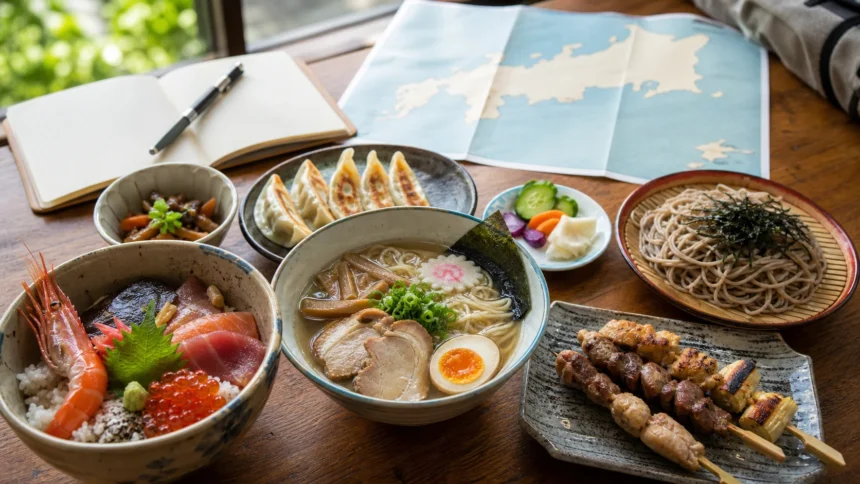
Short answer: For a first Kyushu food trip, choose a corridor before choosing dishes. Fukuoka/Hakata is the easiest short-stay base for ramen, hot pots, seafood, and a weather-dependent yatai evening. Nagasaki is a separate food-and-history commitment with champon, sara udon, shippoku cuisine, and castella. Kumamoto adds its own ramen, karashi renkon, taipiien, and horse-meat traditions. Kagoshima fits a north-to-south or open-jaw route built around pork, local dishes, and sweet-potato shochu. Beppu works as an onsen detour when hot-spring steam cooking fits the wider route.
Do not try to “eat Kyushu” from one Fukuoka weekend. Build each day around one high-commitment meal and one flexible taste. Check JR Kyushu or the responsible operator before accepting a reservation. Treat yatai operation, menus, payment, ramen stock, raw-meat choices, shochu service, restaurant accommodation, and last connections as current venue-level decisions—not permanent regional rules.
Last checked: July 21, 2026. Train, bus, ferry, flight, road and volcanic conditions; yatai operation and location; restaurant hours, menus, prices, reservations, payment, ingredients, and accessibility can change. Recheck the responsible operator, authority, facility, producer, or restaurant on the travel date.
Choose A Kyushu Corridor Before A Food List
| Base or stop | Best first-trip role | Food focus | Main friction | Low-commitment fallback |
|---|---|---|---|---|
| Fukuoka / Hakata | Main base for a short first visit | Hakata ramen, yatai, mizutaki, motsunabe, udon, seafood | Weather-dependent stalls, small seating, queue stacking, late-night assumptions | Indoor restaurant or Hakata Station/Fukuoka Airport meal |
| Kurume | Focused ramen stop when it fits the rail route | Kurume’s early tonkotsu-ramen story and varied local bowls | Detouring for one bowl, origin-story overstatement, shop variation | Keep the regional comparison in Fukuoka and save Kurume for a longer route |
| Nagasaki | Separate overnight or carefully protected full-day commitment | Champon, two broad sara-udon formats, shippoku, castella | Takeo Onsen rail transfer, meal and museum overload, course reservations | Move the city to another day rather than rush the last connection |
| Kumamoto | North–south stop on the Hakata–Kagoshima corridor | Kumamoto ramen, karashi renkon, taipiien, dagojiru, horse-meat dishes | Raw-meat risk, strong mustard, recipe and stock assumptions | Choose a cooked set meal or station-area meal with clearer answers |
| Kagoshima | Southern stay or open-jaw endpoint | Pork and chicken dishes, seafood, local sweets, sweet-potato shochu | Longer route commitment, alcohol decisions, Sakurajima/transport checks | Protect departure first and choose an operating station/airport venue |
| Beppu / Oita | Onsen-area detour | Jigoku-mushi at a specific facility, regional cooking, hot-spring stay | Different east-coast corridor, facility rules, heat and waiting | Eat a normal cooked meal in Beppu without the self-steaming experience |
JR Kyushu’s current structure is the planning key. The Kyushu Shinkansen forms a useful north–south route through Hakata, Kumamoto, and Kagoshima-Chuo. Nagasaki follows a different pattern: the operator tells Nagasaki-bound passengers to transfer between the limited express and Nishi Kyushu Shinkansen at Takeo Onsen. Beppu and Oita sit on another corridor. That makes Kyushu a set of connected food regions, not a single compact tasting district.
Use the live route search rather than copying a permanent travel time. Protect the hardest connection, then place the meal. If you need the wider first-visit workflow—reservations, queues, payment, and cultural expectations—start with our Japan food travel guide for first-time visitors.
What “Kyushu Food” Means—And What It Does Not
Kyushu’s cities share ingredients, trade routes, techniques, and travel connections, but they do not share one menu. “Tonkotsu ramen” covers several city traditions and many shop interpretations. “Shochu” covers different base ingredients, producers, regions, and legally bounded geographical indications. “Local food” may describe a cultural association without tracing every ingredient in a serving.
Use four questions whenever a regional label appears:
- Is the source describing a prefecture, city, producer association, named business, or one dish?
- Is this a documented production rule, a tourism association, a restaurant recipe, or an origin story?
- Does the label prove today’s ingredients and provenance, or only explain why travelers encounter the food here?
- What changes if the shop is closed, the item sells out, the route is disrupted, or the staff cannot confirm suitability?
Our guide to Japanese regional food uses the same discipline: regional identity can improve a route, but it does not make every serving traceable, traditional, or safe for a dietary restriction.
Kyushu Food And Format Decoder
| Food or format | Useful place context | Meal commitment | Ask before relying on it |
|---|---|---|---|
| Hakata ramen | Fukuoka/Hakata; thin noodles and pork-bone association | Usually a quick meal, but queues and ordering differ | Full stock, wheat/egg, sesame, garlic, noodle firmness, kaedama, payment |
| Kurume ramen | Kurume’s official tourism tells an important early tonkotsu story | Worth a stop only when it fits the route | Do not expect one broth strength, noodle, topping, or origin narrative |
| Kumamoto ramen | Kumamoto City associates it with pork/chicken stock and roasted garlic | Flexible city meal | Exact stock, garlic, wheat, egg, soy, sesame, dairy, ticket or table order |
| Yatai | Regulated Fukuoka outdoor stalls; menus vary widely | Weather- and queue-sensitive; small groups work best | Operation tonight, queue, prices, cash/card, ingredients, toilet, seating |
| Mizutaki / motsunabe | Fukuoka-associated shared hot-pot formats | Seated group meal; reservation often worth checking | Broth, chicken/offal, soy/wheat, portions, minimum order, course timing |
| Champon / sara udon | Nagasaki city food traditions with shop-specific stocks and toppings | Casual lunch or dinner | Seafood, pork/chicken stock, wheat, egg, thick or thin sara-udon noodles |
| Shippoku cuisine | Nagasaki shared-table/course tradition | Higher-commitment meal; check reservation and service duration | Course contents, sharing, seafood/meat/alcohol, advance dietary notice |
| Karashi renkon | Kumamoto lotus root with mustard-miso filling and fried coating | Side dish, izakaya plate, or packaged food | Mustard, soy, wheat, egg, frying oil, cross-contact, takeaway storage |
| Basashi / horse meat | Kumamoto-associated raw-meat format | Deliberate risk choice, not a compulsory specialty | Raw/cooked status; choose fully cooked food if risk is unacceptable |
| Shochu | Region- and producer-specific distilled spirits; some names are protected GIs | Tasting, bar serving, bottle, or distillery visit | Base ingredient, GI, alcohol strength, serving method, additives, transport |
| Jigoku-mushi | Beppu/Kannawa facility-based hot-spring steam cooking | Experience meal with facility timing and heat rules | Current operation, ingredients, wait, reservation, handling, accessibility |
Fukuoka Yatai: Treat The Stall As A Live Decision
Fukuoka City provides unusually practical English guidance for yatai. It says closures vary by stall, some stalls do not open in rainy or stormy weather, reservations are uncommon, there are no toilets inside the stalls, luggage should be left elsewhere, and small groups are easier to seat. The city also tells visitors to check menu prices, order clearly, and pay when leaving. Its current guidance describes most yatai as cash-first.
Those are useful format rules, not a promise about tonight’s stall. A saved map can go stale. A stall may change its day, menu, payment, seating, or weather decision. “Yatai” also does not mean “ramen stall”: Fukuoka’s official guide shows oden, yakitori, gyoza, tempura, hot pots, and original dishes alongside ramen.
Before leaving the hotel
- Check the current Fukuoka City yatai listing or the stall’s own current notice.
- Check the weather and keep an indoor restaurant nearby.
- Leave large luggage at the hotel or an appropriate locker; never assume space.
- Carry enough yen for the meal even if a saved listing once showed card payment.
- If allergies, mobility needs, young children, or a fixed departure make the small format risky, choose an indoor venue.
At the stall
Look for the menu and prices before sitting. Ask the staff whether your party can enter; do not occupy separate seats while waiting for a large group. If there is a queue, join at the end and follow that stall’s direction. Order at least one appropriate item per diner unless the stall says otherwise. Do not assume that an appetizer, cover charge, smoking rule, photography rule, or final order works like the next stall.
When to leave the plan
Use the indoor fallback when the stall cannot confirm ingredients, the queue threatens the last connection, rain makes operation uncertain, the party cannot fit, cash is short, or a toilet/accessibility need is unresolved. Leaving is good travel judgment, not a failed food experience. Our Japanese food etiquette guide gives a wider observation-and-recovery framework.
Four Ramen Cities, Not Four Fixed Recipes
Hakata: thin noodles and kaedama are useful clues
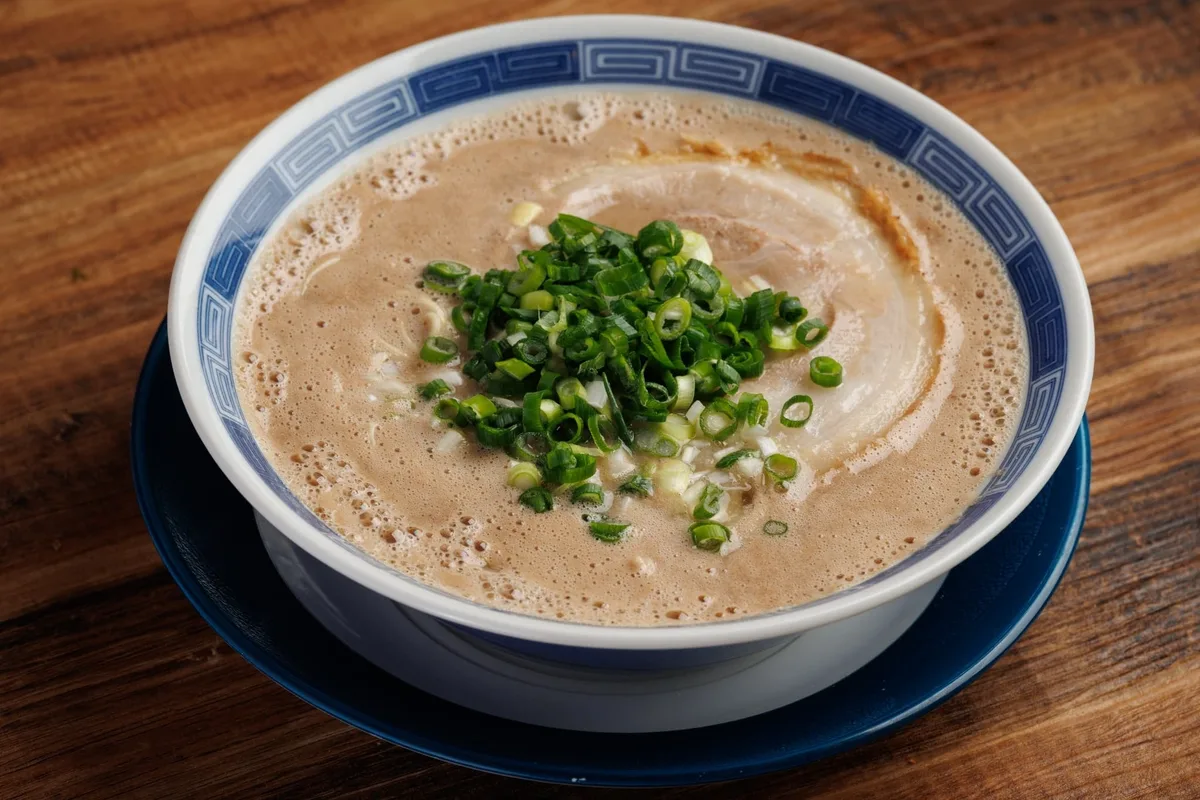
Fukuoka City tourism describes Hakata ramen with thin noodles and a pork-bone soup and explains kaedama, an extra serving of noodles for remaining broth. That does not mean every bowl has the same richness, stock, noodle, topping, or kaedama policy. A shop may use pork, chicken, fish, shellfish, soy, sesame, garlic, dairy, egg, or other components. Wheat is central to the noodles; egg use varies.
If the shop asks for noodle firmness, use its available scale rather than treating internet vocabulary as a command. If a ticket machine appears, follow the machine and staff. If you want another noodle portion, ask before finishing the soup and confirm whether payment happens immediately or at the end. See our restaurant ticket-machine guide for the main branches.
Kurume: an early story, not a compulsory pilgrimage
Kurume City tourism presents Kurume as an important origin point in tonkotsu-ramen history and tells a 1937 yatai story. It is valuable local context. It is not proof that every later Kyushu bowl descends in one straight line or that every Kurume bowl is richer than every Hakata bowl.
Choose Kurume when the stop fits the wider route or when comparing city traditions is a main trip goal. Do not add a hotel change for one famous shop. If the desired shop is closed or crowded, the honest fallback is another current Kurume bowl—or no detour.
Kumamoto: garlic is a signal, not a full ingredient list
Kumamoto City’s official guide describes a mild pork-and-chicken stock with roasted garlic chips or oil as a city pattern. A particular restaurant may differ. Garlic-free appearance does not prove garlic-free stock, and a pork-bone label does not exclude chicken, fish, soy, sesame, wheat, or dairy. Ask about the exact bowl.
Kagoshima: keep the definition open
Kagoshima has a recognized local ramen culture, but the evidence does not justify one universal formula in this guide. Use Kagoshima ramen as one flexible city meal, not as a mandatory fourth comparison. Ask the shop what is in the stock and how to order; do not invent a permanent pork/chicken/fish ratio or topping set.
Fukuoka Beyond Ramen: Reserve The Shared Meal
Mizutaki and motsunabe are useful counterweights to a quick ramen lunch. Both can be shared, seated meals that deserve more time. Fukuoka City tourism associates mizutaki with a chicken-based broth and motsunabe with offal and vegetables, but restaurants control the exact stock, sauce, additions, minimum order, final noodles or rice, and course structure.
Reserve when the meal anchors an evening, the group is large, or dietary questions need advance attention. Ask whether everyone must order a course, when the course starts, how late arrival is handled, and whether cancellations are charged. Confirm chicken, beef/pork offal, fish stock, soy, wheat, sesame, alcohol/mirin, garlic, dairy, and shared preparation. A “vegetable set” placed into meat broth is not vegetarian.
For the reservation workflow, use our Japan restaurant reservation guide. Do not book a non-refundable dinner close to an uncertain arrival.
Nagasaki: Choose Noodles Or A Course Before You Arrive
Nagasaki City tourism explains a food culture shaped by long contact with Chinese and Western traditions. That history deserves more care than a slogan. Champon, sara udon, shippoku cuisine, and castella are different formats with different time, sharing, and ingredient questions.
Champon
Champon is a noodle dish commonly served with a substantial soup and mixed toppings. A bowl may include pork, seafood, shellfish, fish cake, vegetables, wheat noodles, egg, soy, sesame, and animal or seafood stock. Visual inspection cannot identify the stock or cross-contact. It works well as a casual lunch when the shop can answer the questions that matter.
Sara udon
Nagasaki’s official guide distinguishes thin crisp noodles and a thicker noodle form. “Udon” in the English name does not give you a standard bowl of Japanese wheat udon. Ask which noodle the shop serves or offers, whether the sauce contains seafood or meat stock, and how large the plate is. Sharing, individual orders, and serving utensils are restaurant-specific.
Shippoku cuisine
Shippoku is a stronger cultural and time commitment. Nagasaki tourism describes it as a distinctive shared-table cuisine incorporating Japanese, Chinese, and Western influences. Treat it as reservation-led unless the chosen venue clearly says otherwise. Confirm course contents, party size, sharing, alcohol, service duration, cancellation, and dietary questions in advance. Do not force it into a rushed day trip.
Castella
Castella can be an easy café or packaged-souvenir taste, but it commonly raises egg, wheat, sugar, and sometimes dairy or honey questions. Read the exact package or ask the producer. Shelf life, storage, airport security, and international import rules belong to the product, carrier, and destination—not to “Nagasaki castella” as a category.
Kumamoto: Separate Local Identity From Raw-Meat Risk
Kumamoto City’s official guide associates the city with Kumamoto ramen, karashi renkon, taipiien, dagojiru, ikinari dango, and horse-meat dishes. That makes Kumamoto a strong stop for variety. It does not make every preparation suitable for every traveler.
Karashi renkon combines lotus root with a mustard-miso filling and a fried coating in the city guide’s description. Ask about mustard intensity, soy, wheat, egg, frying oil, sesame, and cross-contact. Packaged versions should be checked label by label.
Taipiien uses vermicelli in a soup with toppings. “Vermicelli” does not prove gluten-free: stock, soy sauce, toppings, shared equipment, and the noodles themselves require confirmation.
Basashi is raw horse meat. Japan’s Ministry of Health, Labour and Welfare explicitly warns that raw chicken and horse meat or offal carry food-poisoning risk. Local popularity, freshness language, restaurant reputation, or regulation cannot turn this article into a safety guarantee. Travelers who do not accept that risk should choose fully cooked food. Never pressure a companion to eat raw meat to complete a regional checklist.
Kagoshima And Shochu: Read The Region And The Bottle
Kagoshima City tourism connects the city with sweet-potato shochu, pork, chicken, seafood, and other local foods. Use Kagoshima as a southern endpoint when these themes justify the travel time—not as an extra dinner after Kumamoto.
Shochu is a distilled-spirit category, not one flavor or one Kyushu-wide recipe. Base ingredients can include sweet potato, barley, rice, brown sugar, and others. Service may be straight, on the rocks, diluted with water, mixed with hot water, or used in a cocktail. Alcohol strength and serving size vary. Ask the product or venue rather than guessing from the word shochu.
Three Kyushu GI names worth understanding
| GI name | Bounded official area | Useful beginner clue | What not to assume |
|---|---|---|---|
| Iki | Iki City, Nagasaki Prefecture | A protected regional spirits name; NTA materials associate it with barley shochu | That every barley shochu is Iki or that every bottle tastes alike |
| Kuma | Kuma District and Hitoyoshi City, Kumamoto Prefecture | A protected regional spirits name; NTA materials associate it with rice shochu | That every rice shochu is Kuma or available at every Kumamoto venue |
| Satsuma | Kagoshima Prefecture excluding Amami City and Oshima District | NTA specification requires qualifying Kagoshima sweet potatoes and defined production controls | That every sweet-potato shochu is Satsuma GI, or that Amami is included |
Ryukyu is an Okinawa GI and should not be folded into a Kyushu guide merely because an older “Kyushu/Okinawa” marketing phrase groups the regions. Amami also needs its own brown-sugar-shochu explanation; this first-time route guide does not reduce it to a Kagoshima City bar choice.
Do not drink before driving. Travelers who are pregnant, taking medication, managing a medical condition, avoiding alcohol for religious or personal reasons, or unsure about interactions should follow appropriate professional advice and choose a non-alcoholic drink. A distillery visit may require a reservation and may not offer tasting to drivers. Check the producer.
Beppu: Hot-Spring Steam Cooking Is A Facility Experience
Beppu’s official tourism site explains jigoku-mushi, cooking with hot-spring steam, and identifies specific facilities and inns where visitors can encounter it. That is the safe editorial boundary. Do not cook at an arbitrary vent, pipe, “hell,” or public space.
At a current facility, ask whether you buy ingredients there or may bring permitted food, how the queue works, who handles the steam chamber, what equipment is provided, and where hot trays go. Steam and metal are burn hazards; follow staff instructions. Separate raw-food tools from eating utensils and ask about shared baskets or surfaces if cross-contact matters.
Jigoku-mushi can handle vegetables, meat, fish, shellfish, eggs, buns, or other foods depending on the facility. That flexibility does not make the experience allergen-free or vegetarian. Shared equipment, purchased sauces, and mixed baskets may matter. If the facility is closed or crowded, a normal cooked meal in Beppu still preserves the onsen route.
Six Kyushu Food Route Patterns
1. Fukuoka-only short stay
Use one ramen meal, one reserved or clearly planned indoor meal, and one optional yatai evening. Check yatai operation after the weather, not before. Keep the yatai meal small enough that a closure does not leave the group stranded or overhungry. An indoor restaurant near the hotel is the fallback.
2. Fukuoka plus Kurume
Add Kurume only when rail service and the desired shop fit a comfortable half-day or onward stop. Compare one bowl rather than scheduling a ramen crawl. If the shop is closed or the queue threatens the return, eat another local meal or return. The historical comparison should not control the day.
3. Fukuoka plus Nagasaki
Protect the current JR Kyushu transfer at Takeo Onsen. For a short visit, choose either a casual noodle focus or a reserved shippoku meal; do not combine a rushed museum list, multiple sweets shops, champon, sara udon, and a long course. An overnight stay gives the city room. If the connection is unstable, move the reservation rather than racing it.
4. Fukuoka–Kumamoto–Kagoshima
This is the clearest multi-city food spine. Give each city a purpose: Fukuoka for yatai/hot pots, Kumamoto for a regional lunch and cooked-versus-raw decision, Kagoshima for a southern dinner and bounded shochu introduction. Avoid a full meal at every transfer. An open-jaw flight can reduce backtracking when current fares and schedules work.
5. Fukuoka or another arrival point plus Beppu
Treat Beppu as an east-coast onsen stay, not a spare lunch. Check the current rail/bus route and the chosen jigoku-mushi facility. Keep the steaming experience flexible until transport and facility operation are clear. A standard restaurant is the fallback.
6. Disruption-first day
During heavy rain, typhoon effects, volcanic alerts, ash, ferry trouble, or rail/flight disruption, reverse the planning order. Check JMA and the responsible operator, protect the departure, cancel or move a high-commitment meal, and use an operating indoor venue near the station, airport, or hotel. Do not cross a city for a saved restaurant while the route is uncertain.
Reserve, Queue, Or Switch Format?
| Format | Default planning approach | Payment caution | Switch when |
|---|---|---|---|
| Fukuoka yatai | Same-day check; small group; queue if comfortable | Carry cash; verify the stall | Weather, luggage, toilet, access, ingredients, or last transport creates doubt |
| Ramen counter | Flexible meal; learn ticket/table flow at the door | Cash/ticket machine/card varies | Queue threatens the route or staff cannot answer a critical ingredient question |
| Mizutaki / motsunabe | Check reservation for groups and anchor dinners | Course, per-person order, deposit, and cancellation vary | Arrival margin is weak or shared broth cannot meet dietary needs |
| Shippoku / course dining | Reserve and confirm duration, party, and dietary notice | Confirm cancellation and accepted payment | Train transfer or late arrival is uncertain |
| Distillery visit | Use producer’s current booking and driver rules | Tour, tasting, bottles, and shipping are separate | Driving, age, health, shipping, or reservation rules conflict |
| Jigoku-mushi facility | Check current facility access and wait | Ingredient and steam-use charges may be separate | Facility is closed, heat handling is unsuitable, or cross-contact is unclear |
| Station / airport | Arrival/departure fallback after protecting transport | Tenant methods and hours differ | Security, boarding, or service time is tight |
For payment uncertainty, carry a reasonable cash backup and check the sign before ordering. Card, contactless, IC, and QR acceptance are separate questions. A logo at one stall or tenant does not establish a facility-wide rule. Our Japan food-travel payment guide explains failure recovery and ATM planning.
Allergy And Dietary Risk Matrix
| Food | Questions to ask | Unsafe shortcut | Fallback |
|---|---|---|---|
| Ramen | Wheat/egg noodles; pork/chicken/fish/shellfish stock; soy, sesame, dairy; shared water | “Tonkotsu” identifies everything in the bowl | A packaged or clearly documented alternative, or leave |
| Yatai dishes | Exact dish, sauce, stock, shared grill/fryer, utensils, cross-contact | Outdoor/simple means fewer ingredients | Indoor venue with advance communication |
| Champon / sara udon | Seafood, shellfish, pork/chicken stock, wheat, egg, soy, frying | Noodles and vegetables prove vegetarian | Another dish only if the venue can confirm it |
| Hot pots | Broth, meat/offal, fish stock, sauce, shared pot, final noodles/rice | Removing visible meat changes the broth | Individually prepared meal |
| Karashi renkon | Mustard, miso/soy, wheat, egg, frying oil, sesame | Lotus root means a plain vegetable dish | Packaged item with a readable label or skip |
| Basashi / chicken | Raw, seared, or fully cooked; shared knives/boards; sauce | Fresh/local means safe | Fully cooked food prepared with understood controls |
| Castella / sweets | Egg, wheat, milk, nuts, honey, alcohol, gelatin, shared equipment | A plain-looking cake has few allergens | Exact packaged product with confirmed label |
| Shochu | Product, base ingredient, additives/flavoring, alcohol, mixer | Distillation proves suitability for every allergy or religious rule | Sealed non-alcoholic drink with a readable label |
| Jigoku-mushi | Ingredients, shared baskets/surfaces, sauces, raw/cooked tools | Steam prevents cross-contact | Conventional individually prepared cooked meal |
Japan’s Consumer Affairs Agency distinguishes packaged-food labeling from restaurant and ready-to-eat situations and explicitly addresses unintended mixing. A menu icon, phrase card, or staff answer can improve communication but cannot guarantee absence. Tell the restaurant in advance when possible, ask exact questions, and leave if the answer is unclear or the kitchen cannot control the risk. For a fuller safety workflow, read our Japan food allergy guide for travelers.
Japanese Phrases For Kyushu Food Decisions
These phrases help start a conversation; they are not medical, allergy, reservation, or payment guarantees.
| Japanese | Romanization | Meaning |
|---|---|---|
| 今夜、営業しますか。 | Kon’ya, eigyō shimasu ka? | Are you open tonight? |
| どこに並びますか。 | Doko ni narabimasu ka? | Where should I queue? |
| 二人ですが、入れますか。 | Futari desu ga, hairemasu ka? | There are two of us. Can we enter? |
| 予約は必要ですか。 | Yoyaku wa hitsuyō desu ka? | Is a reservation required? |
| 料理はどのくらい時間がかかりますか。 | Ryōri wa dono kurai jikan ga kakarimasu ka? | About how long will the meal take? |
| これは生ですか、十分に加熱されていますか。 | Kore wa nama desu ka, jūbun ni kanetsu sarete imasu ka? | Is this raw, or fully cooked? |
| だしに豚、鶏、魚、甲殻類を使っていますか。 | Dashi ni buta, tori, sakana, kōkakurui o tsukatte imasu ka? | Does the stock use pork, chicken, fish, or shellfish? |
| 小麦、卵、乳、そば、ごま、大豆が入っていますか。 | Komugi, tamago, nyū, soba, goma, daizu ga haitte imasu ka? | Does it contain wheat, egg, milk, buckwheat, sesame, or soy? |
| 同じ油や調理器具を使いますか。 | Onaji abura ya chōri kigu o tsukaimasu ka? | Do you use the same oil or cooking equipment? |
| 食物アレルギーがあります。 | Shokumotsu arerugī ga arimasu. | I have a food allergy. |
| アルコールやみりんを使っていますか。 | Arukōru ya mirin o tsukatte imasu ka? | Does this use alcohol or mirin? |
| 使える支払い方法は何ですか。 | Tsukaeru shiharai hōhō wa nan desu ka? | Which payment methods can I use? |
| トイレはどこですか。 | Toire wa doko desu ka? | Where is the toilet? |
| お会計をお願いします。 | O-kaikei o onegai shimasu. | The bill, please. |
| すみません、ルールを勘違いしました。 | Sumimasen, rūru o kanchigai shimashita. | Sorry, I misunderstood the rule. |
Five Real Kyushu Food Decisions
A Fukuoka visitor wants ramen, a hot pot, and yatai in one day
Notice that all three can be heavy or queue-sensitive. Choose ramen for lunch, reserve the hot pot on another evening, and make yatai tonight’s optional smaller taste. Check weather and cash. If the stall line is long, use the indoor fallback rather than forcing a third commitment.
A couple wants Nagasaki during a short Fukuoka stay
Notice the Takeo Onsen transfer and the length of the day. Choose either casual noodles plus sightseeing or an overnight with a reserved shippoku meal. Do not assume the last connection will wait for a course. If the route margin is poor, keep Nagasaki for a dedicated stay.
A north–south traveler must choose Kumamoto or Kagoshima
Use the onward journey. Kumamoto works as a rail-corridor stop with ramen and cooked regional dishes; Kagoshima works as a southern endpoint with a longer evening and bounded shochu exploration. Do not add both for one meal each. Choose the city that advances the trip.
A family has luggage during heavy rain
Skip the yatai and cross-city restaurant chase. Check JR Kyushu, the airport or other operator, and JMA. Protect transport, store luggage only where currently available, and choose an indoor station, airport, hotel, or nearby restaurant. A famous reservation is less important than keeping the group dry and connected.
A traveler avoids shellfish, wheat, pork, alcohol, or raw meat
Do not use city names as dietary filters. Ramen, champon, hot pots, sauces, sweets, and shared equipment all need exact questions. Contact a suitable venue before travel, carry the relevant allergy information, and retain a packaged-food or other documented fallback. Choose fully cooked food when avoiding raw meat. Leave if the answer is uncertain.
Frequently Asked Questions
What food is Kyushu known for?
Useful first-trip themes include several tonkotsu-ramen traditions, Fukuoka yatai and hot pots, Nagasaki champon/sara udon/shippoku/castella, Kumamoto karashi renkon and horse-meat traditions, Kagoshima pork and sweet-potato shochu, and Beppu hot-spring steam cooking. The exact recipe and availability remain city-, producer-, and venue-specific.
Is Fukuoka enough for a first Kyushu food trip?
Yes for a short visit. It gives several formats with low hotel-changing friction. It is not a substitute for Nagasaki, Kumamoto, Kagoshima, or Beppu. Call it a Fukuoka food trip, not a complete Kyushu survey.
How do Hakata and Kurume ramen differ?
Fukuoka tourism highlights Hakata’s thin noodles and kaedama, while Kurume tourism emphasizes its early tonkotsu history. Actual broth strength, stock, noodles, toppings, garlic, payment, and service vary by shop. Compare bowls, not rigid definitions.
Are Fukuoka yatai easy for tourists?
They can be, especially for one to three people traveling light. Fukuoka City publishes English guidance. Weather, irregular closures, limited seating, cash, toilets, luggage, ingredients, and accessibility still require a live decision.
Do yatai accept cards?
Fukuoka City’s current guide says most are cash-first. Acceptance can change by stall, so carry yen and check before ordering. Do not generalize from one mobile-payment logo.
Is Nagasaki a day trip from Fukuoka?
It can be a planned full-day rail commitment when current service and your priorities align, but it is not a casual meal hop. JR Kyushu currently requires a transfer at Takeo Onsen for Nagasaki. An overnight is better for a course meal or a fuller visit.
Can I travel through Kyushu without a car?
Yes for the main city corridors if current rail, tram, and bus service fit. Rural producers, some onsen sites, distilleries, and late dining may be harder. Do not assume taxis, lockers, step-free paths, or final buses are available.
Which shochu should a beginner understand?
Start with base ingredient and place rather than a ranking. Iki, Kuma, and Satsuma are protected Kyushu GI names with defined areas. Ask the bartender for the exact bottle, ingredient, alcohol strength, and serving method. Non-alcoholic participation is always valid.
How many food cities fit into three to five days?
For three days, one base plus one deliberate secondary city is usually enough. Five days can support the Fukuoka–Kumamoto–Kagoshima spine or Fukuoka plus Nagasaki and one flexible day. Beppu needs a route of its own. Current transport and appetite matter more than a numeric target.
How should I handle allergies or religious restrictions?
Contact suitable venues early, ask about stock, sauces, alcohol, meat, seafood, noodles, shared oil and equipment, and leave when the answer is unclear. Restaurant meals are not covered by the same practical certainty as a sealed packaged-food label. Never treat “vegetable,” “local,” or a phrase card as proof.
Official And First-Party Sources
- Fukuoka City Official Tourist Guide — How to Enjoy Yatai
- Fukuoka City Official Tourist Guide — Food
- Kurume City Official Tourism Guide — Kurume Ramen
- JR Kyushu — route search and travel guidance
- JR Kyushu — Nishi Kyushu Shinkansen KAMOME
- Nagasaki City Official Tourism — Must-try gourmet
- Kumamoto City Official Guide — Gourmet
- Kagoshima City Official Tourism — Cuisine and culture
- Beppu City Official Tourism — Eating Onsen “Jigokumushi”
- National Tax Agency — GIs protected in Japan
- National Tax Agency — Satsuma GI specification
- Consumer Affairs Agency — allergies when eating out
- Ministry of Health, Labour and Welfare — raw meat and food-poisoning risk
- Ministry of Health, Labour and Welfare — Campylobacter Q&A
- Japan Meteorological Agency — volcanic warnings and forecasts
Editorial disclosure: This independent first-phase guide contains no affiliate links, paid placements, sponsored restaurant rankings, or PR recommendations. Official tourism pages explain regional associations but do not prove every venue’s current operation, ingredients, provenance, payment, or dietary suitability. Verify mutable details with the responsible operator or venue before travel.