Short answer: the best months for Japan food festivals are February for snow-event food, late April to early May for cherry blossom festivals, July and August for major matsuri street food, September and October for local harvest-style events, and early November for autumn float festivals and regional food routes. Use this calendar to choose a season, then confirm the exact official event date for the year you travel.
This guide is for travelers who want festival food, yatai stalls, fireworks nights, regional atmosphere and seasonal events without building a fragile itinerary. If your dates are flexible, first compare the best time to visit Japan for food. If your dates are already fixed, start with the Japan seasonal food calendar, then use this festival calendar to decide whether an event belongs in your route.
Last checked: August 16, 2026. Festival dates, venues, parade routes, food stalls, fireworks, ticket rules, crowd controls, transport, weather, cancellations, payment methods and dietary accommodation can change every year. Recheck the current official event page before booking hotels, transport, paid seats or a fixed meal.
Japan Food Festivals Calendar By Month
Japan has many food-focused events, but many of the best food travel experiences happen at broader cultural festivals where food stalls are part of the night. The table below separates the travel idea from the planning risk so you can choose a realistic route.
| Month | Festival food angle | Examples to research | Main caution |
|---|---|---|---|
| January | New Year foods, shrine visits, winter market meals | Hatsumode areas, winter seafood regions | Closures and holiday crowding can be more important than stalls. |
| February | Snow festival food, hot drinks, Hokkaido seafood, ramen, winter snacks | Sapporo Snow Festival, Otaru-style snow events | Cold, ice, hotel demand and transport disruption need buffers. |
| March | Early spring events, plum and early blossom outings, seasonal sweets | Regional plum festivals, early hanami areas | Bloom timing and food-stall scale vary by location. |
| April | Hanami food, park stalls, picnic meals, spring sweets | Hirosaki Cherry Blossom Festival, local sakura festivals | Late-April travel runs into Golden Week pressure. |
| May | Golden Week events, local spring festivals, day-trip food | Regional shrine festivals and market events | Hotels, trains and restaurants can be busy around national holidays. |
| June | Rainy-season city events, indoor food halls near smaller festivals | Hydrangea events, local shrine festivals | Outdoor comfort and cancellations matter more than famous-name food. |
| July | Big summer matsuri, yatai stalls, fireworks, cold drinks, noodles | Gion Matsuri, Tenjin Matsuri, Hakata Gion Yamakasa | Heat, queues and road closures can change the whole meal plan. |
| August | Dance festivals, lantern festivals, Obon atmosphere, festival snacks | Aomori Nebuta, Awa Odori, local Bon Odori | Obon demand, heat and typhoons require backup days. |
| September | Late-summer to autumn transition, danjiri, fruit and market routes | Kishiwada Danjiri, regional harvest events | Typhoons can affect outdoor events and transport. |
| October | Autumn festivals, harvest menus, sake, soba and fruit routes | Local autumn festivals, food markets, shrine events | Harvest dates and restaurant menus do not always align. |
| November | Float festivals, autumn food trips, seafood and warm dishes | Karatsu Kunchi, foliage-area food routes | Popular autumn towns need early lodging and restaurant planning. |
| December | Year-end markets, illuminations, hot foods, winter seafood | Local year-end food markets and winter events | Late-month closures and reservation pressure increase. |
Best Festival Months For Food Travelers
February: Snow Festivals And Hot Food
February is strong if you want winter scenery with practical food rewards. JNTO describes the Sapporo Snow Festival as a major early-February event with Hokkaido hospitality, local produce, seafood, meats, famous dishes and warm drinks. This is not only a photo stop; it can anchor a broader Hokkaido food route built around ramen, seafood, dairy, soup curry and warm indoor meals.
The tradeoff is weather. Snow, ice and hotel demand can make a tight plan unpleasant. Use the winter foods in Japan guide and the Hokkaido food guide, then keep one indoor backup near your station or hotel.
Late April To Early May: Cherry Blossom Festivals
Spring festivals are less about heavy street eating and more about picnic food, sweets, park snacks, local markets and seasonal atmosphere. Hirosaki Cherry Blossom Festival is a useful northern example because the main bloom period is usually late April to early May, after many Tokyo and Kyoto cherry blossom peaks have passed.
This window overlaps with Golden Week, so it can be expensive and crowded. For food-first travelers, the safer plan is to pair one cherry blossom outing with reserved or flexible meals elsewhere. Use the spring foods in Japan guide before chasing a blossom event by exact date.
July: Japan’s Main Matsuri Food Window
July is the biggest month for famous summer festivals in major travel cities. Gion Matsuri in Kyoto runs through July, with major processions on July 17 and July 24 and Yoiyama evenings before the parades. JNTO notes that visitors can enjoy local street food during those evening celebrations. Osaka’s Tenjin Matsuri is another July anchor; Osaka tourism lists the 2026 festival dates as July 24-25, 2026.
July is also hot and logistically busy. Treat festival food as the fun part of the night, not your only nutrition plan. Eat a proper indoor meal before entering the busiest area, carry water, and use the cash, cards and IC payments guide because small stalls may not match the payment options you expect.
August: Dance Festivals, Nebuta And Obon Energy
August is powerful for atmosphere. Aomori Nebuta is held August 2-7, and the official Aomori tourism page confirms the 2026 dates as August 2-7, 2026. Tokushima’s Awa Odori is another major draw; Awa Navi lists the 2026 period as August 11-15, with the main city events from August 12-15.
This is also one of the hardest months for heat, humidity, Obon travel demand and storms. Build the day around breakfast, indoor lunch, rest, then evening festival time. If a traveler has serious allergies, August festival stalls are not the place to improvise. Read the Japan food allergy guide and arrange safer meals before the event.
October To Early November: Autumn Events And Regional Food Routes
Autumn is often the easiest festival-adjacent food season. The weather is usually more comfortable than July and August, and regional events can pair naturally with fruit, rice, soba, sake, seafood, warm dishes and market visits. Karatsu Kunchi in Saga is a strong early-November example; JNTO describes a three-day autumn festival with huge hikiyama floats and recommends early hotel reservations because of large crowds.
Use this window if you want a broader food route rather than one famous night. Combine autumn festivals with the autumn foods in Japan guide and the regional food guide. For market details, return to the main food map and choose the guide that matches the city and date.
Festival Foods To Expect
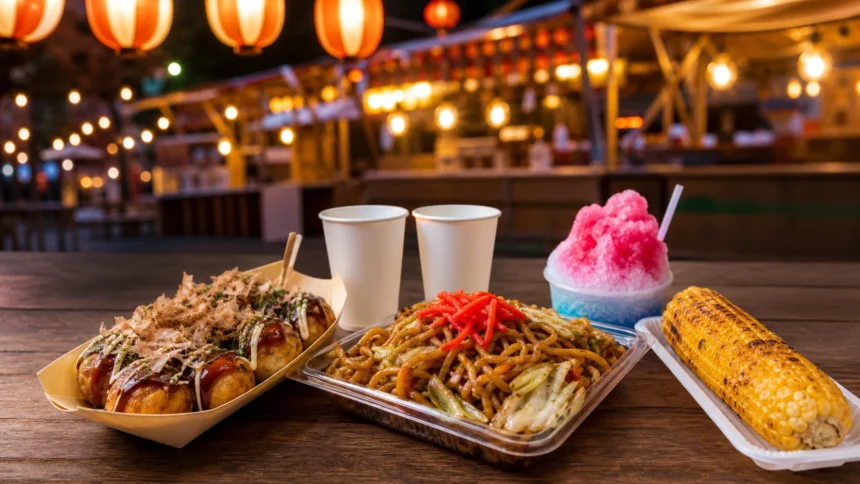
JNTO’s matsuri guidance describes food stalls as a common festival element. Popular stall foods include grilled skewers, takoyaki, yakisoba, hashimaki, grilled squid, scallops, grilled vegetables, sweets and portable snacks. What appears at a specific event depends on the organizer, location, season, crowd size and vendor lineup.
| Food type | Why travelers like it | Planning note |
|---|---|---|
| Takoyaki | Classic Osaka-style festival snack; hot, quick and shareable | Contains octopus, wheat, egg or sauces depending on vendor. |
| Yakisoba | Filling noodle dish for outdoor events | Often includes pork, sauce and shared cooking surfaces. |
| Yakitori or grilled skewers | Easy to eat while standing | Ask about sauce, salt, chicken parts and shared grills if needed. |
| Grilled squid or seafood | Strong festival aroma and regional feel | Seafood allergy risk and sauce ingredients need caution. |
| Shaved ice and cold sweets | Useful in summer heat | Good for cooling down, but not a full meal. |
| Local produce or regional booths | Best when the festival highlights a region | Confirm whether it is a tourism booth, vendor stall or restaurant stand. |
How To Plan A Festival Food Night
- Confirm the current official event page. Do this before hotels, trains, paid seats or restaurant reservations.
- Choose one festival anchor. Do not stack two crowded festivals on the same travel day.
- Eat a real meal first. Treat stalls as tasting and atmosphere, especially in heat.
- Carry cash and a transit card. Payment methods vary by vendor and crowd control can move you away from ATMs.
- Map exits and stations. Road closures and one-way pedestrian routes can change how you leave.
- Keep a bad-weather plan. Find an indoor restaurant, station food floor, covered shopping street or convenience store nearby.
For the broader booking workflow, use the restaurant reservation guide. For a city food route around a festival, start from the Japan food travel guide for first-time visitors and then choose the matching regional guide, such as Kyoto, Osaka, or Kyushu.
Festival Food Safety And Allergy Notes
Festival stalls are exciting, but they are not the safest environment for complex ingredient checks. Vendors may be busy, recipes may be simplified, sauces may be pre-mixed, and shared oil or shared grills can create cross-contact. If you have a serious allergy, celiac disease, strict religious diet or another medical restriction, do not depend on a crowded stall as your main meal.
A safer approach is to eat before the festival at a place that can answer your needs, then enjoy drinks, packaged items or low-risk snacks only if you can verify them. Bring your allergy card, keep medication accessible, and know the nearest station or hotel. The Japan food allergy guide should be part of your planning before any matsuri night.
Best Festival Strategy By Traveler Type
| Traveler type | Best approach | Use this guide next |
|---|---|---|
| First-time visitor | Choose one famous festival and keep meals simple around it. | Best time to visit Japan for food |
| Street food fan | Prioritize July-August, but avoid relying on stalls for every meal. | Markets and food streets |
| Heat-sensitive traveler | Favor February, April, October or November over deep summer. | Seasonal food calendar |
| Regional food traveler | Use autumn festivals as a reason to explore outside Tokyo and Kyoto. | Regional food guide |
| Strict diet or allergy traveler | Plan safe meals separately, then visit the festival for atmosphere. | Food allergy guide |
FAQ
What is the best month for food festivals in Japan?
July and August are the strongest months for major matsuri street food, fireworks and dance festivals. February is best for snow festivals and hot food, while October and early November are easier for autumn festival routes with more comfortable weather.
Are Japanese festivals mainly about food?
Many are not mainly about food. They may be religious, seasonal, historical or community events, with food stalls as one part of the experience. That is why this guide focuses on festival food planning rather than calling every matsuri a food festival.
Can I eat dinner only from festival stalls?
You can, but it is often better to eat a light meal first and use stalls for snacks. Crowds, queues, heat, payment limits, sold-out items and ingredient uncertainty can make a stall-only dinner stressful.
Do festival dates stay the same every year?
Some major festivals use fixed dates, while others follow weekends, lunar calendars, local decisions or annual schedules. Always check the current official event page for the exact year.
Are festival stalls safe for food allergies?
They are risky for serious allergies because ingredient details, sauces, shared oil and cross-contact may be hard to verify in a crowded environment. Arrange safe meals separately and use the festival mainly for atmosphere unless you can confirm the food clearly.
Official Sources
- JNTO: Get Involved in Local Japanese Festivals
- JNTO: Matsuri Street Food
- JNTO: Japanese Festivals & Events
- JNTO: Sapporo Snow Festival
- JNTO: Hirosaki Cherry Blossom Festival
- JNTO: Gion Matsuri
- JNTO: Tenjin Festival
- Osaka Info: Tenjin Festival 2026
- JNTO: Aomori Nebuta Festival
- Amazing AOMORI: Aomori Nebuta Festival
- JNTO: Awa Odori Festival
- Awa Navi: Tokushima City Awa Odori 2026
- JNTO: Karatsu Kunchi Festival
Editorial disclosure: This article was independently planned for international travelers and is not a translation of a Japanese article. Official tourism and event sources were used for festival timing, event examples and planning cautions. No festival organizer, tourism body, restaurant, stall vendor, railway company, hotel, booking platform or food brand paid for inclusion. There are no affiliate links, sponsorships, PR placements or paid rankings in this article. Check current official information before travel and again before eating at an event.