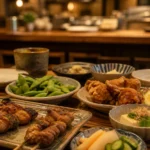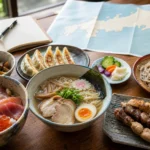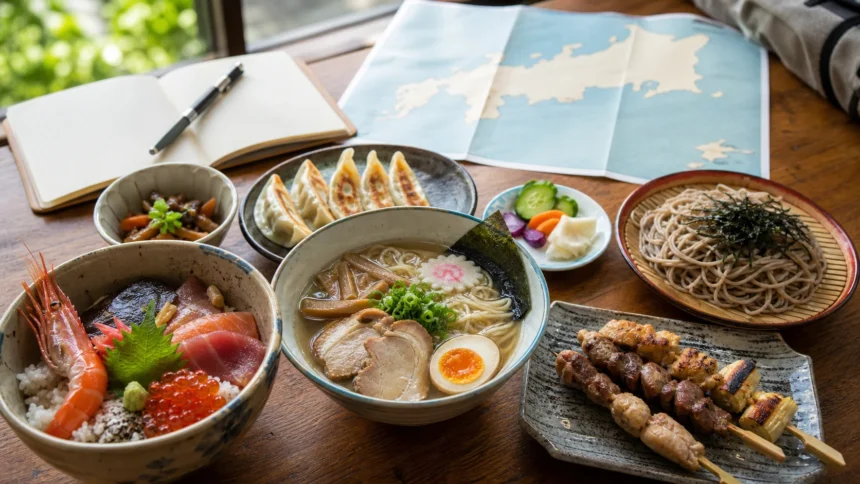
Short answer: Build your first Osaka food day around one neighborhood cluster and two serious meals, not a race through every famous dish. Use Kuromon and Dotonbori/Namba together for a compact Minami route, choose Shinsekai when kushikatsu and a distinct evening district matter, or use Osaka Station/Umeda when rain, luggage, transfers, or mixed group needs make a large connected complex more practical. Tenjinbashisuji is better for a long shopping-street browse than a single iconic photo stop.
Start with one flour-based classic—okonomiyaki or takoyaki—then add a contrasting meal such as kushikatsu, kitsune udon, or Osaka-style pressed sushi. Check the exact shop for hours, queues, cooking method, payment, and dietary suitability. Osaka’s official tourism pages describe the city’s flour-based and dashi-based food culture, but they do not create one recipe or service rule for every restaurant.
Use this as the Osaka city hub from the Japan Destinations by Area guide. For route choices, continue to Osaka Food Itinerary by Area, One-Day Osaka Food Route, or Rainy-Day Food Plan in Osaka.
At Kuromon Market, the official Information Center provides a place to eat purchases, toilets, paid luggage storage, and specific rubbish guidance. Across Osaka, however, eating areas, bins, photography, sauce use, payment, and queue systems remain venue-specific. Read signs and ask instead of importing a rule from another shop or viral video.
Last checked: August 16, 2026. Individual opening days, hours, prices, tenants, queues, reservations, payment methods, menus, luggage services, eating areas, and dietary accommodation can change. Confirm the exact shop, market, station, or building on the day.
Choose Your Osaka Food Area First
| Area | Best first-visit use | Food format | Main friction | Fallback |
|---|---|---|---|---|
| Dotonbori / Namba | One high-energy evening with many choices close together | Takoyaki counters, okonomiyaki, casual restaurants, signs and photo landmarks | Popular-shop queues, dense pedestrian traffic, decision fatigue | Pick one target, then use a station-connected or side-street restaurant |
| Kuromon Ichiba | Late breakfast or lunch with market browsing | Seafood, fruit, fried food, sushi, takeaway and eat-in counters | Shop-by-shop hours, payment, seating, rubbish and allergy information | Use the Information Center rest area or choose a seated shop |
| Shinsekai | Kushikatsu-focused meal plus district atmosphere | Skewer restaurants, doteyaki, casual counters and group dining | Venue-specific sauce, smoking, charge, queue and payment rules | Ask how sauce and ordering work; leave for Namba or Tennoji if the queue is too long |
| Osaka Station / Umeda | Rain, luggage, transfers, families, mixed appetites | Restaurant floors, food halls, cafes, takeaway, department-store dining | Large building complex, mutable tenants and facility rules | Use the current floor guide and choose one building rather than crossing the whole district |
| Tenjinbashisuji / Tenma | A long browse through daily-life retail and many small stops | Shopping-street snacks, produce, cafes, casual meals and bars | Approximately 2.6 km, Japanese-first shops, store-specific payment and hours | Enter from a convenient station, walk one section, and stop when the route stops serving your day |
The most common planning mistake is treating those areas as a checklist. Kuromon and Dotonbori are close enough to form one Minami cluster. Shinsekai adds another distinct stop and another meal. Umeda is a separate northern anchor. Tenjinbashisuji can consume more time than the word “street” suggests: OSAKA-INFO describes it as approximately 2.6 kilometers with around 600 stores, and notes that hours, prices, holidays, and card acceptance vary by store.
What Osaka Food Culture Means—And What It Does Not
Official Osaka tourism material calls the city the “Kitchen of the Nation” and emphasizes flour-based foods and dashi-based cooking. The frame comes from Osaka’s history as a commercial and distribution center and from its dense range of everyday and specialist food. The phrase kuidaore is often rendered as eating until you drop or spending freely on food.
Use those ideas as orientation, not a dare. They do not mean that residents eat the same dishes, that visitors should over-order, or that inexpensive street food is the only “authentic” Osaka meal. A bowl of dashi-led udon, pressed sushi, a carefully cooked okonomiyaki, a few skewers, or a department-store meal can each show a different part of the city’s food landscape.
Konamon literally points to flour-based foods. Okonomiyaki and takoyaki are the best-known traveler examples, while udon also belongs to the wider flour-food conversation. Their sauces, stocks, toppings, cooking surfaces, and shared equipment create practical dietary questions. “Flour-based” is cultural shorthand, not a full ingredient list.
Osaka Dish Decoder For A First Visit
| Dish | What you receive | Good trip role | Ask about |
|---|---|---|---|
| Okonomiyaki | A savory cabbage-and-batter dish cooked on a hot plate with variable meat, seafood, noodles, toppings, and sauce | A seated lunch or dinner; usually filling enough to count as a main meal | Who cooks it, minimum orders, sharing, wheat, egg, dashi, sauce, mayonnaise, pork/seafood, shared grill |
| Takoyaki | Hot round batter pieces with octopus, commonly finished with sauce and optional mayonnaise, aonori, or bonito flakes | A snack to share rather than a second full meal | Piece count, topping removal, octopus, wheat, egg, dashi, shared tools, where to eat and return the tray |
| Kushikatsu | Meat, seafood, vegetables, cheese, or other items on skewers, battered and fried | A pick-and-choose dinner that works well for groups | Sets versus individual pieces, sauce method, shared fryer, wheat, egg, seafood, meat, cheese, table charge, payment |
| Kitsune udon | Soft udon in dashi with sweet-savory fried tofu | A lower-friction, warming meal between heavier fried or grilled foods | Fish in dashi, wheat noodles, soy, mirin or alcohol, ticket-machine or counter process |
| Osaka sushi | Pressed sushi such as box sushi or battera rather than only hand-formed nigiri | A quieter lunch, takeaway, or contrast to hot street-facing foods | Fish species, vinegar seasoning, raw/cured status, wasabi, refrigeration and same-day handling |
| Negiyaki | A griddled green-onion-forward relative in the okonomiyaki family | A useful alternative within a teppan meal | Batter, egg, dashi, beef tendon or seafood, sauce, shared grill |
| Doteyaki | Beef tendon or similar ingredients simmered in a rich miso-based preparation | A small Shinsekai or izakaya-style companion dish | Beef, miso/soy, sugar, alcohol, portion and whether it accompanies a drink order |
This table is a question map, not a universal recipe. The Consumer Affairs Agency distinguishes packaged-food labels from food served in restaurants, bakeries, and display cases, where travelers may need to check with staff. A shop can change its batter, dashi, sauce, fryer, toppings, or supplier. For severe allergies or strict dietary rules, a translated request helps communication but does not prove that cross-contact is controlled.
How To Order Okonomiyaki Without Guessing
OSAKA-INFO explains that okonomiyaki commonly combines flour dissolved in dashi with cabbage and optional toppings, and that many specialty shops have the owner or staff cook it for customers. That is important: the hot plate at your table does not automatically mean you should mix, flip, or season the dish yourself.
- Read the menu structure. Choose a base version or set, then identify meat, seafood, noodles, cheese, mochi, or other additions.
- Ask who cooks. Say “Kore wa mise no hito ga yakimasu ka?”—“Does the staff cook this?”
- Clarify sharing. One dish may be large enough for two light eaters, but a restaurant can have a one-order-per-person or minimum-order policy.
- Keep hands away from the hot plate. Use the spatula or small plate as shown. The surface can remain hot after the dish arrives.
- Add condiments gradually. Sauce, mayonnaise, aonori, and bonito may already be applied. Do not assume removal makes the dish suitable for an allergy or diet.
If you need a simpler workflow, choose a venue that clearly states staff cooking, or ask before sitting. If the menu and allergy explanation remain unclear, change restaurants instead of treating the meal as a test of confidence.
Takoyaki Is Hot, Shareable, And Easy To Overplan
Official Osaka tourism guidance describes takoyaki as dashi-based batter with octopus, commonly served with sauce, mayonnaise, green laver, and bonito flakes. The soft interior can remain extremely hot. Break or pierce one and wait rather than putting a whole fresh piece into your mouth.
Takoyaki works best as a shared snack between meals. Count the pieces before ordering multiple trays. If you want a topping removed, ask before cooking or finishing; the base batter and tools may already contain or contact the ingredient. “No mayonnaise” does not remove wheat, egg, octopus, dashi, sauce ingredients, or cross-contact risk.
Ask where to eat and return the boat, cup, toothpick, or skewer. A busy counter may have a marked standing area or expect customers to move to a designated spot. Do not stand in the next shop’s entrance or place hot food on a public ledge.
Kushikatsu: Follow The Sauce System In Front Of You
Kushikatsu is ordered as individual skewers, sets, or a course depending on the restaurant. OSAKA-INFO associates Osaka kushikatsu with the famous “no double dipping” rule. That cultural shorthand does not tell you how a current restaurant actually serves sauce. A venue may use a shared container, a pour bottle, a brush, an individual dish, or pre-sauced items.
Read the table notice or ask “Sōsu wa dō tsukaimasu ka?”—“How should I use the sauce?” If sauce is shared, do not return a bitten item or personal utensil to it. If it is individually portioned, follow that system. Never correct another table using a rule remembered from an old travel program.
Sets can hide dietary complexity: meat, seafood, cheese, egg, wheat, sauces, and a shared fryer may appear in one order. Kushikatsu Daruma publishes a product allergen page for its own items, which is useful evidence that a named business can provide shop-specific information. It is not an Osaka-wide guarantee, and an allergen table may not settle cross-contact or religious-diet questions.
Dotonbori And Namba: Pick Targets Before The Crowd
Dotonbori is a dense Minami entertainment and food area close to Namba and other rail/subway approaches. The canal, giant signs, restaurants, takeaway counters, and Riverwalk make it visually easy to browse—and easy to lose an evening to queues and indecision.
Choose one priority before arrival: a seated okonomiyaki meal, takoyaki snack, kushikatsu dinner, or a specific dietary-safe option you confirmed in advance. Give that choice a queue limit. If the wait exceeds your limit, move to a second saved option instead of joining another viral line without checking the menu.
Official area pages confirm access and food context but do not establish one Dotonbori-wide rule for eating while walking, rubbish, photography, or queues. Keep pedestrian space open, photograph without blocking people or including faces unnecessarily, and follow the shop’s instructions for food and containers. A public riverside path is not automatically the correct eating or disposal area for every purchase.
Kuromon Market: Use The Market’s Actual Support System
Kuromon’s official material describes a roofed market approximately 580 meters long with about 150 shops. It promotes tabe aruki, but business hours and holidays vary by shop. Treat the market as a sequence of independent businesses inside one district, not a single food court with one checkout, menu, bin, or allergy policy.
The official Information Center is the strongest practical anchor. It offers a free rest area where market purchases may be eaten, toilets, and paid luggage storage. Its rubbish guidance asks visitors to sort waste and return food waste to the shop where it was purchased. It also warns against using private residential bins or vending-machine receptacles for unrelated waste.
- Browse once before buying several hot items.
- Check the displayed price, portion, cooking status, and payment method at the exact shop.
- Ask where the item should be eaten. Use the Information Center rest area when appropriate.
- Keep receipts or remember the seller so food waste can be returned correctly.
- Do not assume the Center’s seats, bins, photography practice, or luggage capacity describe the whole market.
For a serious seafood allergy, raw-food concern, or strict diet, visual browsing is not enough. Seafood, meat, fruit, fried food, sauces, grills, and knives can share very tight spaces. Choose a shop that can answer precisely, or use a pre-researched seated restaurant elsewhere.
Shinsekai: Make Kushikatsu The Meal, Not A Myth
OSAKA-INFO describes Shinsekai as a southern Osaka district around Tsutenkaku and Janjan Yokocho, with kushikatsu and doteyaki restaurants. It is next to Ebisucho Station and a short walk from Dobutsuen-mae. Hours and holidays vary by store, and weekends and holidays can attract large groups.
Plan Shinsekai as a meal plus a short district walk. Check whether your chosen restaurant uses reservations, a paper or digital queue, a complete-party rule, a table charge, smoking separation, or cash-only payment. None of those is established as a district-wide norm by the official area page.
If every promising line is long, do not add a second dinner merely because you traveled there. Have a fallback near Dobutsuen-mae, Ebisucho, Tennoji, or Namba. The experience is still useful when you observe the district, eat a manageable set, and leave room for the next day.
Osaka Station And Umeda: The Practical Food Base
Osaka Station City connects JR Osaka Station with multiple commercial buildings, restaurant floors, food zones, cafes, and takeaway. Its official guide lists coin lockers and luggage services, while its gourmet guide organizes food facilities across the complex. That makes Umeda especially useful during rain, on arrival or departure days, or when a family needs elevators, toilets, seats, and different meal choices nearby.
Do not promise yourself a locker. Capacity, hours, staffed service, and temporary suspensions change. Check the current Osaka Station City baggage page before arrival and keep an alternative such as hotel storage. Likewise, a food-hall purchase may have a designated eat-in zone; one building’s space does not permit eating in every corridor or neighboring mall.
Choose one building or one food floor. Save its current map, then meet your group at a named entrance, floor, or information desk. “Osaka Station” is too broad a meeting point when several people are hungry and carrying bags.
Tenjinbashisuji: Walk A Section, Not An Obligation
Official tourism guidance describes Tenjinbashisuji as approximately 2.6 kilometers with around 600 shops, ranging beyond food into produce, kimono, books, household goods, and souvenirs. It lists Japanese as the language and says hours, holidays, prices, and card use vary by store.
Those facts make it useful for flexible browsing, not automatically easier or more “local” than Dotonbori. Enter near the station that fits your day, choose one direction, and give yourself permission to stop. A croquette, sweet, cafe break, or simple meal can be enough; you do not need to cover the entire street to justify the visit.
Small shops may have little English or limited seating. Carry cash as a backup, but check the sign rather than assuming cash-only. Ask where to eat a purchase and do not block a storefront while comparing maps.
Five Route Patterns That Avoid Backtracking
1. One-Day Minami Cluster
Begin at Kuromon for a late breakfast or early lunch, use the Information Center when you need seating or rubbish guidance, then move toward Dotonbori/Namba for one evening target. Add Shinsekai only if you still want a separate kushikatsu dinner and have time for the transport and queue. The fallback is to remain in Namba.
2. Umeda Plus One Southern Area
Use Osaka Station/Umeda for arrival-day lunch, luggage management, or a rainproof meal. Later take Osaka Metro toward Namba for Dotonbori, or continue to Dobutsuen-mae/Ebisucho for Shinsekai. Choose one, not both. The fallback is an Umeda restaurant floor using the current building guide.
3. Two-Day North/South Split
Day one: Umeda and a manageable section of Tenjinbashisuji. Day two: Kuromon plus Dotonbori/Namba, with Shinsekai as the evening option. This split gives each area a role and reduces repeated north-south movement.
4. Rain Or Limited-Mobility Day
Base the day in Osaka Station City or another verified connected complex. Use official station maps for elevators and current facilities. Add an outdoor district only if conditions, energy, and step-free access still work. The fallback is not failure; a department-store food floor can solve different appetites without exposing the group to multiple wet transfers.
5. Late Arrival Or Early Departure
Do not assume a famous market or small shop will be open. Use the current station or building directory, choose a clearly operating restaurant, and save the regional specialties for the next full day. A verified open meal is better than hauling luggage to a district based on an old blog hour.
Queues, Reservations, And When To Leave
| Venue format | Reservation strategy | Queue decision | Payment check |
|---|---|---|---|
| Market or takeaway counter | Usually investigate current opening rather than reserve | Check whether ordering and pickup lines are separate | Read logos before ordering; hold cash backup |
| Casual griddle restaurant | Reserve when a current official page offers it and timing matters | Look for name sheet, ticket, QR registration, or host | Ask before the meal if card acceptance matters |
| Small kushikatsu or udon shop | Often walk-in, but never universal | Set a personal wait limit and keep the entrance clear | Pay-before, counter, or cashier can differ |
| Station or department-store restaurant | Tenant-specific | Floor queues may use numbered or digital systems | Building-wide campaigns do not prove every tenant accepts the same method |
| Course or specialist dining | Use the official booking route and read cancellation terms | Arrive as requested; contact the venue if late | Confirm deposit, prepayment, service, and accepted cards |
Leave a queue when it breaks your route, your group cannot stand safely, or the menu does not solve your needs. This is not giving up. Osaka’s density is an advantage only when you use alternatives. The restaurant reservation guide explains booking guarantees, cancellation, late arrival, and hotel-concierge help in more detail.
Payment: Check The Shop, Not The Neighborhood
No responsible guide can label Osaka, Kuromon, Shinsekai, or a shopping street “cash-only” or “cashless.” Individual stalls, chains, tenants, ticket machines, and buildings can support different combinations of cash, credit cards, contactless cards, transport IC, and domestic QR services.
Before ordering, look for payment marks at the register or machine. If a method matters, ask “Kādo wa tsukaemasu ka?” Do not rely only on a years-old map or user review. Keep enough yen to finish the meal and reach the next transport point, plus a second card stored separately. The cash, card, and IC guide covers ATM fallback, foreign-card failure, DCC, and duplicate-looking authorizations.
Check when payment happens. A ticket machine is pay-before; a market seller may take payment at order or pickup; a seated restaurant may use the table or a front cashier. If you need separate checks, ask before staff begins processing the bill.
Allergies, Vegetarian Needs, Halal, And Other Diets
Osaka’s best-known foods combine exactly the ingredients that are easy to overlook: flour batter, egg, dashi, bonito, octopus, shellfish, pork, beef tendon, soy, mayonnaise, sauce, mirin, cheese, shared grills, and shared fryers. A vegetable skewer can share oil with shrimp. Fried tofu can sit in fish-based stock. Removing flakes from the top does not remove dashi in batter or sauce.
- Research the exact venue’s official menu or allergen page before travel.
- Name the exact ingredient or restriction; do not rely only on “vegetarian” or “allergy.”
- Ask about stock, sauce, shared oil, and shared grill separately.
- Listen for uncertainty. Staff may not have complete supplier or cross-contact information.
- Leave and use a saved alternative if the answer does not meet your safety threshold.
The Consumer Affairs Agency publishes consumer guidance for eating out that covers information limits and unintended mixing. Read the Japan food allergy guide before building an Osaka route. A restaurant’s refusal to promise safety is useful information, not bad hospitality.
Useful Japanese Phrases
| Need | Japanese and romanization | Meaning and limit |
|---|---|---|
| Queue | どう並べばいいですか? Dō narabeba ii desu ka? |
How should I queue? |
| Whole party | 全員そろってからですか? Zen’in sorotte kara desu ka? |
Must the whole party be here first? |
| Luggage | 荷物はどこに置けばいいですか? Nimotsu wa doko ni okeba ii desu ka? |
Where should I put my luggage? |
| Cooking | これは店の人が焼きますか? Kore wa mise no hito ga yakimasu ka? |
Does the staff cook this? |
| Sharing | 一つを二人で分けてもいいですか? Hitotsu o futari de wakete mo ii desu ka? |
May two people share one? A minimum order can still apply. |
| Sauce use | ソースはどう使いますか? Sōsu wa dō tsukaimasu ka? |
How should I use the sauce? |
| Stock | この出汁には魚が入っていますか? Kono dashi ni wa sakana ga haitte imasu ka? |
Does this stock contain fish? |
| Allergy | 小麦アレルギーがあります。 Komugi arerugī ga arimasu. |
I have a wheat allergy. Replace the ingredient; this is not a safety guarantee. |
| Pork | 豚肉や豚由来のものは入っていますか? Butaniku ya buta-yurai no mono wa haitte imasu ka? |
Does it contain pork or pork-derived ingredients? |
| Shared oil | 同じ油で魚介も揚げますか? Onaji abura de gyokai mo agemasu ka? |
Is seafood fried in the same oil? |
| Eating place | これはどこで食べればいいですか? Kore wa doko de tabereba ii desu ka? |
Where should I eat this? |
| Rubbish | ごみはどこに戻しますか? Gomi wa doko ni modoshimasu ka? |
Where should I return the rubbish? |
| Payment | カードは使えますか? Kādo wa tsukaemasu ka? |
Can I use a card? |
Five Real Osaka Food Decisions
1. One Dinner: Dotonbori Or Shinsekai?
Choose Dotonbori when a mixed group wants many cuisines and an easy Namba route. Choose Shinsekai when kushikatsu is the main goal and everyone accepts shop-specific rules. Save two official business pages, compare current queues or reservations, and go to the shorter viable option. Do not eat two full dinners to avoid making the choice.
2. Hot Market Food With No Visible Bin
Ask the seller where to eat. At Kuromon, use the official Information Center rest area when appropriate. Sort rubbish there as directed and return food waste to the selling shop. Do not use a residence bin or a vending-machine receptacle for unrelated food waste.
3. Sharing Okonomiyaki And Takoyaki
Ask whether one okonomiyaki can be shared and whether each guest must order. Treat it as the meal. Split one takoyaki portion later only if you are still hungry. This produces contrast without turning the route into a volume challenge.
4. Family With Luggage In Rain
Check Osaka Station City’s current baggage page before arrival, but assume lockers may fill. Use hotel storage as backup. Meet at a named information point, choose one connected restaurant floor, and confirm stroller/elevator access on the current guide instead of crossing outdoor districts for a famous snack.
5. Wheat, Shellfish, Vegetarian, Or Halal Constraint
Do not enter a tiny busy shop based on the dish photo alone. Check the official menu or allergen page, name the exact restriction, ask separately about dashi, sauce, fryer, and grill, and leave if staff cannot confirm. Use the pre-researched safe option even if it is outside the “must-eat” list.
FAQ
What food is Osaka best known for?
Official Osaka tourism guidance foregrounds takoyaki, okonomiyaki, kushikatsu, udon, flour-based food, dashi-based cooking, and a wider food-city tradition. Pressed Osaka sushi and dishes such as doteyaki add useful contrast.
Is Dotonbori enough for an Osaka food trip?
It can cover one energetic evening, but not the whole food culture. Add Kuromon for a market workflow, Umeda for connected food facilities, Shinsekai for a kushikatsu-centered district, or Tenjinbashisuji for a long shopping-street browse.
Is Kuromon Market worth visiting?
Yes when you want market browsing, small tastes, and official visitor support such as a rest area and rubbish guidance. Skip or shorten it if severe allergy risk, crowds, raw-food handling, or shop-by-shop uncertainty conflicts with your needs.
Can I eat while walking in Osaka?
There is no reliable citywide answer. Kuromon’s official site promotes food strolling, while its Information Center provides an eating area and specific waste instructions. Other streets, buildings, events, and shops can use different rules. Ask where to eat the item.
Do I need reservations?
Not for every stall or casual shop. Reserve when a particular meal matters, a current official channel exists, or your party has timing, accessibility, children, luggage, or dietary needs. Always read cancellation and late-arrival terms.
Is Osaka food cash-only?
No citywide rule exists. Tenjinbashisuji’s official listing explicitly says card use varies by store. Market shops, chains, machines, and commercial tenants can all differ. Check payment marks and carry cash plus a second card.
Do I cook okonomiyaki myself?
Do not assume so. OSAKA-INFO says many specialty shops have the owner or staff cook it. Ask before touching the grill or tools.
What is the current kushikatsu sauce rule?
The famous no-double-dipping idea is associated with Osaka kushikatsu, but current sauce systems are venue-specific. Follow the container, sign, and staff explanation in front of you.
Where should I put market rubbish?
At Kuromon’s Information Center, sort waste as directed and return food waste to the shop of purchase. Elsewhere, use that venue’s return point. Do not assume another business or vending-machine bin accepts it.
Is Osaka easy for vegetarians or travelers with allergies?
It can be navigated with research, but famous foods often involve dashi, flour, egg, seafood, meat, sauces, shared grills, or shared fryers. Restaurant information and cross-contact control vary. Keep a verified alternative.
How many food areas fit into one day?
Two major areas are usually enough. Kuromon plus Dotonbori forms a compact cluster; Umeda plus one Minami area creates a clear north-south day. A third area often adds transport, queues, and meal overload.
What works on a rainy day or with luggage?
Osaka Station City/Umeda is the strongest practical base because official guides list connected food facilities and baggage services. Confirm capacity and hours; keep hotel storage as backup.
Continue Planning Your Japan Food Trip
Use the Japan food travel guide for first-time visitors for restaurant formats and route planning, the food etiquette guide for queues, photos, rubbish, and mistake recovery, and the ticket-machine guide for pay-first noodle or fast-service shops. The regional food guide helps place Osaka inside a wider Japan itinerary.
Official And First-Party Sources
- OSAKA-INFO: Osaka Food Culture
- Discover Osaka: About Osaka
- OSAKA-INFO: Okonomiyaki
- OSAKA-INFO: Takoyaki
- OSAKA-INFO: Udon And Udon-Suki
- OSAKA-INFO: Dotonbori
- Kuromon Market: Official Store Map
- Kuromon Market: Information Center
- Kuromon Market: Official English Guide And Rubbish Rules
- OSAKA-INFO: Shinsekai
- OSAKA-INFO: Tenjinbashisuji Shopping Street
- Osaka Metro: Route Map
- Osaka Station City: Baggage Services
- Osaka Station City: Food Facilities
- Kushikatsu Daruma: Product Allergen Information
- Consumer Affairs Agency: Food Allergies When Eating Out
- Consumer Affairs Agency: Important Food Labelling In Japan
Editorial disclosure: This independently produced guide contains no affiliate restaurant booking, paid venue placement, sponsored food, or advertising relationship with the organizations named above. The surrounding site may display advertising. Official and first-party pages were checked on July 20, 2026. Districts and businesses are included as practical examples, not rankings or endorsements.