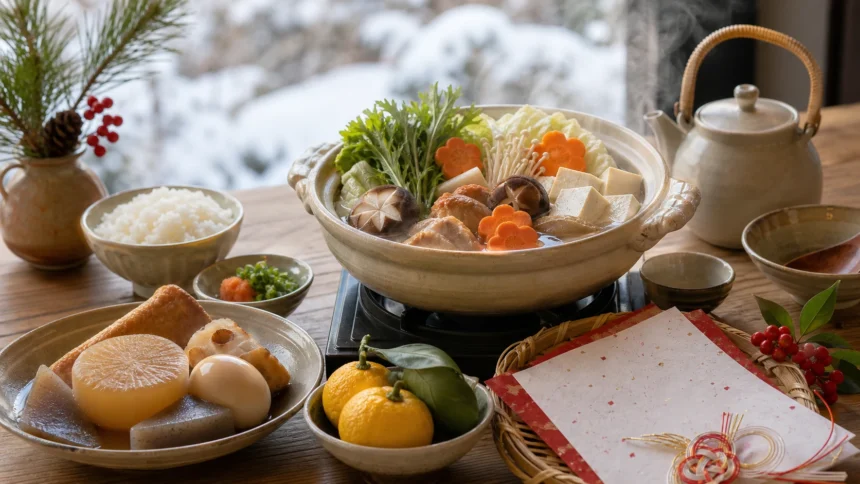
Short answer: Japan is a memorable place to spend New Year, but it is also one of the easiest times to be caught without a meal plan. Around December 29 to January 3, many restaurants, markets, museums, offices and small shops may close or change hours, while hotels and transport can be expensive and crowded. For food, plan to try toshikoshi soba on New Year’s Eve, osechi or ozoni if your hotel or department store offers it, shrine-stall snacks around hatsumode, and reliable backups from convenience stores, supermarkets, station buildings and hotel breakfasts.
This guide is for travelers who will be in Japan from late December through the first days of January. Use it with the winter foods in Japan guide, the Japan seasonal food calendar, and the best time to visit Japan for food guide before locking in hotels, restaurants or intercity travel.
Last checked: July 22, 2026. New Year dates, restaurant closures, department-store food hall hours, hotel meal plans, shrine events, food stalls, transport, luggage delivery, payment methods, weather and dietary accommodation can change every year. Recheck the exact year, city, venue and transport operator before relying on any plan.
What Changes Around New Year In Japan
JNTO’s December guide notes that the Oshogatsu holiday period typically runs from December 29 to January 3, depending on how the days fall. Its January guide warns that hotels, plane tickets and train tickets can be harder to book and more expensive around New Year. The winter guide also warns that many restaurants and attractions shut down during the New Year holidays.
For food travelers, this means New Year should be planned differently from a normal Tokyo, Kyoto or Osaka week. The issue is not that there is no food. The issue is that the restaurants you expected, the market you wanted, or the food hall you planned around may have special hours or be closed.
| Date window | Food opportunity | Main risk | Best backup |
|---|---|---|---|
| Dec 27-28 | Last normal meals, year-end menus, shopping for backups | Popular restaurants may already be booked or hosting parties. | Reserve one anchor meal and buy easy breakfast/snack supplies. |
| Dec 29-30 | Department-store food, supermarket prepared food, hotel meals | Small restaurants may begin holiday closures. | Check hours before traveling across town for food. |
| Dec 31 | Toshikoshi soba, shrine-area food, hotel dinner | Soba shops, countdown areas and transport can be crowded. | Eat earlier than usual and keep a convenience-store backup. |
| Jan 1 | Osechi, ozoni, hotel breakfast, shrine-stall snacks | Many restaurants and shops may be closed. | Book hotel breakfast or buy food the day before. |
| Jan 2-3 | Hatsumode, first sales, limited restaurant reopening | Hours vary widely and department stores can be crowded. | Use station buildings, hotel areas and simple chain restaurants. |
| Jan 4 onward | More normal restaurant planning returns | Some independent restaurants may extend closures. | Confirm each restaurant before going. |
New Year Foods Travelers Should Know
Toshikoshi Soba: New Year’s Eve Noodles
Toshikoshi soba is the easiest New Year food for travelers to understand and try. JNTO describes it as soba eaten on the last day of the year, associated with longevity and crossing into the new year. It can be hot or cold, plain or topped with tempura, and some regions have udon or local variations instead.
The practical problem is timing. Famous soba restaurants can be crowded on December 31, and some may close once they sell out. If eating toshikoshi soba matters to you, choose a soba place near your hotel or sightseeing area and go earlier than normal dinner time. Do not make a late-night soba shop your only meal plan.
Osechi Ryori: The Symbolic New Year Box
Osechi ryori is traditional New Year food served in stacked boxes, with many foods carrying auspicious meanings. JNTO notes that osechi is usually eaten at home and is not typically available in restaurants, although department-store food halls, hotels and some businesses may sell or serve it by reservation.
For travelers, the most realistic osechi experience is through a hotel breakfast or special meal plan, a department-store food hall order, or a prepared set bought before January 1. Do not assume you can walk into a casual restaurant on New Year’s Day and order osechi.
Ozoni: Regional New Year Soup With Mochi
Ozoni is a New Year soup with mochi rice cakes and regional variations. Government of Japan and JNTO materials describe regional differences in broth, ingredients and mochi shape, with Kanto and Kansai styles often used as a simple comparison. If your hotel serves ozoni, it can be one of the most meaningful New Year foods to try.
Mochi has a chewy texture and can be a choking risk, especially for children, older adults or anyone who eats too quickly. Cut it smaller, chew slowly, and do not treat mochi like ordinary bread or noodles.
Hatsumode Food Stalls And Warm Drinks
Hatsumode is the first shrine or temple visit of the year. JNTO’s January guide says the festive atmosphere and food stalls can make these visits worthwhile even for secular travelers. Around large shrines, you may find stalls, warm drinks, sweets, grilled foods or soups, depending on the venue and year.
Use shrine food as atmosphere, not your only dinner. Crowds, cold, cash needs, queues, closures and ingredient uncertainty can all be real. Pair hatsumode with the Japan food festivals calendar and the markets and food streets guide if you enjoy yatai-style eating.
Where Travelers Can Actually Eat
| Option | Why it helps | New Year caution |
|---|---|---|
| Hotel breakfast or dinner | Most reliable for January 1 if booked in advance | May require a meal plan, reservation or package. |
| Department-store food halls | Good for osechi items, prepared food and gifts before closures | Hours and crowds can be intense; check current schedule. |
| Convenience stores | Useful for breakfast, snacks, drinks and emergency meals | Selection can be thinner in crowded areas. |
| Supermarkets | Good for prepared food and simple room meals | Holiday hours and early closing are common. |
| Station buildings | Often easier than neighborhood searching | Individual shops may still close or change hours. |
| Chain restaurants | More likely to reopen earlier than small independents | Never assume; check the specific branch. |
| Shrine or festival stalls | Atmosphere, hot snacks and New Year mood | Not reliable for allergies, seating, payment or full meals. |
Use the Japanese convenience store food guide for backup meals, the cash, cards and IC payments guide for payment planning, and the restaurant reservation guide for the meals that genuinely need booking.
A Simple New Year Food Plan
If You Arrive Before December 29
Use the first normal day to solve logistics. Check your hotel’s breakfast status, buy emergency snacks, confirm any December 31 meal, and ask your hotel which nearby restaurants usually close. Reserve only what would be hard to replace: a New Year’s Eve meal, a January 1 hotel meal, or one special winter dinner.
If You Are In Japan On December 31
Eat earlier than usual. Try toshikoshi soba for lunch or early dinner instead of joining the last-minute rush. If you plan hatsumode at midnight, carry cash, dress warmly, and know how you will return. Do not expect every train, taxi, restaurant or food stall to work exactly like an ordinary night.
If You Are In Japan On January 1
Make January 1 simple. A hotel breakfast, prepared food from the previous day, convenience-store food, shrine visit and one flexible warm meal is a better plan than chasing famous restaurants. If your hotel offers ozoni or osechi, that may be the day’s strongest food experience.
If You Are Traveling Between Cities
New Year travel can be expensive and crowded, especially around the first days of January. Avoid building the day around a meal that requires perfect train timing. Buy food before boarding, keep water and snacks, and use station meals only after checking which shops are open.
Allergies, Strict Diets And Mochi Safety
New Year is a difficult period for serious dietary needs. Osechi can contain seafood, egg, soy, wheat, nuts, fish roe, gelatin, alcohol, dashi, hidden seasonings and shared preparation. Ozoni often includes mochi and broth ingredients that vary by region and kitchen. Shrine stalls may be too busy to answer ingredient questions accurately.
If you have a serious allergy, celiac disease, halal, kosher, vegetarian, vegan or other strict need, plan safe meals before the holiday period begins. Bring a clear allergy card, confirm hotel meals in writing, and keep a backup meal in your room. Read the Japan food allergy guide before treating New Year food as a tasting adventure.
Best Strategy By Traveler Type
| Traveler type | Best New Year food strategy | Useful next guide |
|---|---|---|
| First-time visitor | Stay near a major station or hotel area and keep January 1 simple. | First-time food travel hub |
| Food-focused traveler | Book one strong meal before Dec 31, then use osechi/ozoni/hatsumode as cultural food experiences. | Winter foods in Japan |
| Budget traveler | Use supermarkets, convenience stores, station buildings and daytime meals before closures. | Convenience store food guide |
| Family traveler | Avoid late-night crowd pressure; choose hotel meals, early soba and daytime shrine visits. | Best time for food travel |
| Allergy or strict diet traveler | Confirm hotel or restaurant meals before the holiday and do not rely on stalls. | Food allergy guide |
FAQ
Are restaurants open in Japan on New Year’s Day?
Some are open, especially in major stations, hotels, shopping complexes or chains, but many independent restaurants close on January 1 and sometimes for several days. Always check the exact restaurant or building schedule for the current year.
What should I eat in Japan on New Year’s Eve?
Toshikoshi soba is the classic choice. Eat earlier than normal if you want to avoid the busiest late-night period, and keep a backup meal near your hotel.
Can tourists eat osechi in Japan?
Yes, but usually through a hotel meal, department-store food hall, pre-order, ryokan, or special restaurant plan. It is not something every casual restaurant serves on New Year’s Day.
What is ozoni?
Ozoni is a New Year soup with mochi rice cakes and regional variations. Broth, vegetables, seafood, chicken and mochi shape can differ by region and household.
Is New Year a good time for food travel in Japan?
It can be meaningful, but it requires more planning than other periods. Choose it for culture, winter food and atmosphere, not for maximum restaurant access.
Official Sources
- JNTO: Japan in December
- JNTO: Japan in January
- JNTO: Winter in Japan
- JNTO: New Year’s In Japan
- JNTO: New Year food traditions
- JNTO: New Year Celebrations in Japan
- Government of Japan: O-zoni
- Government of Japan: New Year’s Issue 2025
Editorial disclosure: This article was independently planned for international travelers and is not a translation of a Japanese article. Official tourism and government sources were used for New Year timing, food customs and travel cautions. No restaurant, hotel, department store, shrine, tourism body, railway company, booking platform or food brand paid for inclusion. There are no affiliate links, sponsorships, PR placements or paid rankings in this article. Check current official information before travel and again before eating.